The Hindu Goddess Durga: A Tale of Strength and Protection
The Hindu goddess Durga inspires millions as a symbol of strength and protection. Known as the divine mother, Durga represents courage and resilience.
Her stories show the eternal fight between good and evil, offering lessons for daily life. Festivals like Durga Puja celebrate her power and grace, uniting communities in devotion.
Understanding Durga helps us appreciate her role in Hindu mythology and culture.
Key Takeaways:
- Durga is a major Hindu goddess with associations with protection, strength, and destruction
- Her battles against evil forces serve as metaphors for the war against negative qualities within ourselves
- Festivals like Durga Puja and Navratri celebrate Durga
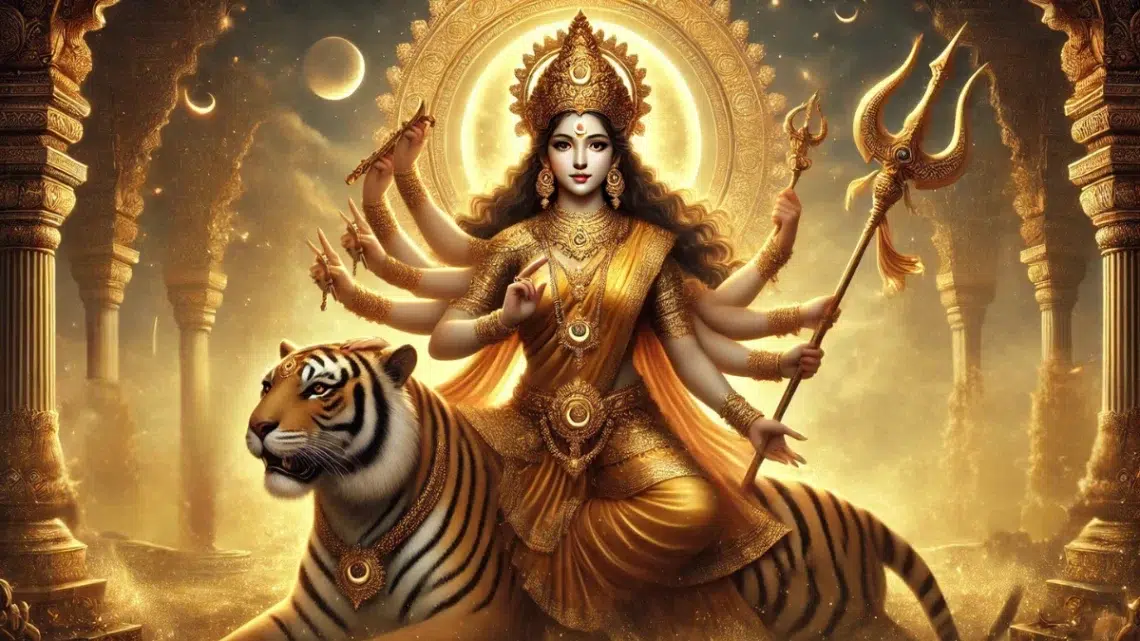
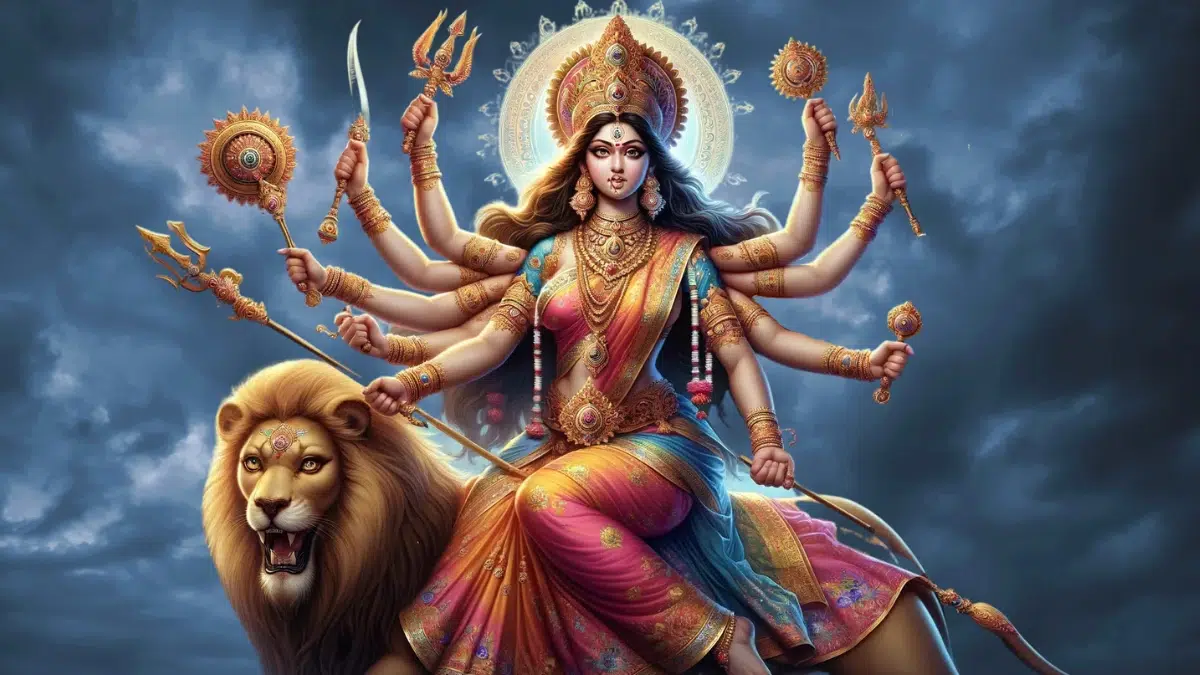
- Depicted as a powerful warrior riding a lion or tiger, she represents inner strength and fearlessness
- Durga’s teachings emphasize the restoration of harmony and the elimination of destructive behaviors
The Meaning of Durga
The word Durga, derived from Sanskrit, holds a profound meaning in Hindu mythology.
Durga’s name means “fortress” or “invincible,” reflecting her role as a protector. She symbolizes the victory of good over evil. Durga’s name encapsulates her fierce and powerful nature, symbolizing her invincible presence as the mother goddess.
Durga is also known by other names such as Devi and Shakti, representing the divine feminine force that breathes life into the world.
As the mother goddess, she exudes strength and embodies the essence of motherhood, protecting her children from harm. Her power is unparalleled, making her the invincible and unconquerable one, free from fear and capable of accomplishing anything.
This embodiment of divine strength and protection makes Durga a revered figure in Hindu culture, inspiring devotion and reverence among her followers. She is a symbol of feminine power and determination, reminding us of the inherent strength within every individual.
The Origins of Hindu Goddess Durga
Durga’s story begins with a great need. The gods create her to defeat the evil demon Mahishasura, who threatens peace. Each god gives Durga a unique power, creating a goddess unlike any other. She embodies courage, wisdom, and strength, ready to protect the universe. Her creation shows the unity of divine forces working together.
Mahishasura causes trouble and cannot be defeated by anyone but a goddess. The gods join their energy to create Durga, a strong and fearless protector.
Each god gives her special weapons, like a sword, trident, and bow, to fight evil. She rides a lion, showing her courage and control over wild power. Durga teaches that courage, teamwork, and determination can solve even the toughest problems. She stands ready to protect the world.
The Many Forms of Goddess Durga
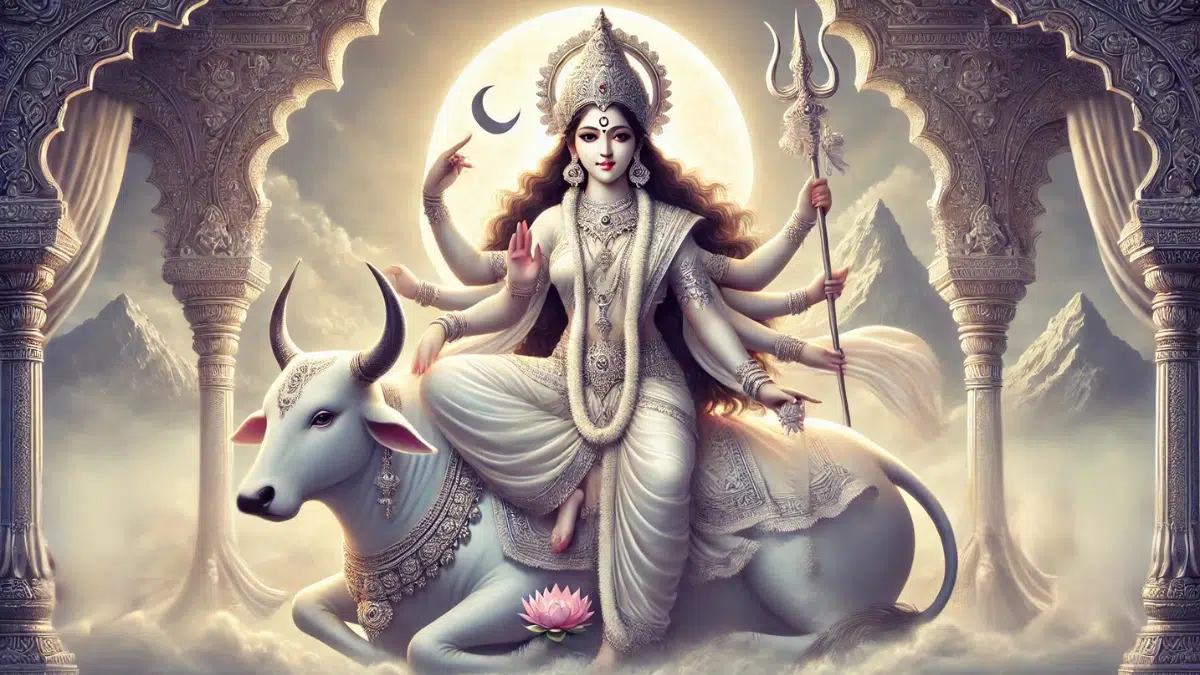
The Nine Forms of Navadurga
Durga’s nine forms, known as Navadurga, highlight her diverse qualities. These forms represent different aspects of her power and guidance.
- Shailaputri: This first form means “Daughter of the Mountain.” She stands for strength, purity, and devotion.
- Brahmacharini: She teaches discipline and meditation, helping people stay calm and focused.
- Chandraghanta: She has a bright golden glow and a crescent moon on her forehead. She shows courage and readiness to fight evil.
- Kushmanda: She creates the universe and brings energy, light, and life to the world.
- Skandamata: With her son Kartikeya, she shows motherly love and protection, always guiding her devotees with care.
- Katyayani: She is a strong warrior who helps people overcome their fears and problems.
- Kalaratri: Known for destroying darkness, she teaches fearlessness and clears away negativity.
- Mahagauri: She is calm, pure, and peaceful, teaching forgiveness and kindness.
- Siddhidatri: Her final form gives wisdom and success, completing the journey of learning and self-discovery.
Connection to the Divine Feminine
Durga embodies Shakti, the divine feminine energy in Hinduism.
Shakti represents creation, transformation, and balance. Durga’s energy connects her to other goddesses like Kali and Saraswati. Exploring these goddesses offers a deeper understanding of Hindu beliefs about feminine power.
Depictions of Goddess Durga
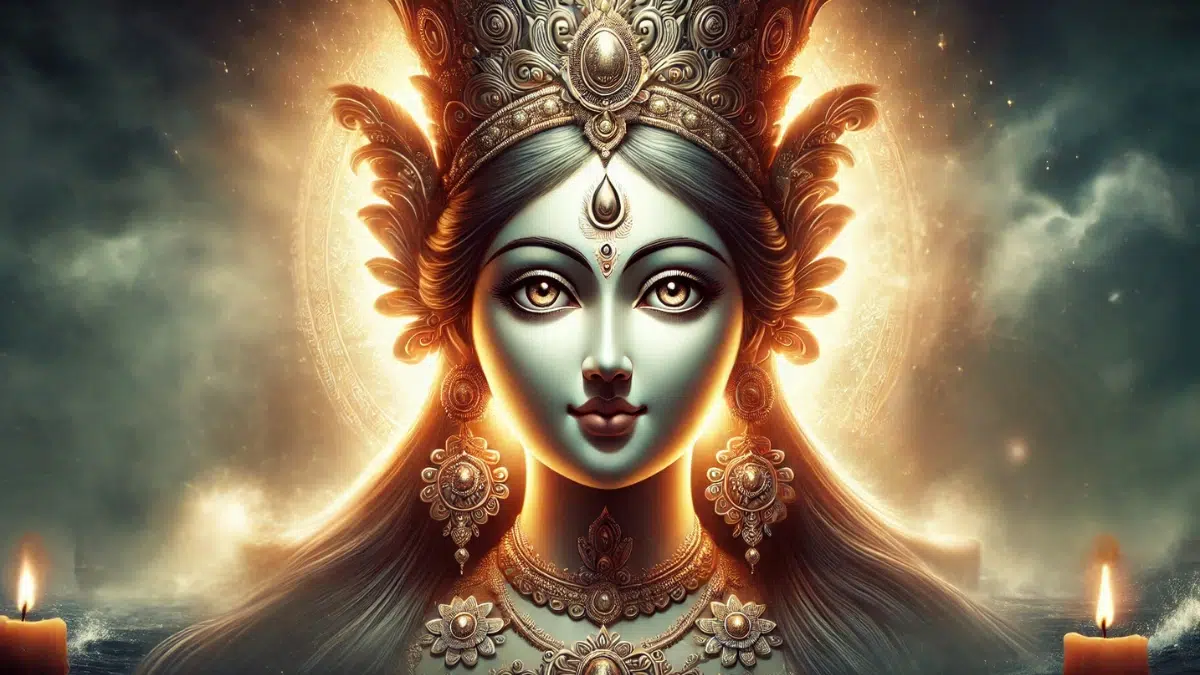
Durga, the fierce and powerful goddess, is often depicted in various forms and manifestations.
Many of the deities in Hinduism are depicted with multiple arms. This is a symbol of their power and ability to perform multiple tasks simultaneously.
The Radiant Face of Durga
Durga’s face glows with calmness, even in battle. Her serene expression shows balance and inner peace. Her appearance is striking and symbolic, reflecting her divine attributes and role as a protector against evil forces.
She teaches that strength does not need anger or aggression. Her calmness encourages us to approach challenges with focus and composure.
Durga’s Lion or Tiger Companion
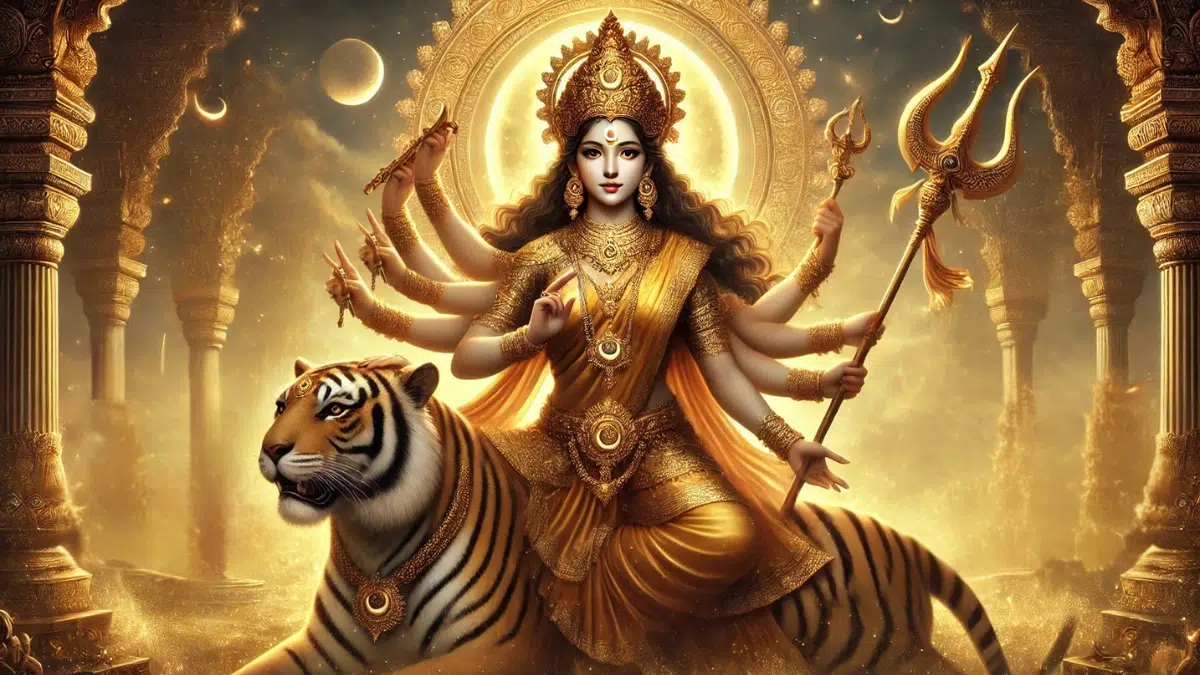
Durga rides a lion or tiger, symbolizing courage and control over power. This symbolizes her resolve to combat evil and protect righteousness. These animals represent strength and wild energy. By riding them, Durga shows mastery over fear and chaos.
The Many Arms of Durga
Durga’s many arms hold weapons gifted by the gods, each with special meaning. These arms symbolize her immense power and divine capabilities.
The trident represents courage, while the conch symbolizes divine sound. Her numerous arms show her ability to protect and multitask, reminding us to balance responsibilities with strength.
With her many arms, Durga can protect and provide assistance to her devotees from all directions, ensuring their safety and well-being.
Symbolic Weapons
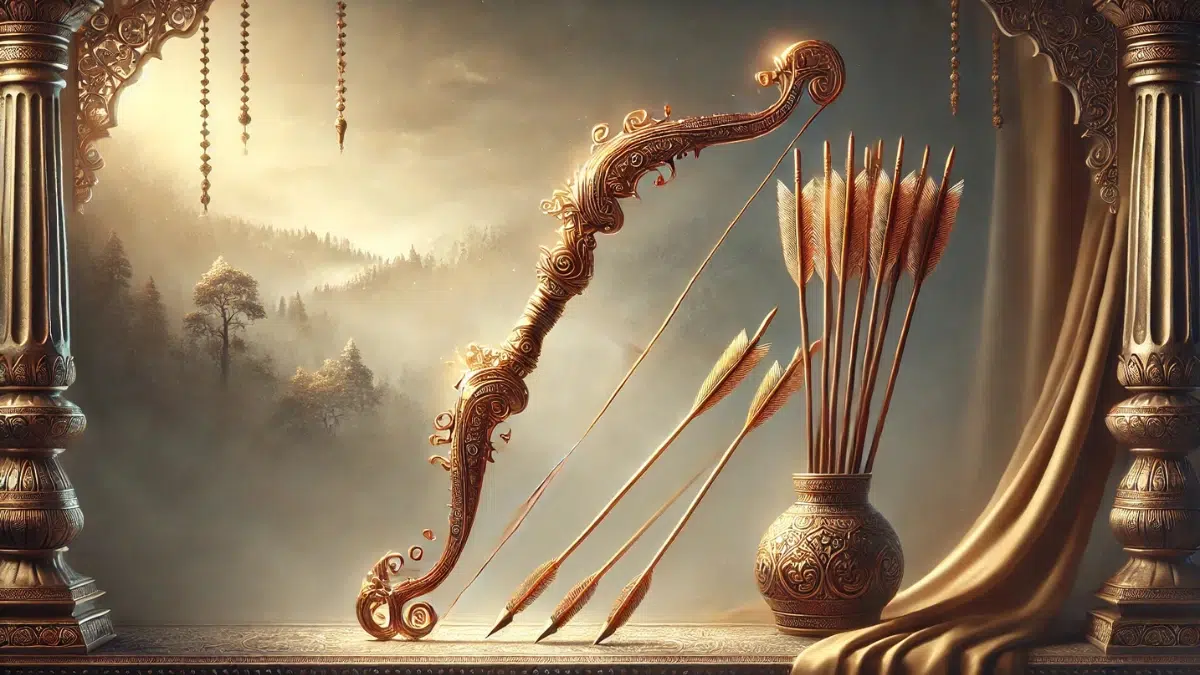
Every arm of Durga adorns a specific weapon, each carrying its own symbolic meaning. These weapons represent her formidable strength, as well as her ability to vanquish evil and protect the righteous. Every weapon she holds carries a message, reminding us to face challenges with confidence.
Some of the symbolic weapons associated with Durga include:
- Spear (Trishula): Represents the destruction of ego and negative tendencies.
- Sword (Khanda): Symbolizes knowledge and the cutting through of ignorance.
- Bow and Arrows (Dhanush and Ban): Signify determination and focused intent to defeat evil.
- Shield (Khetaka): Offers protection from harm and negative influences.
- Thunderbolt (Vajra): Represents irresistible force, strength, and illumination.
- Conch Shell (Shankha): Symbolizes the divine sound that resonates throughout the universe, dispelling negativity.
These symbolic weapons showcase Durga’s readiness to confront any obstacle or threat, ensuring the triumph of good over evil.
The artistic depictions of Durga encapsulate her divine essence and serve as a visual representation of her power, protection, and unwavering determination. Through her appearance, Durga encourages her devotees to uphold righteousness, fight against evil, and seek her divine blessings.
The Myths and Legends of Hindu Goddess Durga
Durga’s story is narrated in the Devi Mahatmya.
The Devi Mahatmya, also called the Durga Saptashati or Chandi Path, is a sacred Hindu text dedicated to the goddess Durga.
The text is divided into three main sections (or episodes). Each describes Durga’s battles and victories over powerful demons.
- Madhu and Kaitabha: Vishnu invokes the goddess to defeat these demons
- Mahishasura: Durga defeats Mahishasura, the buffalo demon
- Shumbha and Nishumbha: Durga defeats these brothers
The text is one of the most important scriptures in Shaktism, a tradition focused on worshipping the goddess. Durga’s ultimate goal is to restore balance in the universe and empower creation.
The Battle Against Mahishasura
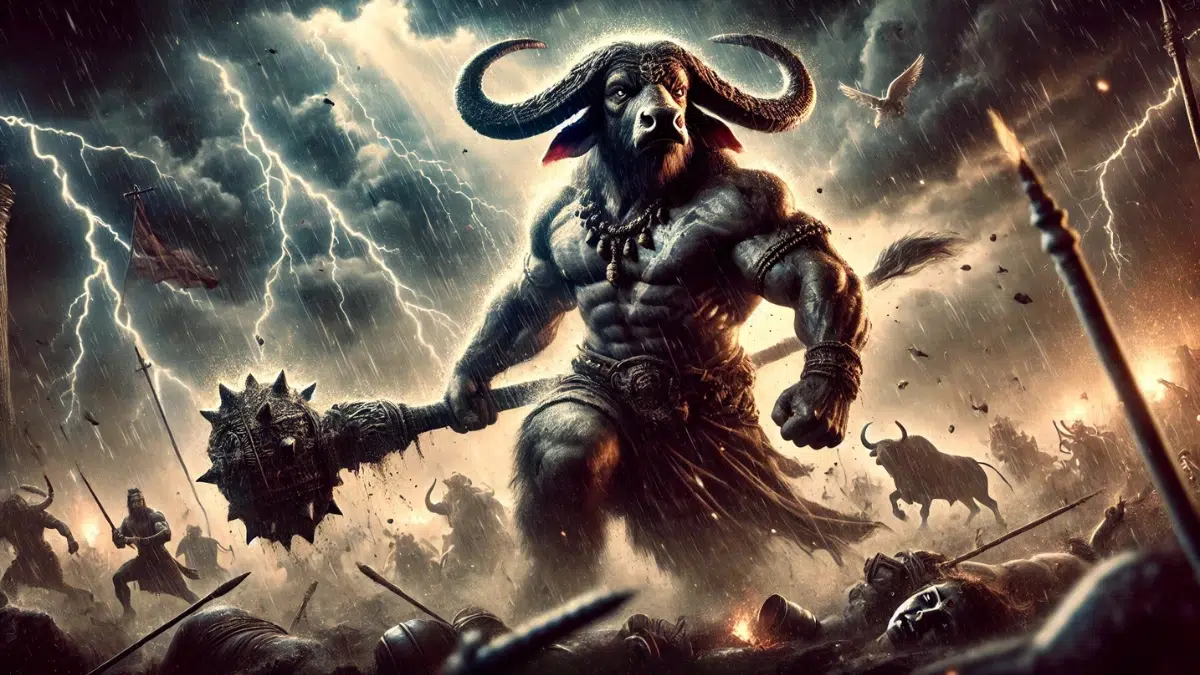
This is the most famous legend of Durga. Mahishasura, the buffalo demon, gains immense power and cannot be defeated by men. Drunk with arrogance, he attacks the gods, spreading fear and chaos.
Desperate to restore balance, the gods combine their energies to create Durga, the divine warrior. Durga receives weapons from each god, including a trident, bow, sword, and discus, making her unstoppable.
Riding a lion, Durga meets Mahishasura on the battlefield. Their fight lasts for days, with Durga defeating every form Mahishasura takes. Finally, she pierces him with her trident, ending his reign of terror.
This victory shows the power of courage, unity, and divine energy to overcome evil. People celebrate this story during Durga Puja, honouring her strength and protection through prayers, processions, and joyous festivities.
Her triumph continues to inspire faith and hope in the fight against darkness.
This victory symbolizes the triumph of good over evil and is celebrated during Durga Puja.
Durga’s Role in Restoring Peace
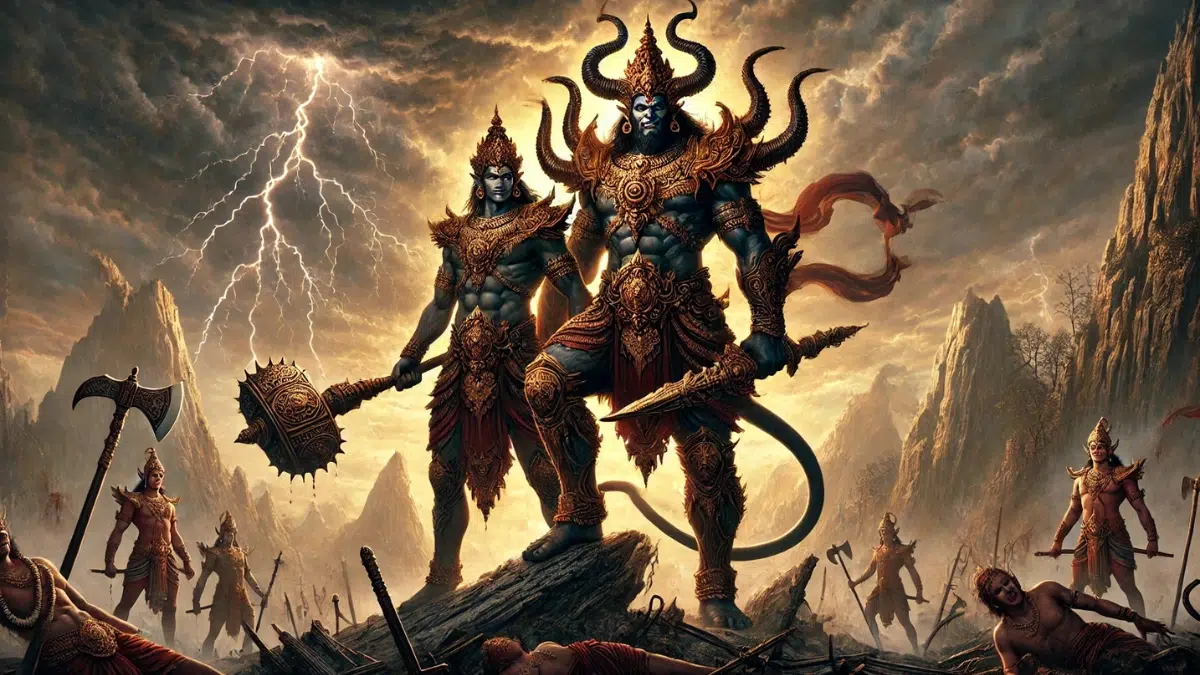
Durga works to bring balance and peace to the world. In one legend, two powerful demons, Shumbha and Nishumbha, cause trouble in the heavens and on Earth.
The gods ask Durga to help stop them. Durga, full of courage and wisdom, uses her special weapons to fight the demons. She does not back down, showing strength and clever thinking to defeat them both.
After the battle, peace returns, and everyone feels safe again. This story shows how Durga protects justice and keeps harmony. People celebrate her bravery during Navratri, remembering how she stood strong to restore balance.
Her story teaches us to be strong, wise, and determined when facing challenges.
Durga and the Demon Raktabija
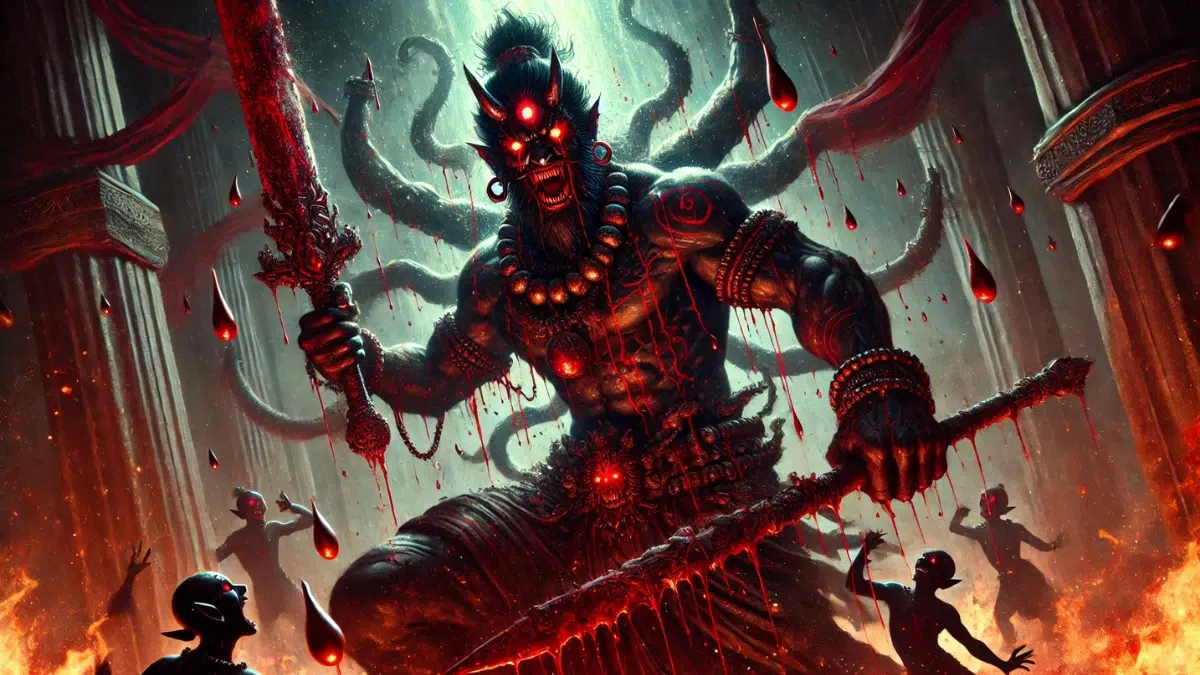
Raktabija is a dangerous demon with a special power. Every time a drop of his blood touches the ground, a new demon appears. This makes him almost impossible to defeat.
When Durga faces Raktabija in battle, she uses her fierce and clever form, Kali, to stop him. Kali opens her mouth wide and drinks every drop of blood before it can fall.
This brilliant plan prevents more demons from forming. With her quick thinking and fierce energy, Durga defeats Raktabija and ends his threat to the world.
This story shows how using strategy and focus can solve even the toughest problems. It reminds us that clever ideas and determination are just as important as strength. Devotees celebrate this victory as an example of Durga’s ability to protect the world from evil.
The Creation of the Universe
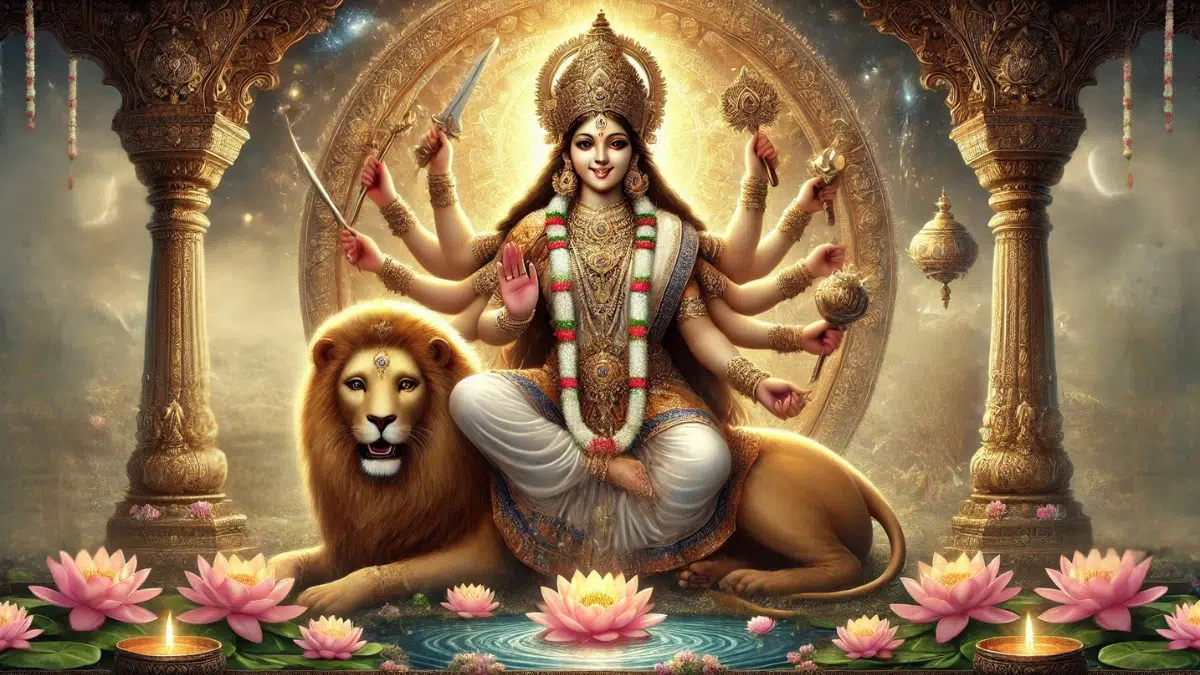
In some myths, Durga appears as Kushmanda, a goddess with a radiant smile that lights up the universe.
With her brilliant energy, she creates the stars, planets, and all forms of life. Her smile fills the cosmos with warmth, bringing life and balance to every corner. Kushmanda nurtures the universe like a mother caring for her children, showing her loving and creative nature.
This story reminds us how important it is to care for the world around us. It also shows that even small actions, like a smile, can make a huge difference. Devotees honour Kushmanda during Navratri as a symbol of creation and positivity.
Her role as the creator inspires people to appreciate life and work towards making the world a better place.
Durga and the Return to Earth

In Bengali mythology, Durga comes to visit her earthly home once every year during Durga Puja.
She brings her children—Lakshmi, Saraswati, Kartikeya, and Ganesha—to stay with her. People believe this is her time to be with her family and devotees.
The visit fills homes and hearts with love, joy, and blessings. Communities create grand idols of Durga and her children, holding celebrations full of music, dancing, and delicious food.
When the festival ends, Durga returns to her heavenly home, leaving everyone inspired by her presence. This story shows the deep bond between Durga and her devotees. It reminds people to celebrate love, family, and togetherness.
During Durga Puja, communities come together to honour this visit with devotion and happiness, making it a time of great joy and unity.
Celebrating Durga, Hindu Goddess

The celebration of Durga is marked by two significant events: Navratri and Durga Puja.
These festivities hold deep cultural and religious significance, offering devotees a chance to honour Durga’s battle against evil forces and celebrate the victory of good over evil.
Navratri: The Nine-Night Festival
Navratri is a special Hindu festival that lasts nine nights and ten days. The word “Navratri” means “nine nights” in Sanskrit. It happens every year in autumn, starting on the first new moon.
During this festival, people celebrate Durga’s victory over the demon Mahishasura. This story shows how good always wins over evil. Communities come together to sing, dance, and wear colourful clothes. Joy fills the air as everyone honours Durga’s strength and kindness.
Each night of Navratri is dedicated to one of Durga’s nine forms, called Navadurga. Devotees pray, fast, and recite hymns to show their devotion. Many people ask for Durga’s blessings for good health, success, and peace.
Navratri is not just about rituals—it’s a time to celebrate faith, community, and the goddess who protects the world. It’s a joyful reminder to stay strong and believe in the power of good.
Durga Puja: A Celebration of Strength and Joy
Durga Puja is a special festival during Navratri, celebrated with great excitement in Bengal, India. It honours Durga’s victory over evil and showcases Bengal’s rich culture.
Beautiful clay statues of Durga and her children are placed in colourful pandals (temporary structures). People visit these pandals to pray, offer flowers, and ask for blessings.
The festival includes lively processions, traditional dances, cultural performances, and music. Families and friends gather to enjoy the celebrations, sharing food and laughter.
Durga Puja is a joyful time, bringing communities together to honour the goddess’s strength, beauty, and grace.
Here is a table summarizing the key aspects of Navratri and Durga Puja:
| Aspect | Navratri | Durga Puja |
|---|---|---|
| Date | First new moon of autumn | Varies (usually in September or October) |
| Duration | 9 nights and 10 days | 4-5 days (varies) |
| Significance | Honouring Durga’s battle against evil forces | Triumph of good over evil |
| Activities | Reenactments, fasting, recitation of scriptures, dancing | Display of clay statues, pandal visits, cultural performances |
How to Honour Hindu Goddess Durga in Daily Life
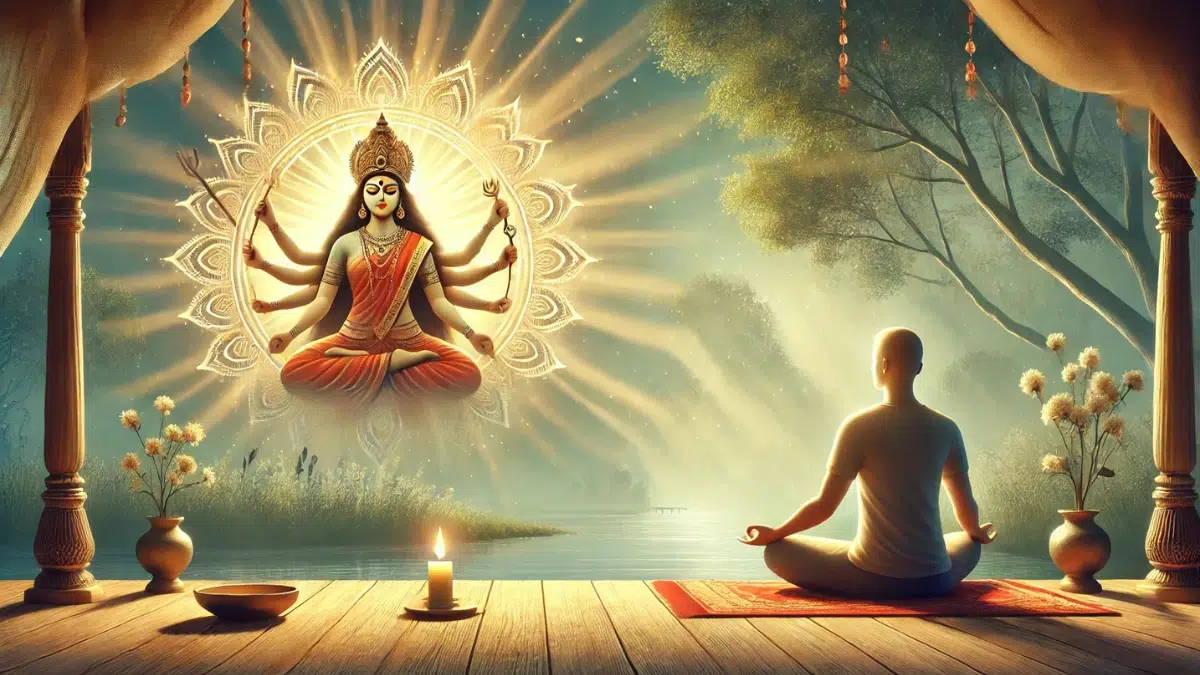
Applying Durga’s lessons in daily life involves practicing courage, kindness, and balance. Small acts of bravery and compassion reflect her energy. Meditating on her image can bring focus and clarity to challenging situations.
What Durga Teaches Us
Goddess Durga, strong and fearless, teaches us important lessons beyond her battles against evil. She shows us how to bring balance to the world, get rid of bad habits, and find harmony in life.
Durga reminds us to let go of negative behaviours, like anger or selfishness, and connect with our inner goodness. When we face our inner “demons” and work to become better, we can find peace and help others too. She teaches us that our actions affect the world around us, so making positive choices matters.
Durga also inspires us to look inside ourselves and remove anything that stops us from growing. By being brave, kind, and fair, we can create balance in our lives and in the world.
Her lessons show us that real strength comes from within—through courage, kindness, and doing what’s right. By following her example, we can live in harmony with the world and the universe.
The Teachings of Hindu Goddess Durga
- Brings peace to the world: Durga helps restore harmony when things go wrong
- Stops bad habits: She shows us how to let go of behaviours that hurt ourselves or others
- Reconnects with our true self: Durga reminds us to find the goodness and strength within us
- Defeats negativity: She inspires us to fight fears, anger, and other negative feelings
- Shows how actions affect others: Durga teaches us that everything we do can impact the world around us
- Finds inner calm: She encourages us to look for peace and happiness in our hearts
- Builds good qualities: Durga helps us grow stronger, kinder, and braver
- Makes the world better: By following her lessons, we can spread goodness everywhere
- Teaches courage and kindness: Durga inspires us to be strong and care for others
- Creates balance in life: She shows us how to live in harmony with ourselves and the world
Goddess Durga and Yoga
Yoga can help people connect with the powerful energy of Goddess Durga through meditation. By focusing on Durga during meditation, individuals can feel her strength and courage, especially during tough times.
Meditating on Durga allows people to bring her qualities into their lives, such as bravery, resilience, and inner power. This practice inspires them to face challenges with confidence and grow stronger from within.
Durga’s teachings are also part of goddess yoga, a type of yoga that honours divine feminine energy. This special form of yoga helps people feel empowered, express themselves, and connect with the powerful energy inside them.
Conclusion
The Hindu goddess Durga remains a timeless symbol of strength and protection. Her stories inspire courage, her festivals unite communities, and her teachings guide us to live with purpose.
Durga’s epic battles and teachings inspire individuals to tap into their inner power, eliminate negative qualities, and restore harmony in the universe. Her worship exemplifies the enduring power of the divine feminine in Hindu culture.
Through Durga’s mythological stories, devotees learn valuable lessons about courage, resilience, and determination. As a symbolic warrior, she embodies the divine strength needed to overcome obstacles and protect the righteous. Durga’s multiple arms and iconic weapons signify her readiness to defend and shield her devotees from all directions.
Within Hindu mythology, Durga holds a revered position as the ultimate embodiment of protection and divine power. Her worship during festivals like Durga Puja and Navaratri highlights her influential role in the lives of devotees. By emulating the virtues and teachings of Durga, individuals strive to establish a balanced and harmonious existence, guided by her unparalleled courage and strength.