

Hestia: The Forgotten Goddess Who Held Olympus Together
In Greek mythology, most gods chase power, glory, or war. But Hestia chooses something different—peace. She doesn’t ride a chariot or carry a weapon. Instead, she tends the hearth fire and protects the home. She brings calm to a world full of chaos. Her story reminds us that quiet strength matters just as much as loud action.
In Greek mythology, Hestia is the quiet power behind every flame. She doesn’t fight wars or chase glory. Instead, she guards the hearth—the centre of every home, temple, and city. Her warmth brings peace, safety, and a sense of belonging.
Hestia’s Origins: The Firstborn Olympian
Hestia is the first child of Cronus and Rhea, two powerful Titans in Greek mythology. This makes her the oldest of all the Olympian gods. But her beginning is not peaceful.
Cronus, her father, fears that his children will one day rise up against him. To stop this, he swallows each one as soon as they are born. Hestia is the first to be swallowed.
Later, her younger brother Zeus is born and hidden by their mother, Rhea. When he grows strong, Zeus gives Cronus a special potion that makes him vomit up his children.
Hestia comes out last, making her the firstborn and the last freed. That strange detail sets her apart from the beginning. While the other gods fight for thrones and power, Hestia chooses a quieter path.
She becomes the goddess of the hearth, which is the sacred fire at the centre of every home and temple. She represents family, peace, and community. She does not join in arguments or battles. Instead, she stays close to the fire, bringing comfort and warmth.
Hestia’s story reminds us that leadership does not always mean control. She shows that being first does not require being loud. In fact, it can mean being steady and dependable. As the oldest of the Olympians, she sets the tone for calm, order, and care.
Hestia’s Sacred Oath
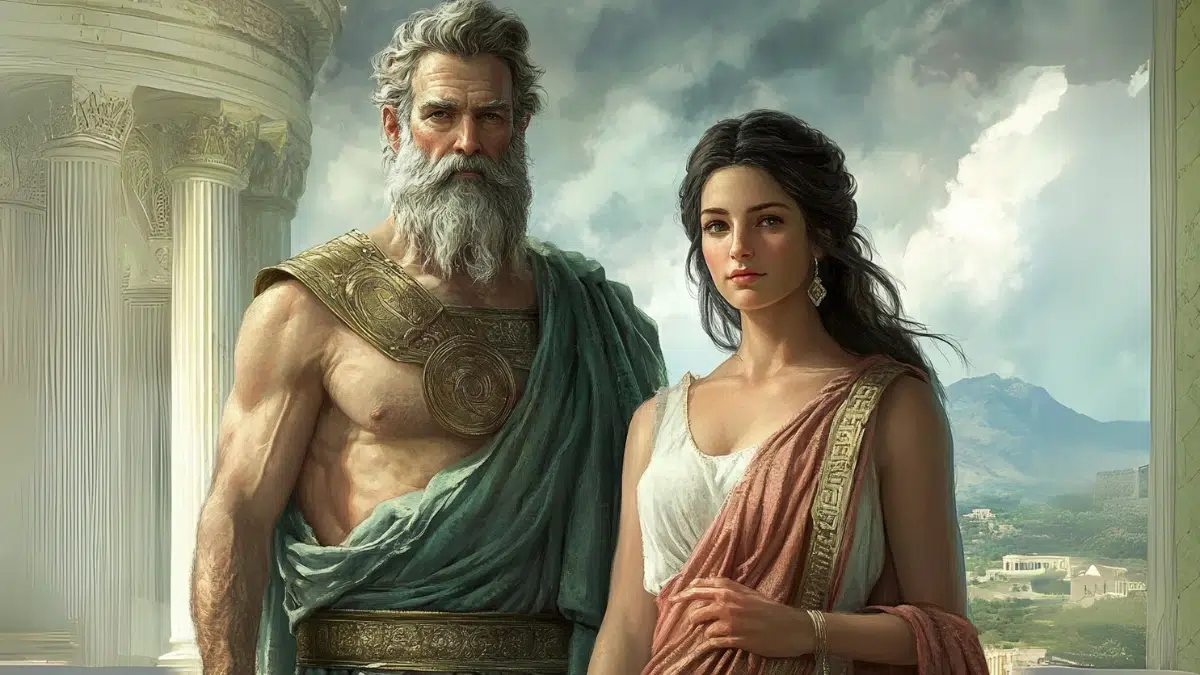
In Greek mythology, many gods chase love, marriage, or power through romance. But Hestia makes a different choice. Two powerful gods—Apollo and Poseidon—both ask to marry her. Either match would bring status and influence. But Hestia does not want that life.
She chooses peace, independence, and devotion instead. She goes to Zeus, the king of the gods, and makes a sacred promise. She swears an oath to remain a virgin forever. In return, Zeus honours her choice and allows her to stay at the centre of Mount Olympus, tending the sacred fire.
Hestia’s oath shows strength, not weakness. She is not afraid—she simply knows her purpose. She wants to serve the gods, protect the hearth, and bring harmony without distraction. She does not need marriage or children to feel complete.
This vow makes her one of the three virgin goddesses, alongside Athena and Artemis.
But unlike them, Hestia avoids conflict. She brings people together rather than standing apart from them.
Her oath is more than a promise—it becomes her power. By saying no, she creates space for peace, home, and belonging. In a world of storms and struggle, Hestia stands for calm, steady light.
The Goddess Who Refuses the Throne
Hestia once holds a seat among the Twelve Olympians, the main gods of Mount Olympus. She earns her place not through battle or trickery, but through her importance to daily life. As the goddess of the hearth, she stands for peace, home, and unity. She brings calm to a mountain filled with pride, rivalries, and endless drama.
But Hestia is not interested in power. When the young god Dionysus rises to fame, a choice must be made. The council of gods has room for twelve. To make space, one god must step aside. Hestia gives up her throne willingly.
This act sets her apart. Most gods fight to be seen. They compete for attention and worship. But Hestia steps back, not because she is weak, but because she knows her worth does not come from a throne. Her role continues—quiet, sacred, and essential.
Even without a seat at the table, Hestia remains one of the most respected gods. Every meal, every prayer, and every offering begins and ends with her. No matter what happens on Olympus, her fire keeps burning.
This choice shows her deep wisdom. She teaches that letting go is not a loss. Sometimes, stepping aside is the most powerful move. Hestia’s strength lies in service, not control. She reminds us that real power can be gentle, steady, and full of care.
Myths and Meaning: Hestia’s Role in Daily Life
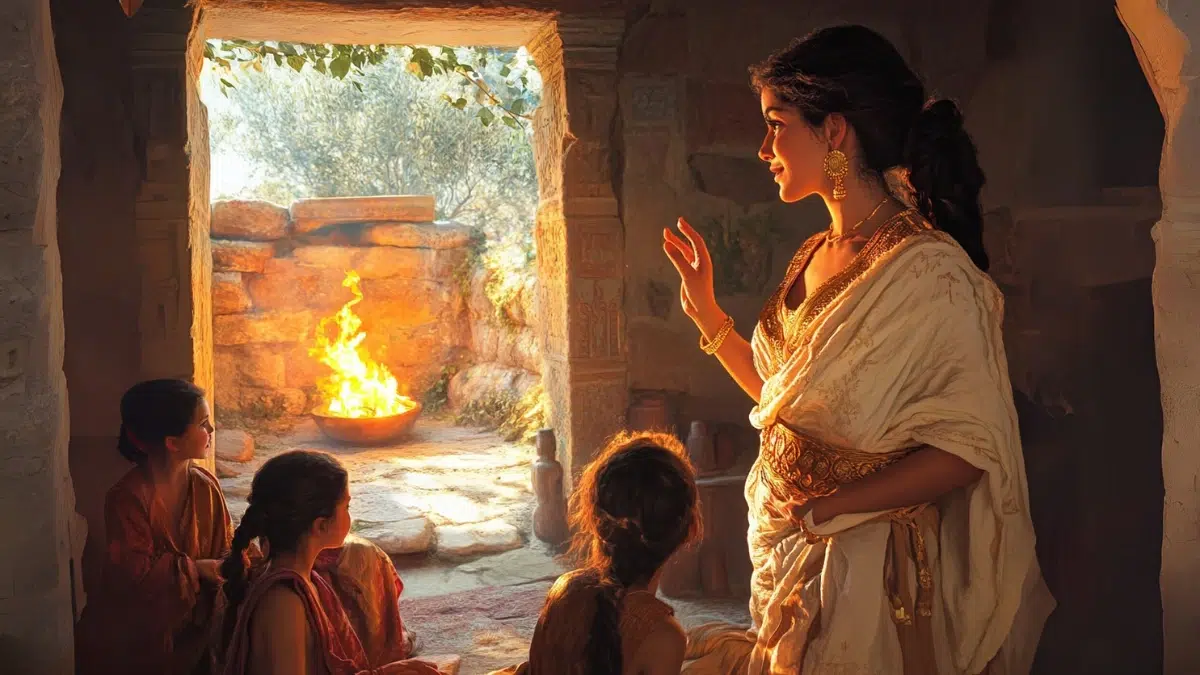
Unlike many Olympian gods, Hestia has very few dramatic myths. She does not chase lovers, fight monsters, or lead armies. Yet, she plays one of the most important roles in Greek life. Her presence is quiet but constant—woven into everyday actions.
Hestia is the goddess of the hearth, the sacred fire at the centre of every home and temple. In ancient Greece, the hearth is more than just a place to cook. It is where families gather, tell stories, share meals, and honour the gods. The fire represents life, unity, and belonging. Without it, the home feels cold and empty.
Every family offers the first and last part of each meal to Hestia. This small gesture shows respect and thanks. It also reminds people to honour peace and care above conflict. When a baby is born, the family carries the child around the hearth to welcome them into the household. When people move to a new place, they bring a flame from the old hearth to light the new one. This act links their past to their future.
Hestia also watches over the public hearths of cities and temples. These fires burn day and night. If the flame goes out, people believe it brings misfortune or disconnection. Keeping the fire alive means keeping the people united.
Though her stories are few, Hestia’s meaning runs deep. She stands for warmth, community, and steady devotion. Her fire burns at the heart of both family and state, offering comfort in a world full of chaos and change.
Why Hestia Still Matters

In a world filled with loud voices and bold actions, Hestia stands out by staying still. She does not seek the spotlight. She does not demand attention. Yet her presence shapes the heart of Greek life. She shows that quiet roles can hold great power.
Hestia reminds us that not all strength looks the same. Some people lead through action. Others lead through care, calm, and consistency. She teaches that home, peace, and belonging matter as much as victory or fame. Without her, the gods would have no warmth, no shared space, and no daily rituals.
Even today, Hestia’s message feels clear. We all need a centre—a place where we feel safe and grounded. Whether it’s a real hearth, a group of loved ones, or a moment of peace in a busy day, that space matters. Hestia is that space.
She also shows us the value of service over status. By giving up her throne, she keeps her purpose. By tending the fire, she supports everyone else. She reminds us that leadership can mean helping others shine.
Hestia’s myths may be few, but her impact is lasting. Every flame that brings people together carries a bit of her spirit. Every act of care, calm, or welcome continues her legacy.
In a world that often rewards noise, Hestia teaches the strength of silence. She doesn’t rule with force—she rules through warmth, trust, and quiet devotion. And that kind of strength never fades.
Conclusion
Hestia may not star in dramatic myths, but her presence holds everything together. She shows that true power can be calm, steady, and kind. Every home, every temple, and every fire owes something to her. In a world full of storms, Hestia is the flame that never fades.