Greek Mythology Movies Showcasing Archers
Greek mythology, a bedrock of classical literature, radiates with deities, heroes, and beasts entwined in epic narratives.
It reflects ancient Greek culture, explaining the mysteries of the universe and conveying moral lessons through rich storytelling.
Within these legends, archers occupy a significant role, symbolizing attributes like precision, foresight, and the human struggle against fate.
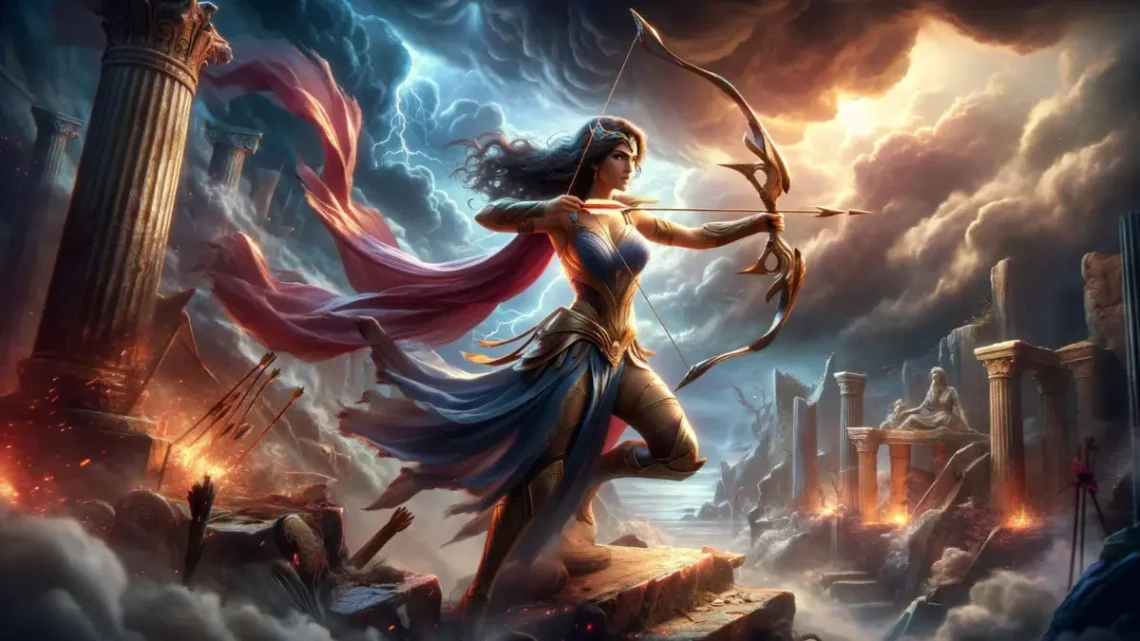
The demigod Hercules and huntress Artemis are celebrated archers, depicted with bows, showcasing their strength and skill.
10 Greek Mythology Movies
Greek mythology movies often feature archers, given the significance of archery in ancient Greek culture and myth.
Here’s a list of movies that showcase characters skilled in archery, inspired by Greek mythology:
- Troy (2004) – The movie depicts the legendary Trojan War and includes various heroes, like Paris from Greek mythology.
- Immortals (2011) – This film presents a highly stylized version of Greek mythology, with Theseus as the protagonist. It features gods and mortals in battle, with some scenes highlighting archery.
- Clash of the Titans (2010) and its sequel Wrath of the Titans (2012) – These films focus on the adventures of Perseus and include archery scenes.
- 300 (2006) and 300: Rise of an Empire (2014) – These films depict the famous Battle of Thermopylae and the Persian Wars. Including scenes where Persian archers play a significant role against the Greek hoplites.
- Jason and the Argonauts (1963) – An older film that covers the quest for the Golden Fleece. It includes elements of Greek mythology and archery scenes.
- The Odyssey (1997) – Miniseries based on Homer’s epic includes various mythological figures and moments where archery is pivotal. Notably in the challenge to string Odysseus’ bow.
- Helen of Troy (1956) – This film focuses on the beauty of Helen that sparked the Trojan War. It includes various scenes of archery scenes and is based in Greek mythology.
- Ulysses (1954) – This adaptation of Homer’s The Odyssey focuses on the journey of Odysseus back to Ithaca. It includes the famous scene where Odysseus strings his bow to win back his wife, Penelope.
- The Warrior’s Husband (1933) – This lesser-known film is set in a mythical Amazon society. It draws upon Greek mythology’s Amazons, known for their archery skills.
Classic Greek Mythology Movies
Troy (2004)
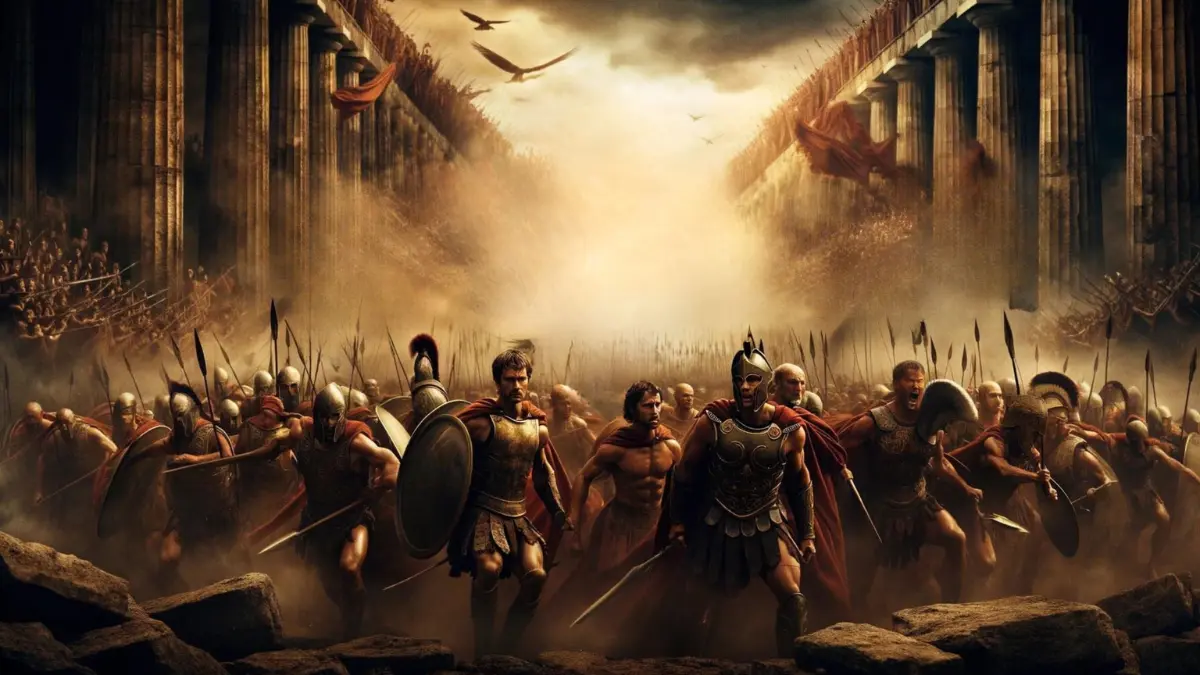
Troy is an epic historical war film and is loosely based on Homer’s Iliad, focusing on the decade-long Trojan War and its key figures.
The narrative centers around the conflict that erupts after Paris, Prince of Troy, elopes with Helen, Queen of Sparta, leading to the Greeks launching a vast military expedition against Troy. The film delves into the personal and political motivations behind the war.
It highlights the clashes between Achilles, the greatest warrior of the Greeks, and Hector, the noble prince of Troy. This is against the backdrop of gods, destiny, and the quest for glory and honour.
Troy is renowned for its grand scale, featuring large-scale battle scenes, intricate set designs, and an ensemble cast. The film explores themes of love, revenge, fate, and the tragic consequences of pride and ambition.
While it takes creative liberties with the source material, Troy attempts to humanize its legendary characters.
Characters and Actors
- Achilles (played by Brad Pitt): The greatest warrior of the Greeks, whose quest for eternal glory leads him to the Trojan War.
- Hector (played by Eric Bana): The noble prince of Troy, renowned for his bravery and sense of duty, who leads the defense of his city.
- Paris (played by Orlando Bloom): The young Trojan prince whose love affair with Helen sparks the war.
- Helen (played by Diane Kruger): The Queen of Sparta, known as the most beautiful woman in the world, whose elopement with Paris triggers the conflict.
- Agamemnon (played by Brian Cox): The ambitious king of Mycenae who uses the war as a pretext to expand his empire.
- Menelaus (played by Brendan Gleeson): The King of Sparta, Helen’s husband, whose desire for revenge against Paris and Troy drives part of the conflict.
- Odysseus (played by Sean Bean): The king of Ithaca, famed for his wisdom and cunning, who plays a key role in the Greek strategy against Troy.
- Priam (played by Peter O’Toole): The venerable king of Troy, father of Hector and Paris, who faces the ultimate test of his reign during the siege.
Troy sought to showcase ancient Greek warfare’s epic scale and heroism, blending action with character depth. Critics noted deviations from the epic and inaccuracies but lauded its visual spectacle, acting, and bold narrative.
The film stands as a key historical and mythological epic, providing a contemporary take on a timeless tale.
Learn more about:
- The Trojan War: Heroic Figures and Myths
- Achilles: Greek Warrior Hero’s Journey
- Hector of Troy: Legendary Trojan Warrior
- Paris: Tragic Hero, Villain or Pawn of the Gods
Wrath of the Titans (2012)
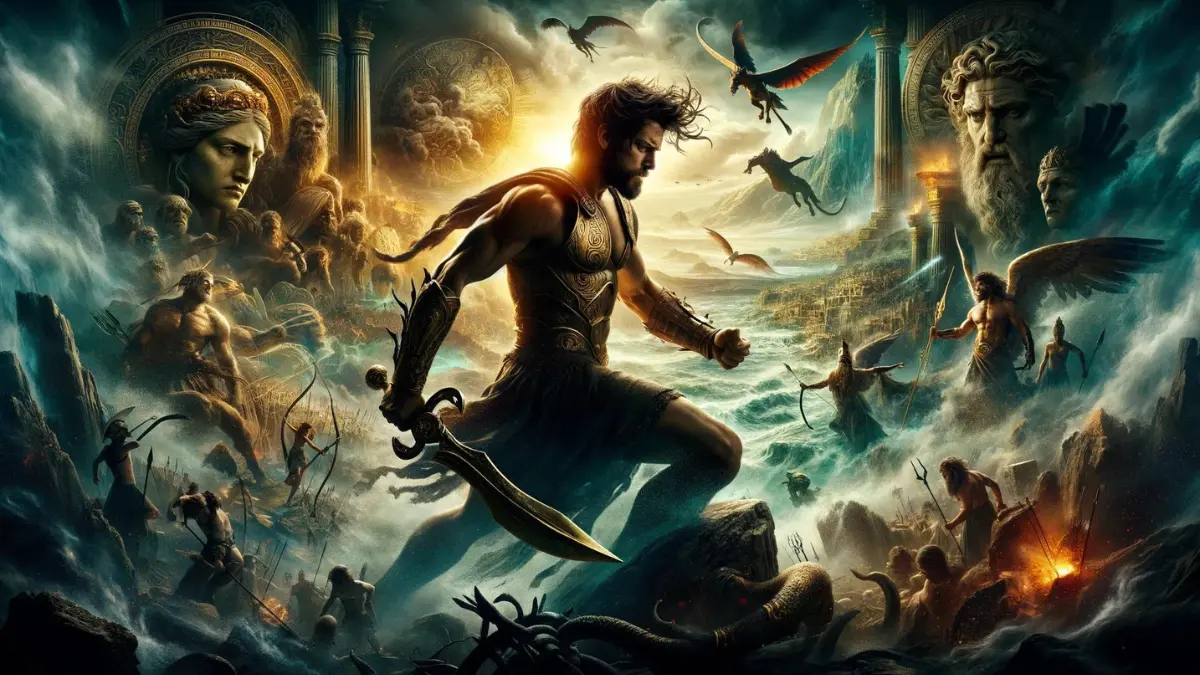
A decade later, Perseus, Zeus’s demigod son, ventures into the underworld to save Zeus, defeat the Titans, and rescue humanity. Ares and Hades, Zeus’s son and brother, have captured and weakened him, plotting to unleash the Titans under Kronos.
Perseus must overcome various monsters and challenges to prevent the Titans from reclaiming power and destroying the world. Wrath of the Titans delves deeper into the mythological world, introducing more gods, demigods, and mythical creatures.
The film emphasizes high-stakes action, elaborate special effects, and the complex relationships within the pantheon of Greek gods and heroes.
Characters and Actors
- Perseus (played by Sam Worthington): The protagonist, a demigod and the son of Zeus, who lives as a fisherman with his young son. He is called once again to action to save the world and the gods.
- Zeus (played by Liam Neeson): The king of the gods, father of Perseus, who is betrayed by his brother Hades and son Ares, leading to his capture.
- Hades (played by Ralph Fiennes): The god of the underworld, brother to Zeus and Poseidon, who initially allies with Kronos to gain more power but faces a crisis of conscience.
- Ares (played by Édgar Ramírez): The god of war, son of Zeus, who betrays his father to join forces with Hades and Kronos.
- Andromeda (played by Rosamund Pike): The queen of the humans and a warrior in her own right, she joins Perseus on his quest to save Zeus and stop the Titans.
- Hephaestus (played by Bill Nighy): The disabled god of fire and craftsmanship, who provides Perseus with the means to find and enter the underworld.
- Kronos: The leader of the Titans and father to Zeus, Hades, and Poseidon, who seeks to break free from his prison in Tartarus and destroy the world.
Despite mixed reviews from critics, who often cited its focus on spectacle over narrative depth, the film was appreciated for its imaginative portrayal of ancient myths and the performances of its leading actors.
Learn more about:
Overview of 300: Rise of an Empire (2014)
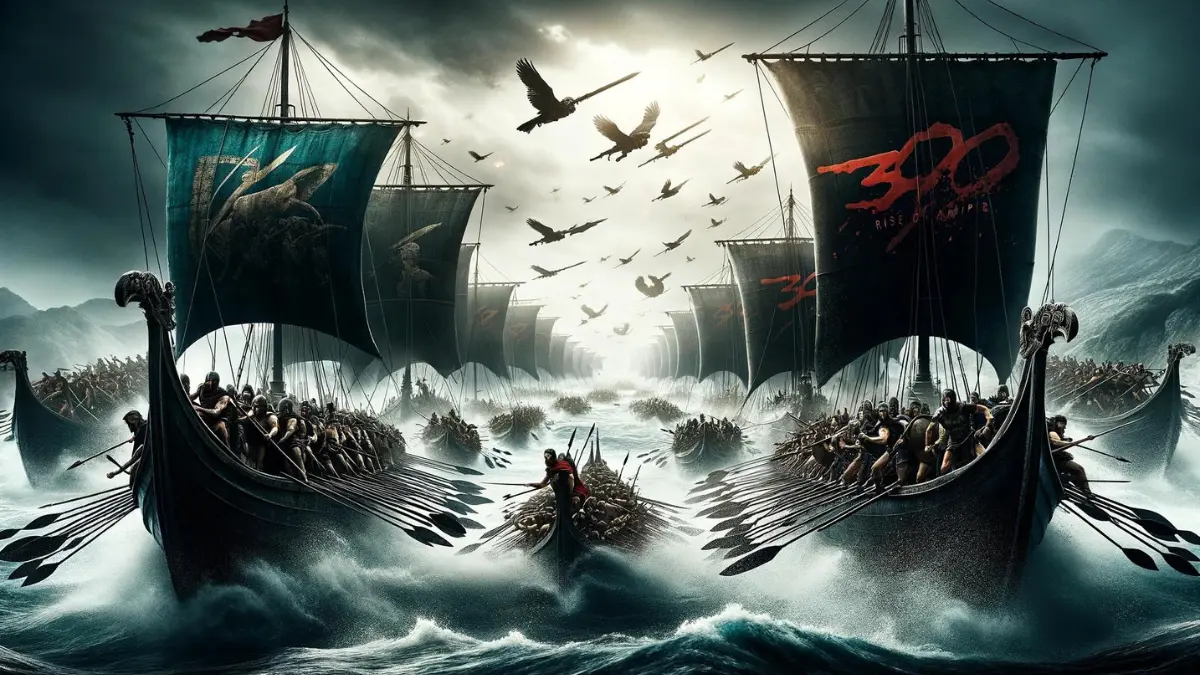
300: Rise of an Empire is a historical fantasy war film that serves as a sequel to the 2006 film 300. The film is loosely based on the Battle of Artemisium and the Battle of Salamis, with a narrative that runs parallel to and follows the events of the first film.
It tells the story of Greek general Themistocles as he attempts to unite all of Greece. This by leading the charge that will change the course of the war against the invading Persian forces.
Led by mortal-turned-god Xerxes, and Artemisia, the vengeful commander of the Persian navy. 300: Rise of an Empire delves into the backstories of key Persian characters. Thus offering a broader perspective on the Greco-Persian Wars.
Themes of freedom, unity, and revenge are explored against the backdrop of epic naval battles. There’s a focus on strategy, leadership, and the sacrifices made for victory.
Main Characters and Actors
- Themistocles (played by Sullivan Stapleton): The Athenian general and strategist who seeks to unite Greece against the Persian invasion.
- Artemisia (played by Eva Green): The commander of the Persian navy, seeking revenge against the Greeks for past injustices.
- Xerxes (played by Rodrigo Santoro): The Persian king who declares himself a god and seeks to conquer Greece as a means of avenging his father Darius.
- Queen Gorgo (played by Lena Headey): The Spartan queen who narrates part of the story and leads the Spartans to ally with the rest of Greece.
- Aeschylus (played by Hans Matheson): A Greek soldier who fights alongside Themistocles.
- Scyllias (played by Callan Mulvey): A skilled Greek warrior and father of Calisto.
300: Rise of an Empire maintains the first film’s visual style and grandeur, focusing on sea battles. It employs slow-motion fights, stirring speeches, and mythic grandeur to extend 300’s legacy.
Critics gave mixed reviews, applauding the visuals and Eva Green’s role but criticizing the story and character growth. Yet, the film attracted viewers craving thrilling action and stunning visuals, achieving audience success.
Modern Day Greek Mythology Inspired Movies
The Hunger Games (2012)

The Hunger Games is a dystopian science fiction film.
The story is set in a dystopian future in the nation of Panem. The Capitol exerts control over the 12 districts. They force them each to send a boy and a girl, known as “tributes,” to compete in the Hunger Games.
This is a televised event where the participants fight to the death until only one survivor remains. The film follows Katniss Everdeen, a young woman from District 12. She volunteers to take her younger sister’s place in the Games.
Alongside fellow District 12 tribute Peeta Mellark, Katniss navigates the dangers of the Arena. She forms alliances and facing ethical dilemmas, all while under the watchful eye of the Capitol.
The film has a compelling story, strong performances, and its visual and thematic depth. It sparked a highly successful film franchise, leading to three sequels that further explore the resistance against the Capitol’s tyranny.
Main Characters and Actors
- Katniss Everdeen (played by Jennifer Lawrence): The protagonist, a resourceful and skilled archer from District 12, who becomes a symbol of hope and resistance.
- Peeta Mellark (played by Josh Hutcherson): The male tribute from District 12, who has complex feelings for Katniss and plays a crucial role in their survival strategy.
- Gale Hawthorne (played by Liam Hemsworth): Katniss’s best friend from District 12, who represents her life outside of the Arena and her conflicted feelings.
- Haymitch Abernathy (played by Woody Harrelson): The only living Hunger Games victor from District 12, who becomes Katniss and Peeta’s mentor.
- Effie Trinket (played by Elizabeth Banks): The Capitol-appointed chaperone for District 12’s tributes, known for her flamboyant appearance and Capitol loyalty.
- President Snow (played by Donald Sutherland): The authoritarian ruler of Panem, who sees Katniss as a threat to his control.
Critics praised The Hunger Games for closely adapting the source material and lauded Jennifer Lawrence’s performance. Her role significantly boosted the film’s success.
The film’s shaky cam techniques, costume, and set design effectively crafted the dystopian world. As the first installment of a four-part series, it set the stage for an expansive saga. Exploring rebellion, warfare, and the personal cost of becoming a symbol for a cause.
Percy Jackson: Sea of Monsters (2013)
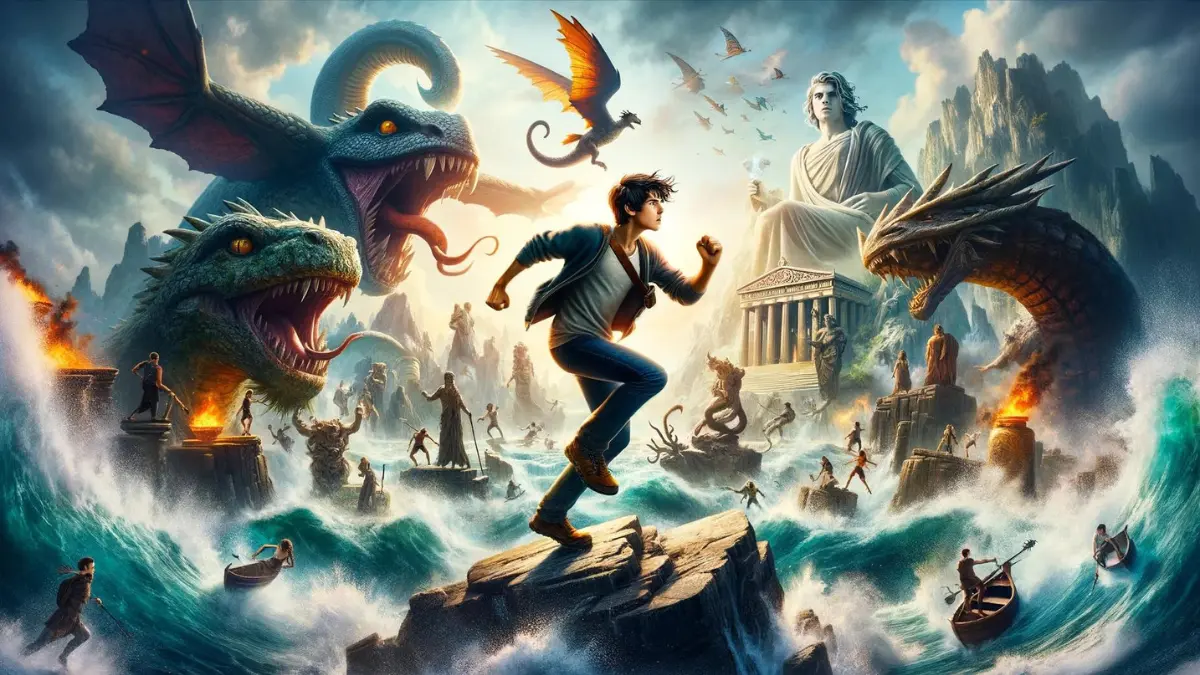
This is the second installment in the Percy Jackson & the Olympians film series, directed by Thor Freudenthal. The film, based on Rick Riordan’s Sea of Monsters, follows demigod Percy Jackson’s continued adventures.
Percy, Annabeth Chase, Grover Underwood, and Tyson, his cyclops half-brother, set off to find the Golden Fleece in the Sea of Monsters.
The Golden Fleece stands as their last hope to protect Camp Half-Blood, now exposed after its magical borders fail. Sea of Monsters ventures further into the mythological realm, introducing fresh gods, monsters, and hurdles.
It tackles themes of identity, friendship, courage, and acceptance, with Percy questioning his heroism and discovering familial loyalty’s essence.
The movie blends action, adventure, and comedy, targeting young viewers and modernizing Greek mythology for today’s world.
Main Characters and Actors
- Percy Jackson (played by Logan Lerman): The protagonist, a demigod son of Poseidon, who sets out on a quest to find the Golden Fleece.
- Annabeth Chase (played by Alexandra Daddario): Daughter of Athena, Percy’s close friend, and a skilled warrior.
- Grover Underwood (played by Brandon T. Jackson): A satyr and Percy’s best friend, who has been kidnapped, prompting the quest.
- Tyson (played by Douglas Smith): Percy’s cyclops half-brother, who joins the quest and brings his unique abilities to the team.
- Clarisse La Rue (played by Leven Rambin): Daughter of Ares and a fellow camper, who initially competes with Percy but eventually becomes an ally.
- Luke Castellan (played by Jake Abel): The primary antagonist, a demigod son of Hermes, who seeks to resurrect the titan Kronos and overthrow the gods.
Critics gave the film mixed reviews, pointing out deviations from the source material. They praised its special effects, action sequences, and young cast’s performances.
The movie aimed to capture the imaginative spirit of Rick Riordan’s novels, bringing to life the mythological creatures and epic quests that define the Percy Jackson series.
Immortals (2011)

Immortals is a visually stylized action-fantasy film. The film draws loosely from Greek mythology, focusing on Theseus, the Minotaur, and the Titanomachy.
Zeus chooses Theseus to lead the battle against King Hyperion, who seeks the powerful Epirus Bow. Theseus and his followers embark on a quest to thwart Hyperion, overcoming obstacles and unveiling his destiny.
Immortals captivates with its artistic visual style, employing elaborate sets and effects for a fresh mythological interpretation.
The narrative delves into faith, destiny, and moral conflict, amidst divine acts and grand battles. Blending myth with new twists, the film reimagines ancient Greece with gods, heroes, and mythical beings.
Characters and Actors
- Theseus (played by Henry Cavill): The mortal hero chosen by Zeus to lead the fight against Hyperion. A skilled warrior with a strong sense of justice.
- King Hyperion (played by Mickey Rourke): The film’s antagonist, a ruthless tyrant who seeks the Epirus Bow to destroy the gods and rule the world.
- Phaedra (played by Freida Pinto): An oracle priestess who joins Theseus on his quest, possessing the ability to see visions of the future.
- Zeus (played by Luke Evans): The king of the gods, who intervenes in mortal affairs while trying to uphold the law that gods should not directly interfere in human conflict.
- Athena (played by Isabel Lucas): The goddess of wisdom and warfare, daughter of Zeus, who supports Theseus and the gods in the battle against Hyperion.
- Poseidon (played by Kellan Lutz): The god of the sea, who aids Theseus and the gods in their fight against the Titans.
- Ares (played by Daniel Sharman): The god of war, involved in the divine conflict and the battle to protect the heavens from the Titans.
Immortals sought to bring a fresh and artistic perspective to Greek mythology.
The film’s production design, costumes, and visual effects were highlights, creating a unique aesthetic that set it apart from other films in the genre.
Critics gave “Immortals” mixed reviews, noting its departure from traditional myths and emphasis on visuals over story. Yet, they praised its broad ambition, dynamic action, and strong cast performances.
Learn more about:
Conclusion – The Timeless Allure of Greek Mythology Films
Whether you prefer the classics or modern day fantasy, Greek mythology movies transcend time.
Greek mythology films captivate audiences with their blend of epic tales, heroic deeds, and divine dramas.
These movies transport viewers to ancient worlds. Gods and mortals interact in stories that explore universal themes of love, betrayal, and heroism. Directors harness stunning visuals and compelling narratives to bring mythical legends to life.
The timeless appeal lies in the rich, imaginative landscapes and the complex characters that embody human virtues and flaws. Each film invites us into a fantastical realm.
Thus rekindling our fascination with mythology’s power to mirror and transcend the human experience.
Learn more about: