Lumine: The Traveler’s Story in Genshin Impact
Lumine does not begin her story in Teyvat.
She arrives as a traveler between worlds, moving freely across realms alongside her twin brother, Aether. That freedom ends when an unknown god intervenes, seals their powers, and tears them apart.
Lumine awakens alone in a foreign land.
Stripped of her strength and separated from the only person who shares her origin, she begins a search that will carry her across nations, through divine politics, and into the shadow of a fallen civilization.
Her journey is not only about reunion. It is about truth, identity, and the cost of defying the gods.
Lumine at a Glance
| Attribute | Details |
|---|---|
| Full Name | Lumine |
| Role | The Traveler |
| Origin | Otherworld traveler beyond Teyvat |
| Weapon | Sword |
| Element | Variable, resonates with multiple elements |
| Story Focus | Search for her twin and the truth behind Khaenri’ah |
| Personality | Observant, determined, quietly resilient |
| Symbolism | Light, stars, wandering hero archetype |
Lumine’s Origin Beyond Teyvat
Lumine does not belong to Teyvat.
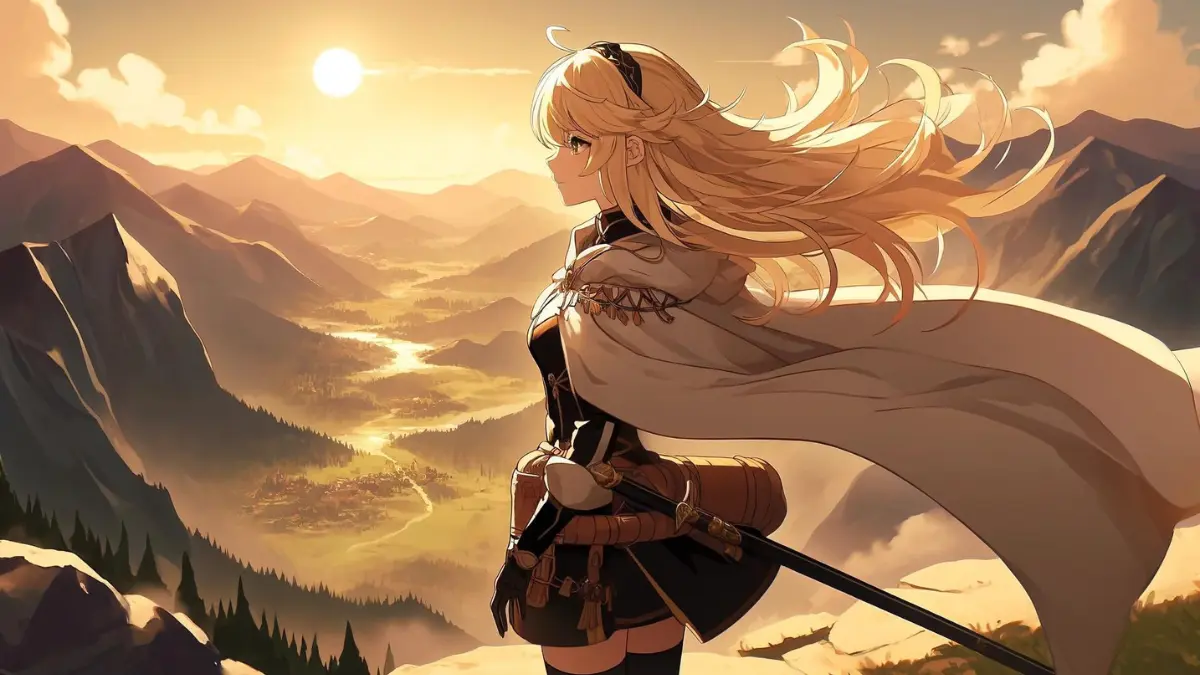
She and her twin brother travel between worlds, moving freely across realms unknown to the people of this land. Their origin remains intentionally vague, but the game makes one thing clear, they are outsiders to every nation they visit.
This wandering existence defines her role. She is not bound by a single element, nation, or god. Instead, she resonates with the powers of each region she encounters, adapting as she moves forward.
That freedom ends when an unknown god intercepts the twins during their departure from Teyvat. In a brief confrontation, their powers are sealed and they are forced apart.
When Lumine awakens, centuries may have passed.
The world has changed. Civilizations have fallen. The cataclysm that destroyed Khaenri’ah reshaped the balance of power. Her search for Aether becomes more than a personal mission, it becomes a journey through the consequences of divine judgment.
As an outsider, Lumine sees Teyvat differently than its people. She questions its gods. She moves between its nations without allegiance. Her role resembles that of a wandering hero in myth, a figure who crosses boundaries and exposes hidden truths.
The Separation from Aether
The defining moment in Lumine’s story is not her arrival in Teyvat. It is her separation from Aether.
When the unknown god intervenes, the twins stand together against a force beyond their understanding. Within seconds, that bond is shattered. Their powers are sealed, and one is cast into suspended time while the other awakens alone.
For the player, this moment sets the emotional tone of the entire game.
Lumine’s search is not driven by ambition or conquest. It is driven by reunion. Every region she explores, every Archon she questions, and every secret she uncovers circles back to one goal, finding her twin.
As the story unfolds, the separation becomes more complex. The other twin does not remain a passive victim. Instead, that twin takes a path tied to the Abyss Order and the memory of Khaenri’ah’s destruction.
This revelation transforms Lumine’s journey.
Her quest is no longer simply about rescue. It becomes a confrontation with ideology. The twins do not see Teyvat in the same way. One seeks answers through travel and diplomacy. The other seeks change through opposition to the gods.
This contrast gives Lumine’s story depth. The conflict is not purely external. It is philosophical. It asks whether Teyvat deserves to remain as it is, or whether the divine order must be challenged.
At its core, the separation represents a classic mythic theme, the divided twin. One embodies light and exploration. The other moves through shadow and rebellion. Together, they frame the moral tension of the entire narrative.
Lumine, Khaenri’ah, and the Abyss
Lumine’s story becomes darker when the truth about Khaenri’ah begins to surface.
Khaenri’ah was a powerful nation that existed without the protection of the gods. It relied on human ambition and advanced knowledge instead of divine rule. Five hundred years before the main story, the gods destroyed it in an event known as the Cataclysm.
This tragedy changed everything.
While the Traveler was asleep, the world of Teyvat suffered war, corruption, and the rise of monsters. When Lumine awakens, the scars of that disaster still shape the political and spiritual tension across every nation.
But here is the twist.
Depending on the chosen twin, one sibling has already lived through those five hundred years.
If Lumine is the Traveler, Aether becomes aligned with the Abyss Order. If Aether is chosen, Lumine becomes the Abyss sibling. In either version, one twin witnesses the fall of Khaenri’ah and comes to believe that the gods of Teyvat are not protectors, but oppressors.
That belief drives the central conflict.
The Abyss Order
The Abyss Order consists of cursed survivors of Khaenri’ah. Many were transformed into monsters after the Cataclysm. Their goal is not simple revenge. They seek to overturn the divine order of Teyvat.
The sibling who joins them does not appear mindless or corrupted. Instead, they act calm, calculated, and deeply committed to their cause.
This makes the story morally complicated.
Lumine does not chase a villain. She chases someone who believes they are fighting for justice.
The Truth Behind the Gods
As Lumine travels across Mondstadt, Liyue, Inazuma, Sumeru, Fontaine, Natlan, and Snezhnaya, she begins to see cracks in the system.
Each Archon rules differently. Each nation struggles with power, control, or rebellion. The story slowly suggests that the gods may not be as benevolent as they appear.
The unknown god who separated the twins calls herself the Sustainer of Heavenly Principles.
That title matters.
It implies control. Order. Enforcement.
Lumine’s journey shifts from personal rescue mission to philosophical confrontation. She begins searching not only for her brother, but for the truth about the structure of the world itself.
Why This Lore Matters
This is where Lumine becomes more than a playable character.
Her story asks a larger question:
Is divine order always good?
The twins come from beyond Teyvat. They are outsiders. They observe the system without loyalty to it. That perspective gives Lumine a unique role.
She becomes both participant and witness.
And that duality makes her lore rich enough to carry the entire article.
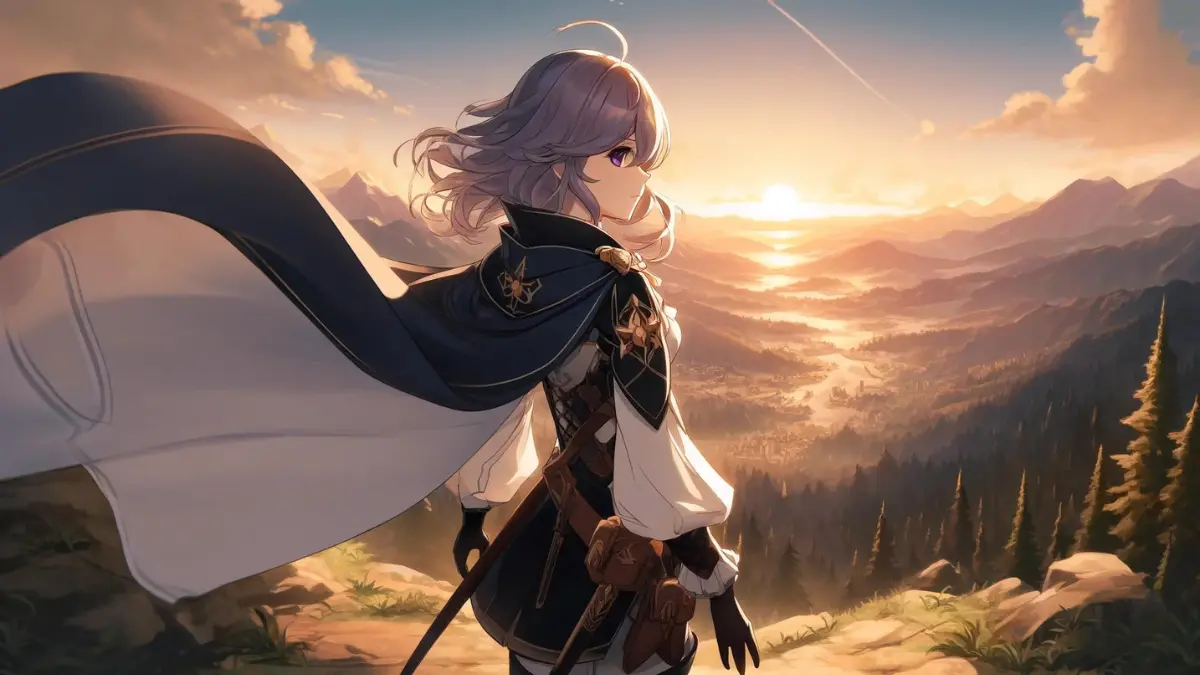
Lumine’s Character and Visual Design
Lumine’s design reflects her role as a traveler between worlds.
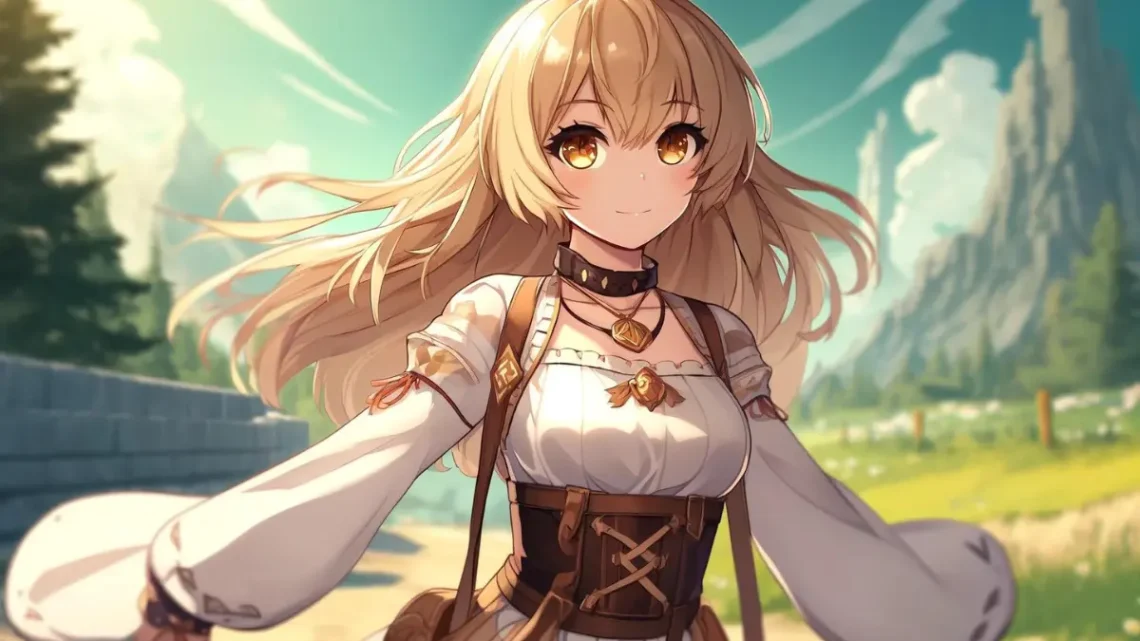
She wears light fabrics in shades of white and gold, colours traditionally associated with stars, dawn, and divinity. Her outfit resembles ceremonial clothing more than armour, reinforcing the idea that she is not a soldier of Teyvat, but an outsider passing through it.
Gold accents run throughout her design. These details echo celestial imagery, suggesting a connection to light and higher realms. Her cape and accessories feature star-like patterns, reinforcing the theme of cosmic origin.
Unlike many characters who visually align with their nation, Lumine remains visually neutral. She does not adopt the clothing style of Mondstadt, Liyue, Inazuma, or any other region. This design choice supports her narrative role. She belongs everywhere and nowhere at once.
Her expression remains calm and observant. As a largely silent protagonist, much of her personality is conveyed through posture and movement rather than dialogue. She reacts thoughtfully rather than impulsively, giving her an air of quiet resilience.
When contrasted with Aether, subtle differences emerge. Lumine’s softer silhouette and flowing design emphasize grace and composure, while Aether’s sharper lines suggest forward momentum. Both reflect the same cosmic origin, yet their presentation shapes how players interpret their emotional presence.
Her appearance does not change dramatically as she resonates with different elements. Instead, her identity remains consistent. The power shifts, but the traveler remains the same.
This visual consistency reinforces the core idea of her story. Lumine adapts to the world, yet she is never fully absorbed by it.
Themes in Lumine’s Story
Lumine’s journey is more than a search for her brother. It reflects deeper themes that mirror ancient myths and epic traditions.
A Stranger in a Broken World
Lumine does not belong to Teyvat. She arrives from beyond its skies, already powerful, already experienced. Yet she wakes powerless and alone.
This reversal mirrors many hero myths. A divine or gifted figure must walk among mortals without their former strength. The journey becomes a process of remembering who they are.
In Teyvat, Lumine learns its history, its wars, and its hidden fractures. She does not simply pass through nations. She witnesses corruption, loss, ambition, and betrayal. Each region reveals that the world is not as orderly as its gods claim.
Her outsider status allows her to see what others accept without question.
The Silence of the Traveler
Unlike many protagonists, Lumine rarely speaks. Other characters talk around her. They interpret her silence as patience, kindness, or mystery.
This narrative choice gives her a mythic quality. Ancient heroes often act more than they speak. Their presence shapes events without long speeches.
Her quiet nature also reinforces her isolation. She listens to everyone’s story, yet carries her own grief privately.
Fate and Free Will
The conflict between destiny and choice drives much of her story.
The unknown god attempts to control her fate. The Archons claim to protect their people. The Abyss Order fights against divine rule.
Lumine stands between these forces.
She is not aligned fully with gods or rebels. She questions both. This tension reflects a classic mythic theme. Is the world guided by divine will, or shaped by personal choice?
Her journey suggests that truth may lie somewhere in between.
Memory and Loss
At its heart, Lumine’s story is about separation.
She travels through beautiful landscapes, yet her goal remains unchanged. She searches for the one person who shared her past.
Her memories anchor her. Even when confronted with shocking truths, she continues forward.
This emotional core keeps her grounded. Without it, she would simply be another wandering hero. With it, she becomes a figure defined by loyalty and endurance.
Frequently Asked Questions About Lumine
Who is Lumine in Genshin Impact?
Lumine is one of the twin Travelers who arrive in Teyvat from another world. After being separated from her brother by an unknown god, she begins a journey across the seven nations to uncover the truth behind their fate.
Is Lumine the main character of the story?
Players choose between Lumine and Aether at the beginning of the game. The overall storyline remains the same, but the chosen twin becomes the central protagonist from the player’s perspective.
Why is Lumine connected to the Abyss?
As the story unfolds, one twin becomes associated with the Abyss Order and the fall of Khaenri’ah. This connection drives the moral tension of the narrative and raises questions about the role of the gods in Teyvat’s history.
What element does Lumine use?
Lumine can resonate with multiple elements by interacting with the statues of the Archons in each region. Her abilities shift as she progresses through the story.
Are Lumine and Aether different in strength?
Both twins share the same core abilities and mechanics. The primary difference lies in visual design and narrative perspective rather than combat power.
Conclusion
Lumine’s story begins with loss, but it unfolds into something larger than reunion.
As a traveler between worlds, she stands apart from the nations of Teyvat. She questions its gods, witnesses its fractures, and moves through its history without belonging fully to any part of it. That distance gives her clarity.
Her search for Aether anchors the narrative emotionally, yet her journey steadily expands beyond personal grief. The fall of Khaenri’ah, the rise of the Abyss Order, and the silence of the gods reshape her purpose. What begins as a quest to find her twin becomes a confrontation with the foundations of the world itself.
Lumine embodies the wandering hero archetype, a figure who crosses borders, exposes hidden truths, and challenges established order. She is neither fully aligned with divine authority nor with rebellion. Instead, she occupies the space between them.
That tension defines her role.
In the end, Lumine’s journey is not only about finding her brother. It is about deciding what kind of world deserves to endure, and whether the traveler from beyond the stars will accept it as it stands.