Gakgung: The Korean Bow and Elite Archers Through History
The Gakgung, a traditional Korean reflex bow, has a history that dates back over 2,000 years.
Its design combines a compact size with impressive power and range. This made it an integral weapon in Korean military history.
Introduction to Gakgung
The first evidence of bows resembling the Gakgung dates to the Bronze Age (around 1000 BCE). Early depictions and remnants depict this in Korean archaeological sites.
The Gakgung, as a developed reflex bow, became prominent during the Three Kingdoms Period (57 BCE–668 CE). During this time, kingdoms like Goguryeo and Silla used it in warfare and hunting.
The Goguryeo archers were particularly famous for their skill, as seen in ancient murals depicting archery in action.
The Hwarang, an elite warrior group in the Silla Kingdom, likely used a similar style of bow during their training and battles.
It is unclear who invented the Gakgung. Its design reflects influences from cultures like the Scythians and Central Asian nomads. Over time, Korean archers refined the bow’s structure, creating a weapon suited for their needs.
Origins of Korean Archery
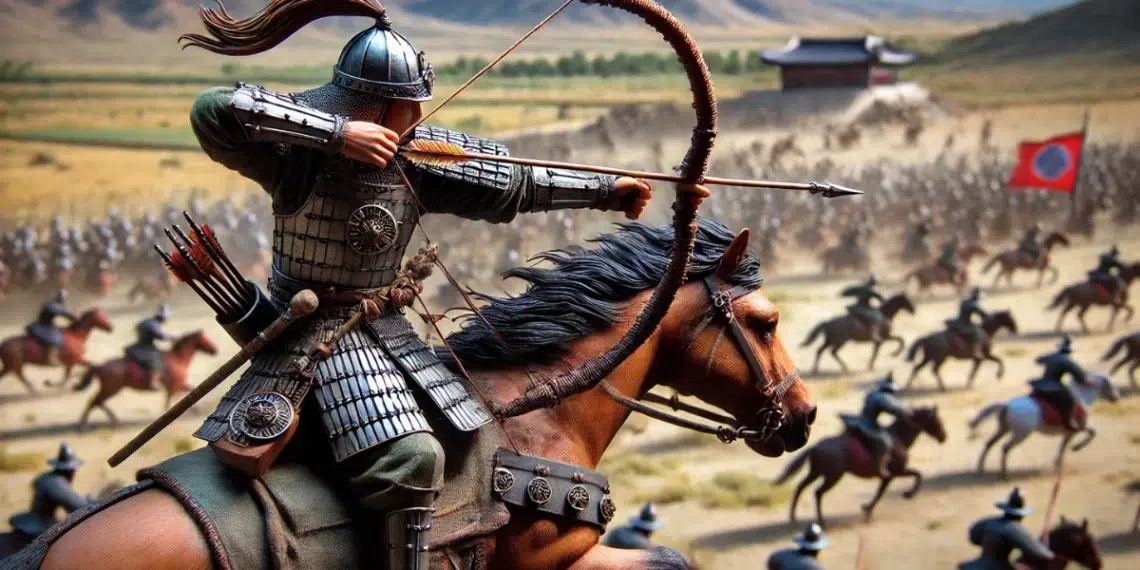
Korean archery stretches back to ancient times and has always been key in battles and defenses.
From the fifth century BCE, archery was crucial for chiefs in wars. This was true until the 19th century. When Korea unified under the Silla Kingdom, their expert mounted archers, the Hwarang, really showed off Korean archery’s strength.
Three Kingdoms Period (57 BCE to 668 CE)
Korean archery has roots that go way back, to the time of the Three Kingdoms.
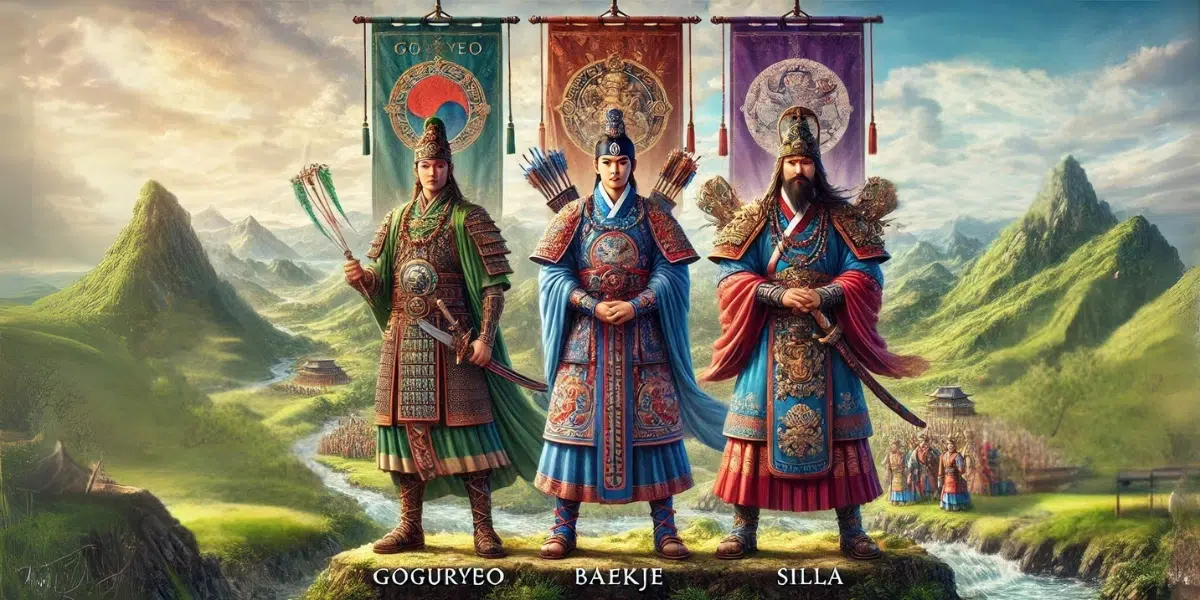
The Three Kingdoms of Korea were Goguryeo, Baekje, and Silla. These three powerful kingdoms that ruled the Korean Peninsula from the 1st century BCE to the 7th century CE.
- Goguryeo (37 BCE–668 CE)
Goguryeo was the largest and most powerful kingdom, located in the northern part of the Korean Peninsula and parts of modern-day China. Known for its strong military and skilled archers, it played a key role in defending against invasions from China. - Baekje (18 BCE–660 CE)
Baekje was located in the southwest of Korea and was famous for its rich culture, art, and diplomacy. It had strong ties with Japan and China, sharing knowledge and cultural advancements. - Silla (57 BCE–935 CE)
Silla was in the southeast and started as the smallest kingdom but eventually united the peninsula in 668 CE. The Hwarang, Silla’s elite warrior group, were known for their dedication and training, which included archery.
These three kingdoms were rivals but shared a common heritage in their use of advanced weapons like the Gakgung bow and their emphasis on military strength.
Silla Military Success
The Silla Kingdom’s use of archery played a significant role in its military success, including the eventual unification of Korea.
During the Three Kingdoms Period, Silla allied with the Tang Dynasty of China to defeat the rival kingdoms Baekje (660 CE) and Goguryeo (668 CE). The Tang army provided critical support, including troops and resources.
However, after defeating Baekje and Goguryeo, tensions arose between Silla and the Tang forces. Silla eventually drove the Tang army out of the Korean Peninsula. Thus securing control over the unified territory. This demonstrated the effectiveness of Silla’s military strategy, including their skilled archers and the use of the Gakgung bow.
Silla’s victory also relied on strategy, alliances, and internal cohesion, rather than archery alone.
The Craftsmanship Behind the Gakgung
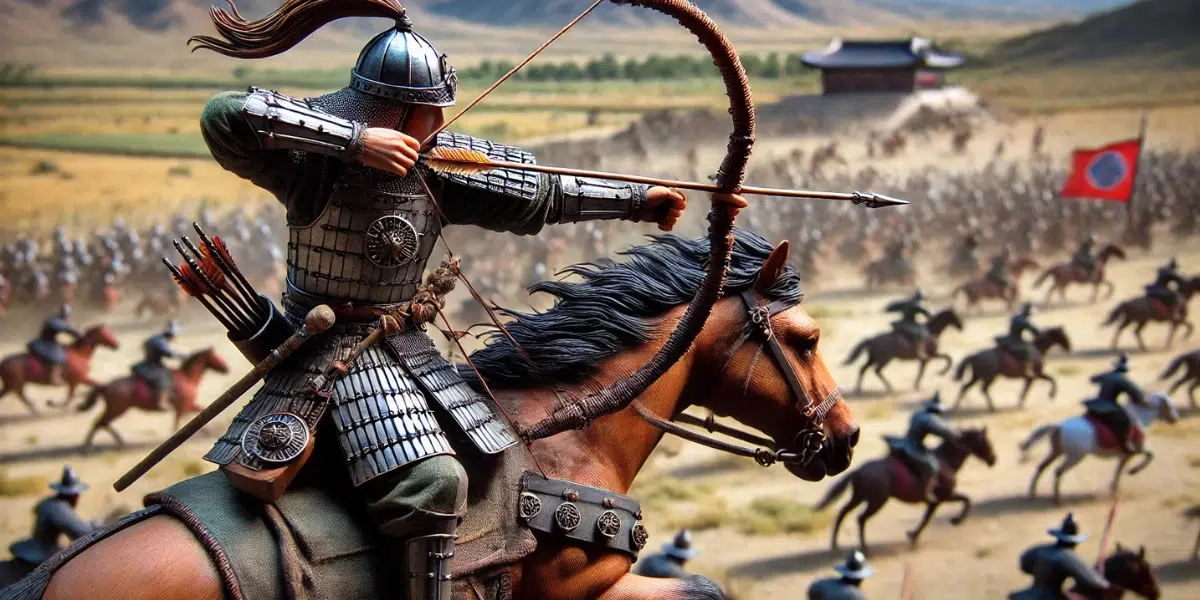
The Gakgung is a special type of bow from Korea, showing the country’s rich tradition of crafting. It was highly valued by Korean archers for its unique power. Different from most bows, it has a special design that makes it stronger.
- Bow materials and craftsmanship: The Gakgung was a composite bow made from horn, wood, sinew, and other materials, showcasing Goguryeo’s advanced weapon-making skills
This bow is made from a mix of materials. Inside, there’s a core made of sinew-backed bamboo. Outside, there’s water buffalo horn and mulberry wood. It also has an oak handle.
It takes about four months to make a Gakgung. This process uses old-fashioned materials. These include ox tendons and special glue from a fish’s air bladder. Cherry tree bark is used for the final touches.
The Gakgung’s construction required exceptional skill. Each bow took months to make and reflected deep knowledge of materials and techniques.
Gakgung Bow Range and Accuracy
Bows made with water buffalo horn, like the Gakgung, are powerful.
- Historical records suggest they could shoot arrows up to 500 metres, but this extreme range would sacrifice accuracy
- For practical purposes, they remained accurate up to around 150–200 metres
- Today’s Olympic competitions target distance is 70 metres
Each Gakgung is special because of how it’s made. Artisans use ancient methods to craft them. The Gakgung’s popularity stems from its effectiveness in war and hunting. Its craftsmanship and role in Korean history highlight archery’s importance in Korean culture.
Mongolian Draw
One special technique in traditional Korean archery was the Mongolian Draw. It’s where they drew the bowstring using their thumb and finger. This method made Korean bows more powerful and their shooters deadlier in combat.
From ancient times until the Silla Kingdom, Korean archery was deeply important. It was about more than just fighting. It was a part of their culture that had a big impact on Korean values over time.
Elite Archers in the Three Kingdoms

Hwarang – Silla’s Elite Warriors
The Hwarang were an elite group of young warriors from the ancient Korean kingdom of Silla. They trained to protect their kingdom and serve their people. The word “Hwarang” means “flowering knights,” showing their balance of strength and beauty. They also showed how powerful the Korean traditional horn bow, Gakgung, was in battle.
These warriors were not just fighters. They studied art, music, and philosophy to become well-rounded leaders. They also trained in martial arts, sword fighting, and mounted archery, making them skilled in battle.
The Hwarang followed a strict code of honour, focusing on loyalty, bravery, and kindness. They worked to defend Silla and unite Korea. Their teamwork and dedication played an important role in helping Silla become the most powerful kingdom during the Three Kingdoms Period.
The Hwarang fought in key battles, showing their might and strategic value. Their influence can still be seen in South Korea today.
South Korea is known for its strong archers, who win big in global contests, even the Olympics. The Hwarang’s dedication and skill mark a lasting tradition in Korean archery history. Today, the Hwarang are remembered as symbols of courage, leadership, and loyalty.
Famous Goguryeo Skilled Archers
The Goguryeo Kingdom, known for its strong military, produced some of the most skilled archers in Korean history. Goguryeo warriors trained from a young age to master archery, as it was a crucial skill in battle and hunting. Their small yet powerful Gakgung bows allowed them to shoot with incredible precision, even while riding horses.
- Goguryeo’s defense against the Sui Dynasty: Goguryeo archers played a key role in defending against the Sui Dynasty’s four invasions during the early 7th century (598–614 CE). The most notable battle was during the Sui Emperor Yang’s campaign in 612 CE, where over a million troops reportedly attacked Goguryeo but failed due to strong resistance and strategic defenses.
- Range of the Korean bow: the Korean bow could hit targets 145 metres away. The Gakgung was renowned for its power and range, surpassing many modern bows, including those used in today’s Olympic competitions.
Ancient murals, such as those in the Goguryeo tombs, depict archers in action, highlighting their importance in warfare. These skilled warriors could shoot rapidly and with great accuracy, giving Goguryeo an advantage on the battlefield.
Their archery skills not only protected their kingdom but also influenced the development of Korean archery for generations. Today, Goguryeo’s archers are remembered as symbols of strength, discipline, and mastery of the bow.
Jumong and Lady Sun and the Gakgung Bow
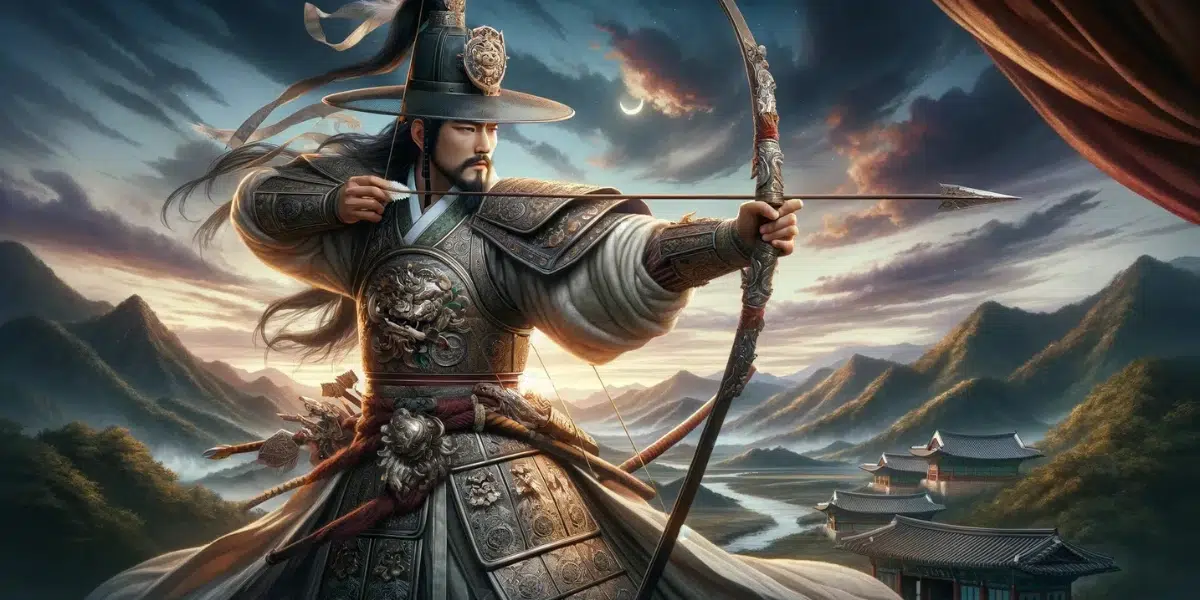
The Gakgung bow played a pivotal role in ancient Korean battles, particularly in the Goguryeo Kingdom’s military success. Its power, accuracy, and long range made it a key weapon in defending against invasions and launching counterattacks.
Jumong
Jumong (Founder of Goguryeo, 58 BCE–19 BCE) is one of the most famous figures linked to the Gakgung bow.
Known for his exceptional archery skills, Jumong used the bow to display remarkable feats, such as splitting arrows mid-flight
His mastery of the Gakgung highlighted the bow’s importance in warfare and hunting
Lady Sun
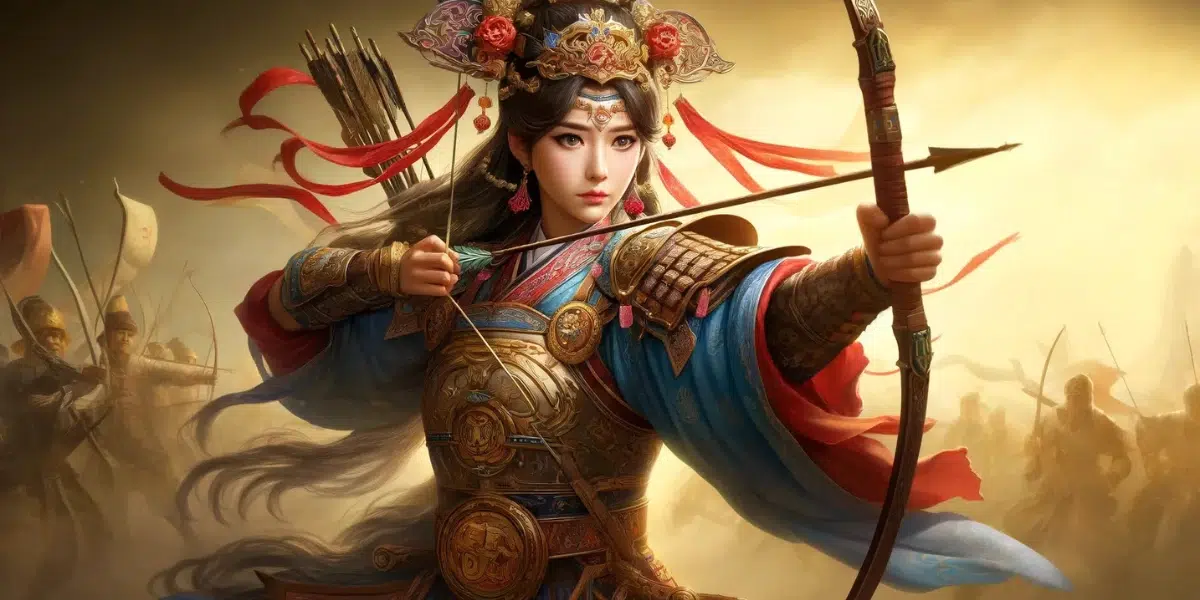
Lady Sun was one of Jumong’s wives, often seen as his second wife after Lady Ye.
Legends say she supported Jumong while he built the Goguryeo kingdom and helped make it stronger. Some stories describe her offering wisdom, strategic advice, and help in uniting the kingdom.
There is no record of Lady Sun using the Gakgung bow herself. However, her connection to Jumong ties her indirectly to archery. Lady Sun’s story shows how women played important roles in supporting and influencing Korea’s legendary warriors.
Learn more about women warriors:
- Female Warriors in History Defying Gender Norms
- Brave Women Disguised As Men Join Their Nation’s Military
- 20 Native American Women Warriors, Leaders & Diplomats
Other Warriors Associated With the Gakgung Bow
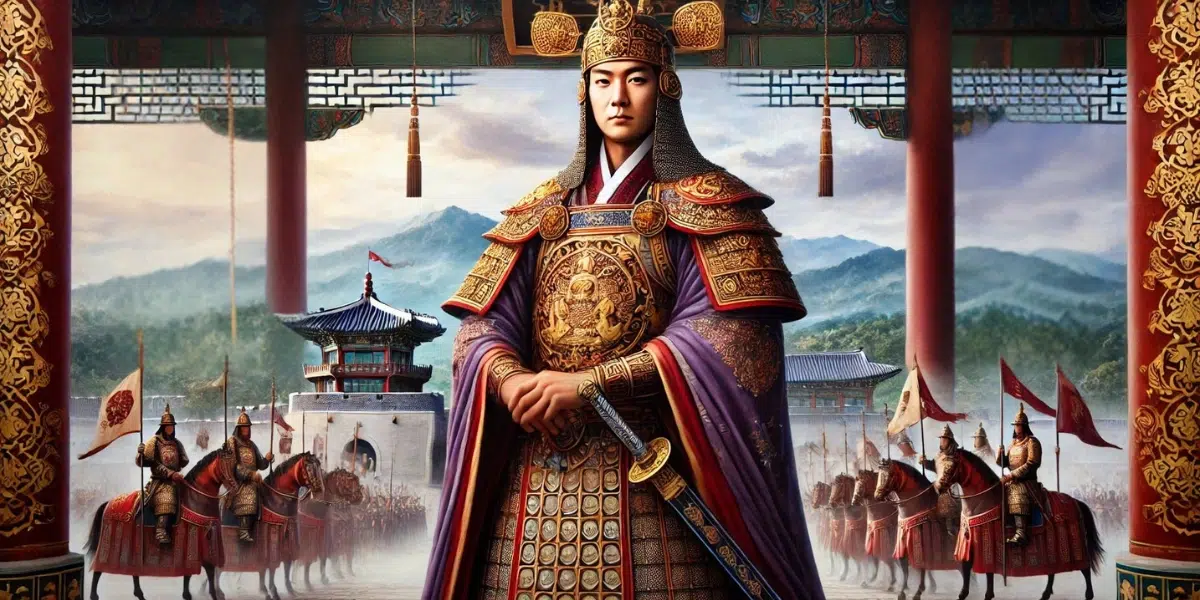
- King Gwanggaeto the Great (Goguryeo, 374–413 CE) expanded Goguryeo’s territory significantly
- His armies, including expert archers equipped with the Gakgung, secured key victories against Baekje, Silla, and Chinese forces
- His reign showcased the bow’s effectiveness in Goguryeo’s military dominance
- Yeon Gaesomun (Goguryeo, 7th Century CE) a military leader, played a pivotal role in defending Goguryeo from Tang invasions
- At the Battle of Ansi Fortress (645 CE), Goguryeo archers using Gakgung bows inflicted heavy losses on the Tang army
- Thus marking one of Korea’s most famous military victories
- General Kim Yusin (Silla, 595–673 CE) was a key figure in Korea’s unification
- He relied on Gakgung-equipped archers to defeat Baekje and Goguryeo forces
- His military leadership was crucial in establishing Silla’s dominance during the Three Kingdoms Period
- King Munmu (Silla, 626–681 CE) is the king who unified Korea under Silla
- His forces, including Gakgung archers, helped drive out both Baekje and Goguryeo forces
- They would later repel the Tang army from the peninsula
Key Battles
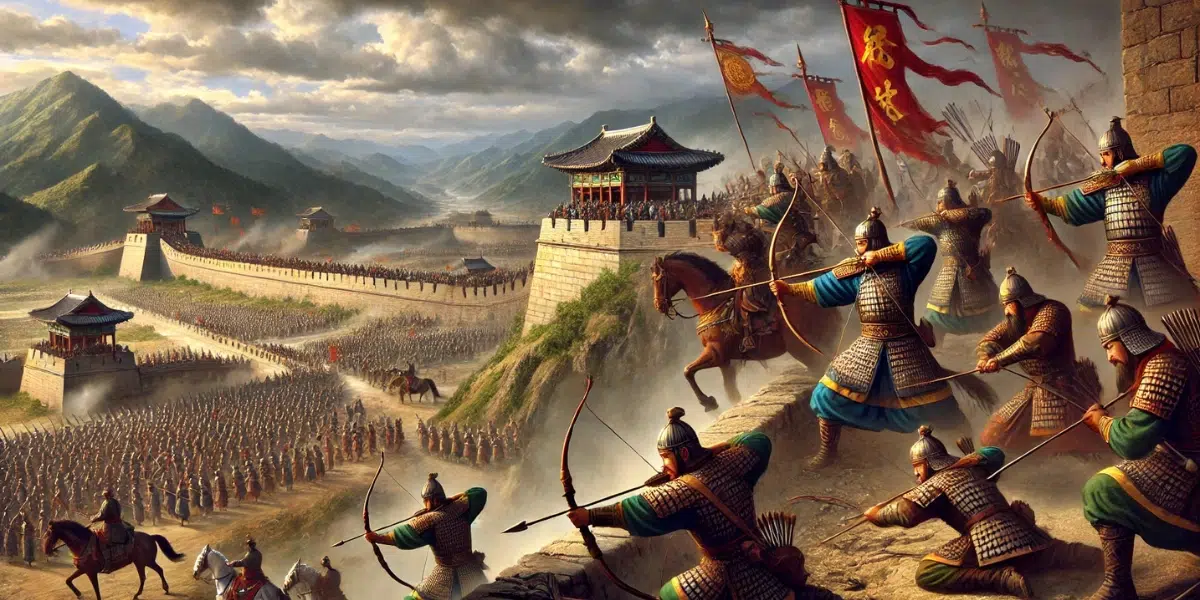
- Sui Invasions (598–614 CE): Goguryeo repelled four massive attacks by the Sui dynasty, including the famous 612 CE invasion where over a million troops failed to conquer Goguryeo. The Gakgung bow played a critical role in defending forts and ambushing Sui forces.
- Battle of Ansi Fortress (645 CE): During the Tang Dynasty’s campaigns, Goguryeo archers, using the Gakgung, helped defend Ansi Fortress against a much larger Tang army led by Emperor Taizong. This victory became a symbol of Goguryeo’s resilience.
- Haengju and Ulsan sieges: These battles occurred during the late 16th century Imjin War against Japanese invasions
The Gakgung’s Impact During Japanese Invasions
In the sixteenth century, the Gakgung’s importance in Korea’s fight against Japan was huge. They were pivotal in defending against the Japanese. These archers guarded Korea, shooting lethal arrows from far away with great accuracy.
Their skill with the Gakgung was crucial in key battles. It helped the Joseon Dynasty win and protected Korea’s sovereignty. The fear of these skilled archers kept invaders at bay, reinforcing national pride.
The Gakgung’s impact extended past war times. Korea embraced archery in its culture, making it a sport and martial art. This change led to archery becoming a respected tradition, still practiced today.
Today, South Korea is a leader in international archery. The skills passed down from the Gakgung’s era still influence Korean archery. This shows how deeply the Gakgung’s legacy is rooted in Korea’s identity.
Decline and Modernization of Archery in Korea
In the 19th century, Korea’s military history changed a lot, influenced by the West.
The rise of modernization led to a reduced role for archery in wars. But, it remained an important part of Korean culture, turning into a favourite traditional sport.
Despite cultural changes, archery still holds a high place, connecting old traditions with new ways. This mix is clear as Korean archery combines age-old techniques with today’s advancements. Programs help young archers grow from school to college, showing that Korea values its sports history.
In the 20th century, Korea went back to the top in archery globally. Archery went from being a war skill to a national source of pride. Today, South Korea’s archers shine in the Olympics, merging their history with a bright future in the sport.
South Korea’s Archery Dominance Today

Attribution: Korea.net / Korean Culture and Information Service
South Korea leads the world in competitive archery.
Archery starts early in school and follows kids through high school. This system makes sure young archers get top-notch teaching from the start.
Today, South Korea is unmatched in archery. They train hard each day, sometimes for up to ten hours. This focus and tough practice are why they do so well on the world stage.
South Korea’s hard work shows. They have won many Olympic medals in archery.
By the 2016 Olympics, they had taken 39 medals, with 23 being gold. In 2020, they kept their spot at the top. Women archers from South Korea have been especially outstanding. They have won all the women’s recurve events since 1988 when they first joined the Olympics. This shows the high quality of their training right from the start.
Notable South Korean Olympic Medalists
- Kim Woo-jin:
- 2016 Rio de Janeiro: Gold in Men’s Team
- 2024 Paris: Gold in Men’s Individual; Gold in Men’s Team
- An San:
- 2020 Tokyo: Gold in Women’s Individual; Gold in Women’s Team; Gold in Mixed Team
- Lim Si-hyeon:
- 2024 Paris: Gold in Women’s Individual; Gold in Women’s Team; Gold in Mixed Team
- Kim Je-deok:
- 2020 Tokyo: Gold in Men’s Team; Gold in Mixed Team
- 2024 Paris: Gold in Men’s Team
- Ki Bo-bae:
- 2012 London: Gold in Women’s Individual; Gold in Women’s Team
- 2016 Rio de Janeiro: Gold in Women’s Team; Bronze in Women’s Individual
- Lee Sung-jin:
- 2004 Athens: Silver in Women’s Individual; Gold in Women’s Team
- 2012 London: Gold in Women’s Team
Learn more about:
These archers have significantly contributed to South Korea’s dominance in Olympic archery, showcasing exceptional skill and consistency across multiple Games.
What’s special about training in South Korea is its intensity and innovation.
Archers there even practice in places like baseball stadiums to get used to bright lights and loud sounds. This unique approach improves both skill and mental strength.
By turning archery from a traditional military skill to a modern sport, South Korea makes archery a big part of its culture. Their strong training methods help make them the best in competitive archery.