From Myth to Game: Story of Okami Amaterasu
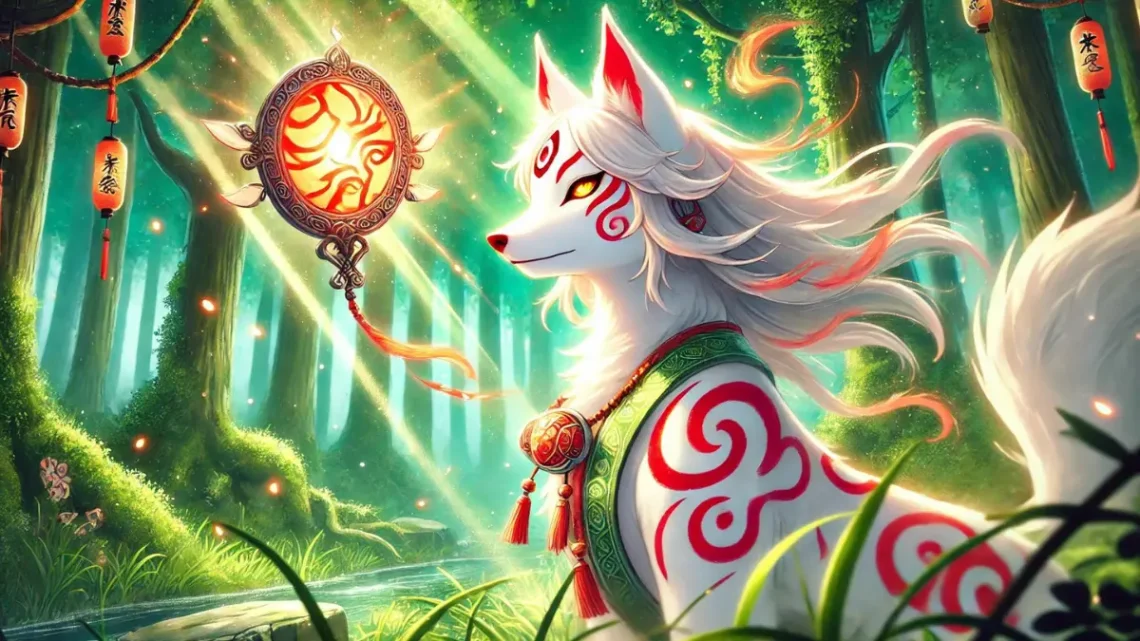
In Okami Amaterasu, the goddess of the sun, is the main character, taking the form of a white wolf. Players guide Amaterasu to restore beauty and balance to a cursed land of Nippon.
Amaterasu’s journey involves battling various demons, reviving nature, and collaborating with allies like the tiny artist Issun and the enigmatic Waka.
Her divine powers allow her to use the Celestial Brush, drawing symbols to summon miracles. The game’s stunning art style draws from traditional Japanese paintings, making Amaterasu’s journey visually captivating.
Okami blends mythology with action and adventure, offering players a rich, immersive experience. Through Amaterasu’s quest, the game teaches the importance of nature, harmony, and perseverance in overcoming darkness.
Released in 2006 Ōkami is a critically acclaimed action-adventure game that stands out for its unique art style receiving numerous awards,
Mythological Roots of Amaterasu in Japanese Mythology
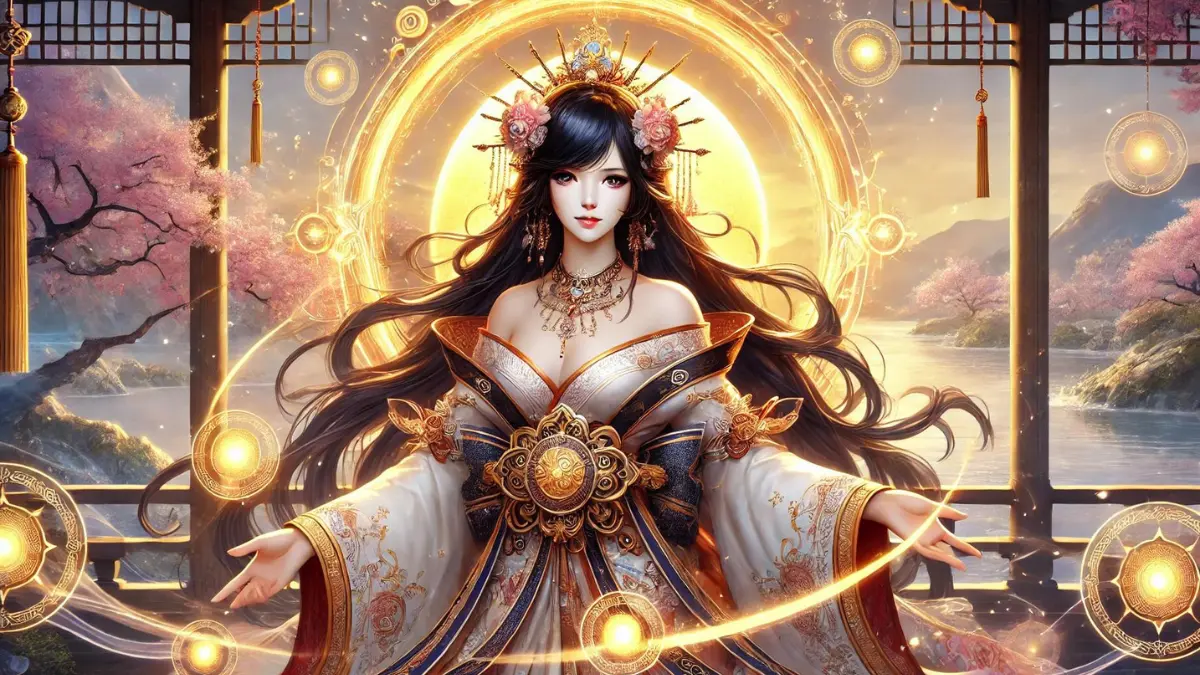
Amaterasu, or Amaterasu Ōmikami, stands as a key deity in Shinto, Japan’s traditional religion. Her name means “Great Divinity Illuminating Heaven,” and she represents the sun and the universe.
According to myth, she emerges from her father Izanagi’s left eye during a purification ritual. Amaterasu rules Takamagahara, the High Celestial Plain, where the kami (spirits) live.
She is the ancestral deity of Japan’s imperial family. Her chief place of worship is the Grand Shrine of Ise, a major Shinto shrine in Japan. The mirror, one of the three Imperial Regalia of Japan, symbolizes her presence.
Key Myths Involving Amaterasu
Myth: Birth and Family
Amaterasu was born from Izanagi’s left eye, while her siblings, Tsukuyomi (the moon god) and Susanoo (the storm god), were born from his right eye and nose, respectively.
These three deities were tasked with ruling different realms: Amaterasu the heavens, Tsukuyomi the night, and Susanoo the seas and storms.
Myth: The Heavenly Rock Cave
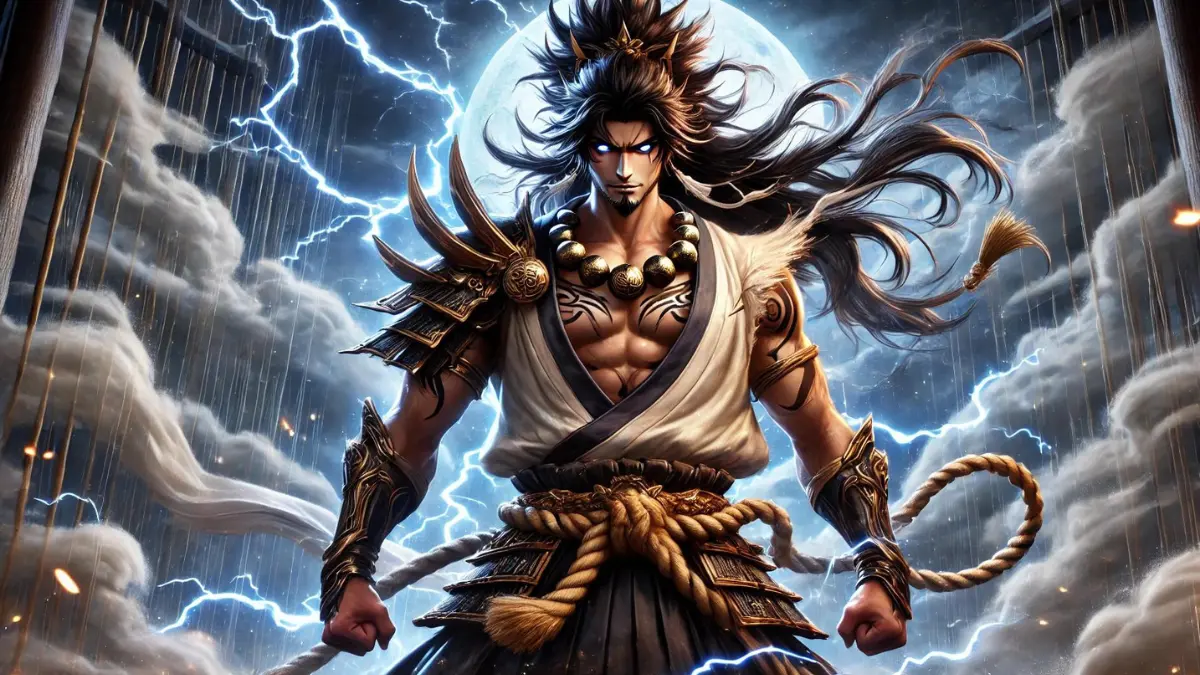
One of the most famous myths involving Amaterasu is her retreat into the Heavenly Rock Cave, which caused the world to be plunged into darkness.
Amaterasu’s brother, Susanoo, acts impulsively and destructively. After his banishment from heaven, he visits Amaterasu, causing chaos. He destroys her rice fields, defiles her sacred space, and throws a flayed horse into her weaving hall, causing an attendant’s death.
Amaterasu, in response, hides in the Ama-no-Iwato cave. This act causes the sun to disappear, plunging the world into darkness. The lack of sunlight affects both the heavens and the earth, bringing calamity and chaos.
The other gods, understanding the dire consequences, devise a plan to lure her out. They gather outside the cave, placing a mirror and jewels on a sakaki tree. The goddess Ame-no-Uzume performs a humorous and provocative dance, making the gods laugh uproariously. Curious about the commotion, Amaterasu peeks out of the cave. She sees her reflection in the mirror and becomes momentarily distracted. The strong god Ame-no-Tajikarao seizes the opportunity to pull her out. They seal the cave entrance with a sacred rope (shimenawa) to prevent her return.
- In Ōkami, Amaterasu restores light to darkened areas. The Celestial Brush, allowing players to draw symbols for miracles, adapts the divine tools used to lure her out.
Myth: The Separation of Day and Night
The myth of Amaterasu and Tsukuyomi explains the separation of day and night.
Initially, Amaterasu and Tsukuyomi marry, but conflict ends their union. Tsukuyomi kills Uke Mochi, the goddess of food, in a fit of rage after feeling disgusted by her method of creating food.
Horrified by his actions, Amaterasu declares that she can no longer look at him, thus separating day and night.
Amaterasu’s myths are central to Shinto beliefs and Japanese cultural heritage. Her stories explain natural phenomena like the cycle of day and night, emphasizing themes of order, chaos, and harmony. Through her worship, especially at the Grand Shrine of Ise, Amaterasu remains vital in Japan’s spiritual and cultural life.
Okami Amaterasu and Shinto Mythology
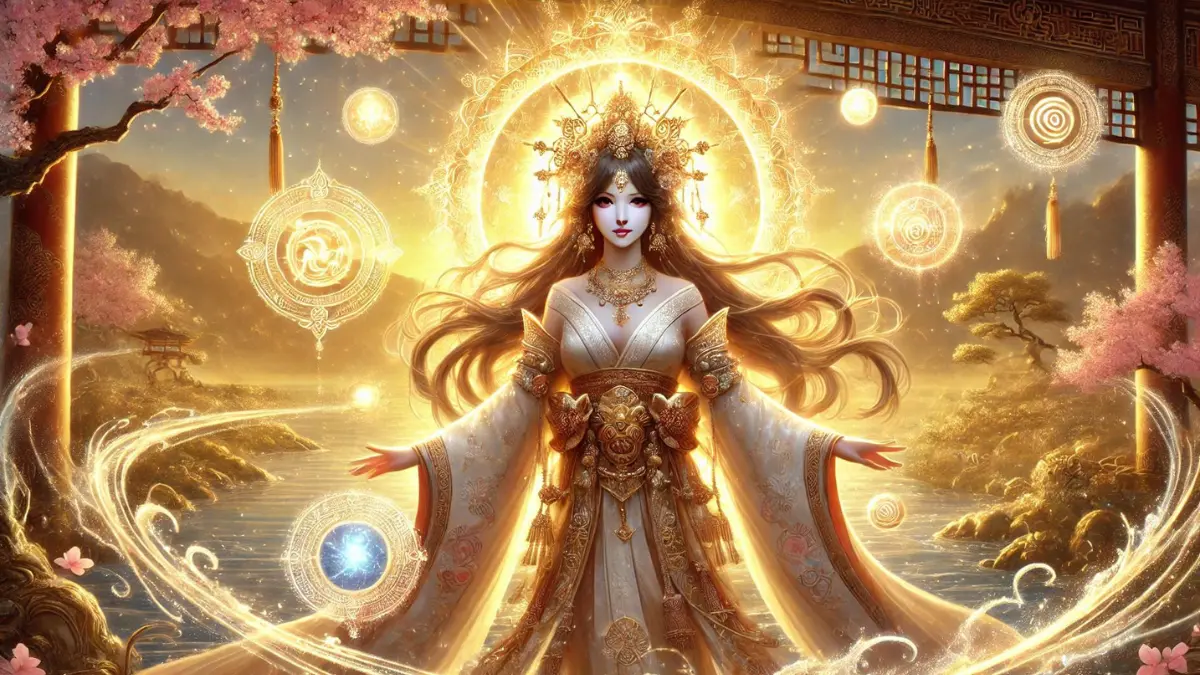
Ōkami weaves a rich tapestry of Japanese mythology and folklore into a vibrant, interactive world. The game draws heavily from ancient stories, adapting them to fit its narrative and gameplay.
Form and Appearance
- Shinto Mythology: Amaterasu is depicted as a celestial sun goddess, often represented in human form. She is the ruler of the heavens and a central figure in Shinto beliefs.
- Ōkami: In the game, Amaterasu takes the form of a white wolf with red markings and divine attributes. This design choice emphasizes her connection to nature and her role as a protector deity.
Role and Abilities
- Shinto Mythology: Amaterasu’s primary role is as the sun goddess who illuminates the world. She is involved in various myths, such as the tale of her retreat into a cave, which causes darkness to fall upon the world until she is lured out. Her abilities are more divine and celestial, focusing on her status as a deity.
- Ōkami: In the game, Amaterasu’s abilities are centered around the Celestial Brush, which allows her to manipulate the environment, restore life, and combat evil. These abilities are integral to the gameplay mechanics and narrative progression.
Narrative and Characterization
- Shinto Mythology: Amaterasu’s stories are deeply embedded in the Shinto religion and Japanese cultural heritage. Her myths often involve interactions with other deities, such as her brother Susanoo, and her actions have significant cosmic consequences.The myths are often straightforward tales of divine actions and consequences, with a focus on moral and cosmic order.
- Ōkami: The game reimagines these myths within a new narrative framework. While it draws on traditional stories, it introduces new characters and plot elements, such as the battle against Orochi and the journey to restore the land. Amaterasu’s character is also more interactive, as players control her actions and decisions throughout the game.The game expands these stories into a larger narrative, incorporating side quests, character development, and interactive elements. This allows players to experience the myths in a more immersive and personal way
Cultural Representation and Impact
- Shinto Mythology: Amaterasu is a central figure in Shinto worship and is enshrined at the Grand Shrine of Ise, one of the most important religious sites in Japan. She symbolizes the divine right of the Japanese imperial family and is a key figure in Japanese spiritual life.
- Ōkami: The game introduces Amaterasu to a global audience, blending traditional Japanese mythology with modern gaming. This portrayal has been praised for its artistic design and educational value, helping to popularize Shinto myths and Japanese culture worldwide.
Visual and Artistic Interpretation
- Traditional Myths: Mythological stories are passed down through oral tradition, texts like the Kojiki, and traditional art forms.
- In Ōkami: The game uses a unique sumi-e-inspired cel-shaded visual style, which brings the myths to life in a visually stunning way. The Celestial Brush mechanic is a direct homage to traditional Japanese calligraphy and painting, blending ancient art with modern gameplay.
Character Representation
- Traditional Myths: Characters like Amaterasu, Susanoo, and Orochi are depicted as powerful deities with specific roles and attributes.
- In Ōkami: These characters are given more human-like qualities and flaws, making them relatable and adding depth to their interactions. For example, Susanoo is portrayed as a cowardly but ultimately brave warrior, adding a comedic and redemptive arc to his character.
Okami Amaterasu: Character Design and Abilities
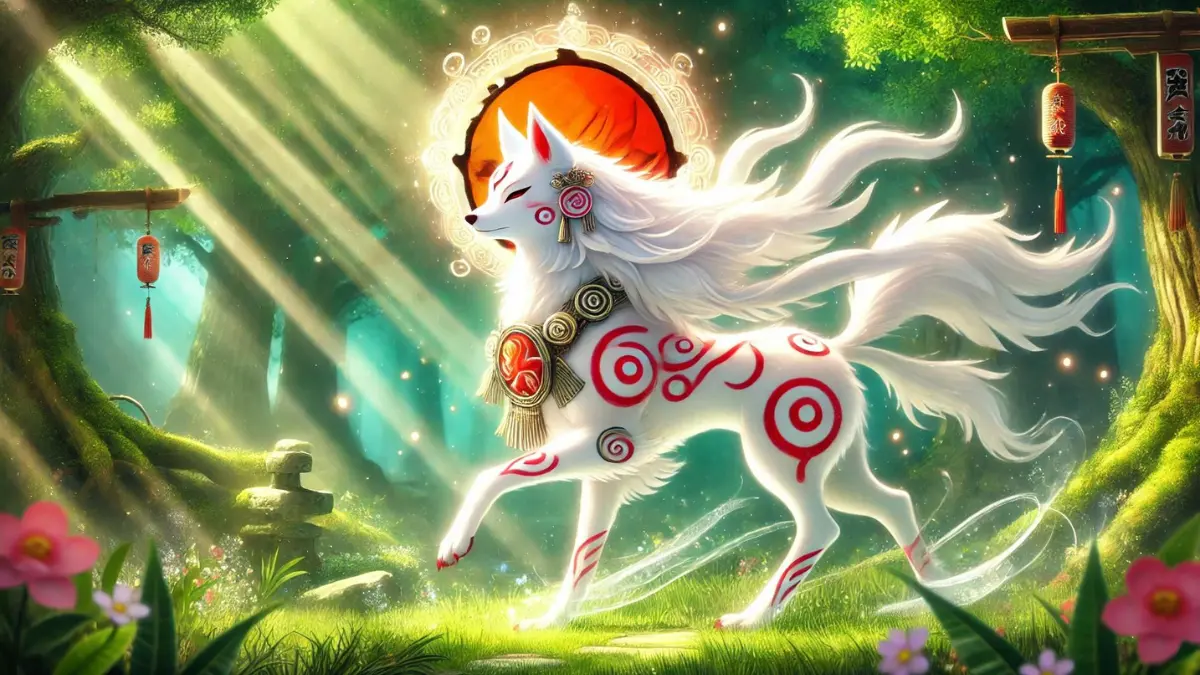
Okami Amaterasu: Visual Design
In Ōkami, Amaterasu appears as a majestic white wolf with red markings and divine attributes. Her design is both striking and symbolic, reflecting her status as a sun goddess and divine protector.
- White Fur: Her pure white fur symbolizes purity and divinity, aligning with her celestial role.
- Red Markings: The red markings resemble traditional Japanese ink paintings, connecting her to the Celestial Brush techniques. They also highlight her divine nature and power.
- Divine Attributes: Amaterasu carries the Yata no Kagami, a sacred mirror, on her back. This mirror, one of the three Imperial Regalia of Japan, symbolizes wisdom and honesty. Flames often emanate from the mirror, representing solar flares and her connection to the sun.
Okami Amaterasu: Symbolism Behind Her Design Elements
Mirror (Yata no Kagami): The mirror on Amaterasu’s back references the sacred mirror in Japanese mythology. It symbolizes her divine authority and her role in reflecting light and truth.
Flames: The flames around the mirror represent solar flares, emphasizing her identity as the sun goddess. These flames draw inspiration from Buddhist statues, which depict deities surrounded by flames to signify spiritual power and enlightenment.
Red Markings: The intricate red patterns on her body enhance her visual appeal and nod to traditional Japanese art forms, like Ukiyo-e and sumi-e, which use bold lines and minimalistic designs.
Okami Amaterasu: Abilities and Gameplay Mechanics
The Celestial Brush is a unique gameplay mechanic in Ōkami. It allows players to draw symbols on the screen to perform various miracles and combat techniques.
These techniques are integral to both the narrative and the gameplay. This allows Amaterasu to interact with the world in creative and meaningful ways.
- Sunrise: Drawing a circle in the sky to summon the sun, changing night into day
- Rejuvenation: Restoring broken or missing elements in the environment, such as bridges and trees
- Power Slash: Drawing a straight line to create a powerful slash that can cut through enemies and obstacles
- Cherry Bomb: Drawing a circle with a line through it to create an explosive bomb
- Bloom: Reviving wilted trees and flowers, which is essential for restoring life to cursed areas
- Water Lily: Creating lily pads on water surfaces to traverse large bodies of water
- Veil of Mist: Slowing down time to solve puzzles and gain an advantage in combat
- Catwalk: Drawing pawprints on walls to climb vertical surfaces
- Thunderstorm: Summoning lightning to strike enemies and activate certain objects
- Blizzard: Creating ice platforms and freezing enemies
Evolution of Okami Amaterasu’s Powers Throughout the Game
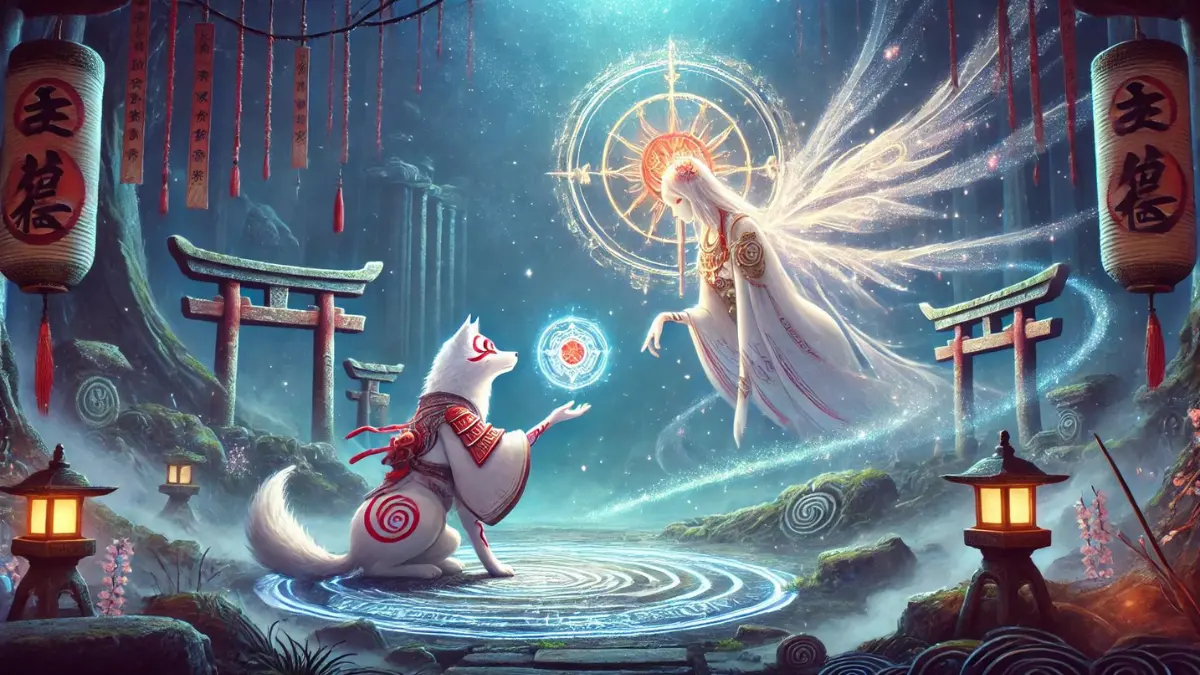
Okami Amaterasu starts the game with limited abilities and gradually regains her full divine powers. This evolution ties to the narrative, as she must rediscover and restore the Celestial Brush techniques by finding and reuniting with the Celestial Brush Gods.
At the beginning, Amaterasu has basic abilities like Sunrise and Rejuvenation, which help her start her journey and solve simple puzzles.
As players explore and complete quests, they encounter Celestial Brush Gods who bestow new techniques on Amaterasu. Each new ability opens up more gameplay possibilities and allows for complex interactions with the environment and enemies.
Some techniques upgrade to more powerful versions, enhancing their effectiveness. For example, Power Slash upgrades to cut tougher materials, and Cherry Bomb enhances to create larger explosions.
By the end, Amaterasu regains all her powers, becoming a formidable force capable of restoring balance and defeating the ultimate evil, Yami. This progression provides a sense of growth and accomplishment and ties into the theme of restoration and renewal.
Okami Amaterasu: Story and Role
Ōkami begins with a legend from 100 years ago. The white wolf Shiranui and the swordsman Nagi defeat the eight-headed demon Orochi to save Kamiki Village.
In the present day, Nagi’s descendant, Susano, releases Orochi, who curses the land of Nippon. The wood sprite Sakuya, guardian of Kamiki Village, summons Amaterasu, the sun goddess, reincarnated as Shiranui, to remove the curse and restore the land.
Accompanied by Issun, a tiny artist known as a Poncle, Amaterasu sets out to defeat Orochi and cleanse the land of darkness.
Okami Amaterasu: Major Plot Points
Amaterasu and Issun travel to the Moon Cave, where Orochi resides. With Susano’s help, they defeat Orochi and save the maiden Kushi. This victory marks the start of Amaterasu’s journey to restore light to Nippon.
Amaterasu and Issun travel through regions like Ryoshima Coast and Sei’an City, battling demons and restoring life. They work with characters like the priestess Rao and Queen Himiko to cleanse the land. They discover Rao was killed and impersonated by the fox demon Ninetails, whom they defeat.
The duo travels to the icy northern island of Kamui, assisting the Oina tribal people in defeating the twin demons Lechku and Nechku. They uncover the Ark of Yamato, a celestial ship that brought demons to the mortal world. Here, Amaterasu learns more about her past and her mission’s true nature.
Okami Amaterasu: Relationships with Other Characters
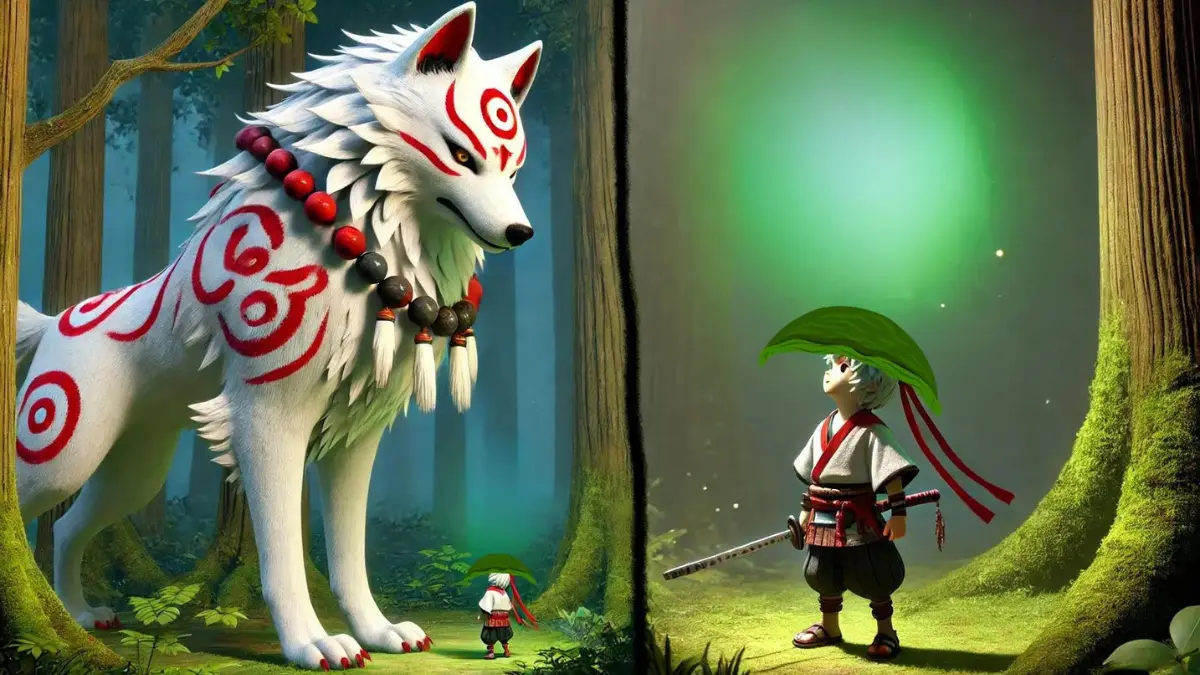
Issun – Amaterasu’s constant companion, serves as guide and comic relief
Issun is a prominent character, serving as Amaterasu’s traveling companion and guide throughout her journey. He is a member of the Poncle tribe, a race of tiny beings who live in the forest of Yoshpet.
Issun is a self-proclaimed “Wandering Artist” and a master of the brush stroke Rejuvenation.
Despite his small stature, he plays a significant role in the game’s narrative and gameplay.
Throughout the journey, Issun grows from a mischievous, selfish character into a true Celestial Envoy. Embracing his role in spreading Amaterasu’s divine influence.
Issun shares a special bond with Amaterasu, whom he affectionately nicknames “Ammy” or “Furball.” Despite their frequent bickering, Issun deeply respects and cares for her. Their partnership is central to the game’s narrative.
Susano – a cowardly, reluctant hero
Initially a cowardly hero, Susano overcomes his fears and embraces his lineage as Nagi’s descendant. His relationship with Kushi and his bravery in facing Orochi highlight his growth.
Waka – mysterious and enigmatic character
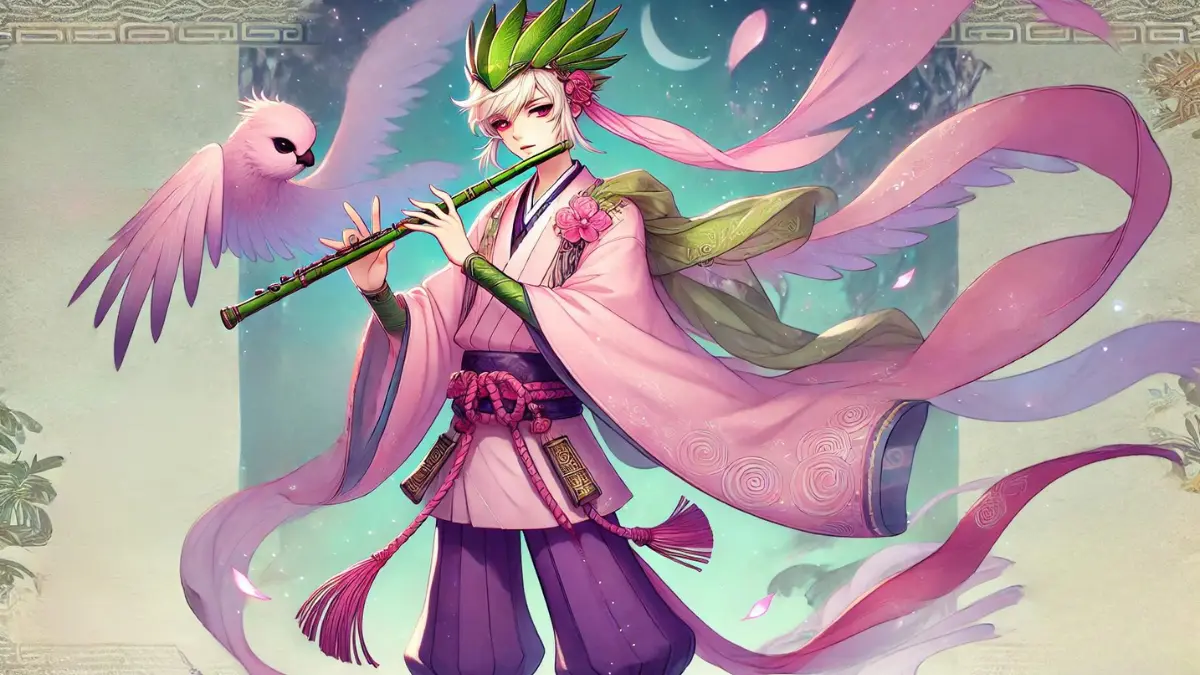
Waka aids and challenges Amaterasu. He belongs to the Moon Tribe and has a deep connection to celestial events and Amaterasu’s mission. His foresight and cryptic hints guide Amaterasu.
Issun has a contentious relationship with Waka. Issun’s distrust and rivalry with Waka add tension and depth to the story.
Final Battle
Ōkami’s climax takes place on the Ark of Yamato, where Amaterasu confronts Yami, the leader of the demons. Yami initially drains Amaterasu’s powers, leaving her vulnerable.
However, Issun, embracing his role as a Celestial Envoy, rallies the people of Nippon to send their prayers and support to Amaterasu. This collective faith restores her powers, allowing her to defeat Yami in a dramatic final battle. With Yami’s defeat, the curse over Nippon lifts, and peace returns.
Amaterasu and Waka take control of the Ark and sail back to the Celestial Plain, determined to rebuild the land of the gods. The game concludes with a sense of renewal and hope as Amaterasu’s journey brings light and harmony back to the world.
Amaterasu’s story in Ōkami blends traditional Japanese mythology with engaging gameplay. Her journey from awakening to the final battle against Yami features memorable characters, epic battles, and themes of restoration and renewal.
Through interactions with characters like Issun, Susano, and Waka, and battles against foes like Orochi and Yami, Amaterasu’s role as a divine protector and restorer of balance is beautifully portrayed.
Cultural Impact and Legacy of Okami Amaterasu
Amaterasu’s Influence in Other Games
Amaterasu’s influence extends beyond Ōkami, appearing in various video games and showcasing her popularity and cultural significance.
Marvel vs. Capcom 3: Amaterasu appears as a playable character in Marvel vs. Capcom 3: Fate of Two Worlds and Ultimate Marvel vs. Capcom 3. Her inclusion highlights her iconic status within the Capcom universe.
Monster Hunter Generations: In Monster Hunter Generations, players can obtain armour sets and weapons inspired by Amaterasu, embodying the sun goddess while battling monsters.
Asura’s Wrath: Amaterasu and Issun make a cameo appearance during Interlude 10 in Asura’s Wrath, another Capcom title, cementing her presence in broader Capcom lore.
Tatsunoko vs. Capcom: Amaterasu also appears in Tatsunoko vs. Capcom: Ultimate All-Stars, a crossover fighting game featuring characters from Capcom and Tatsunoko franchises.
Amaterasu’s influence also appears in various references and homages across different media.
Bayonetta: The game Bayonetta includes a reference to Ōkami through a weapon called “Shuraba,” nodding to the Celestial Brush techniques.
The Simpsons Game: The Simpsons Game features a parody of Ōkami in one of its levels, showcasing the game’s impact on popular culture.
Learn more about other games:
- Modern Aphrodite Fortnite: Myths & Mortals
- Top Archery Games: Genshin to Skyrim
- Genshin Impact Characters: Exploring Teyvat
Conclusion
Okami Amaterasu’s journey inspires players to appreciate nature and its beauty. Her powers demonstrate the importance of light and harmony. The game’s art style and storytelling create an immersive experience.
Players learn valuable lessons about perseverance and hope. By guiding Amaterasu, they help restore balance to a cursed land. This adventure showcases the impact of mythology in modern gaming.
Ōkami reminds us of the timeless power of stories and their ability to teach and inspire. Amaterasu’s quest encourages us to protect our world and cherish its wonders. The game leaves a lasting impression on all who experience it.