Fionn Mac Cumhaill: Myths of the Irish Legend
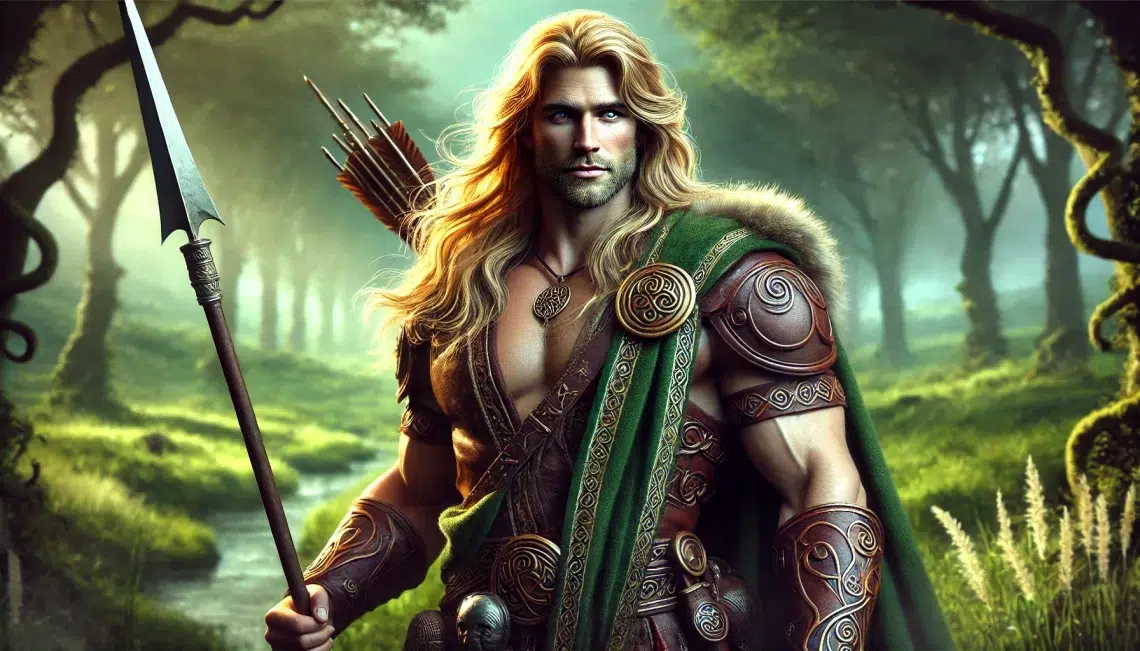
Fionn mac Cumhaill is a central figure in Irish mythology, known for his role in the Fenian Cycle, which celebrates the ancient Irish warriors.
He leads the Fianna, a group of warriors known for their bravery and loyalty. Fionn is also called Finn McCool or Finn Mac Cumhail in different translations. He is famous for his wisdom, gained by tasting the Salmon of Knowledge. Stories about him and his warriors highlight their adventures and challenges.
Fionn’s tales show his strength, intelligence, and leadership. These stories play a big part in Irish culture and tradition, sharing lessons of honour, courage, and wit.
The name “Fionn” means “white,” “bright,” or “fair.” It comes from Proto-Celtic roots, with similar words in other Celtic languages. In Welsh, “gwyn” means “white,” and in Gaelic, “fionn” also means “fair” or “bright.”
These words all share the same origin, highlighting their common heritage. The name reflects qualities like brightness and purity, which are important in many cultures.
Mythical Birth and Early Life of Fionn Mac Cumhaill
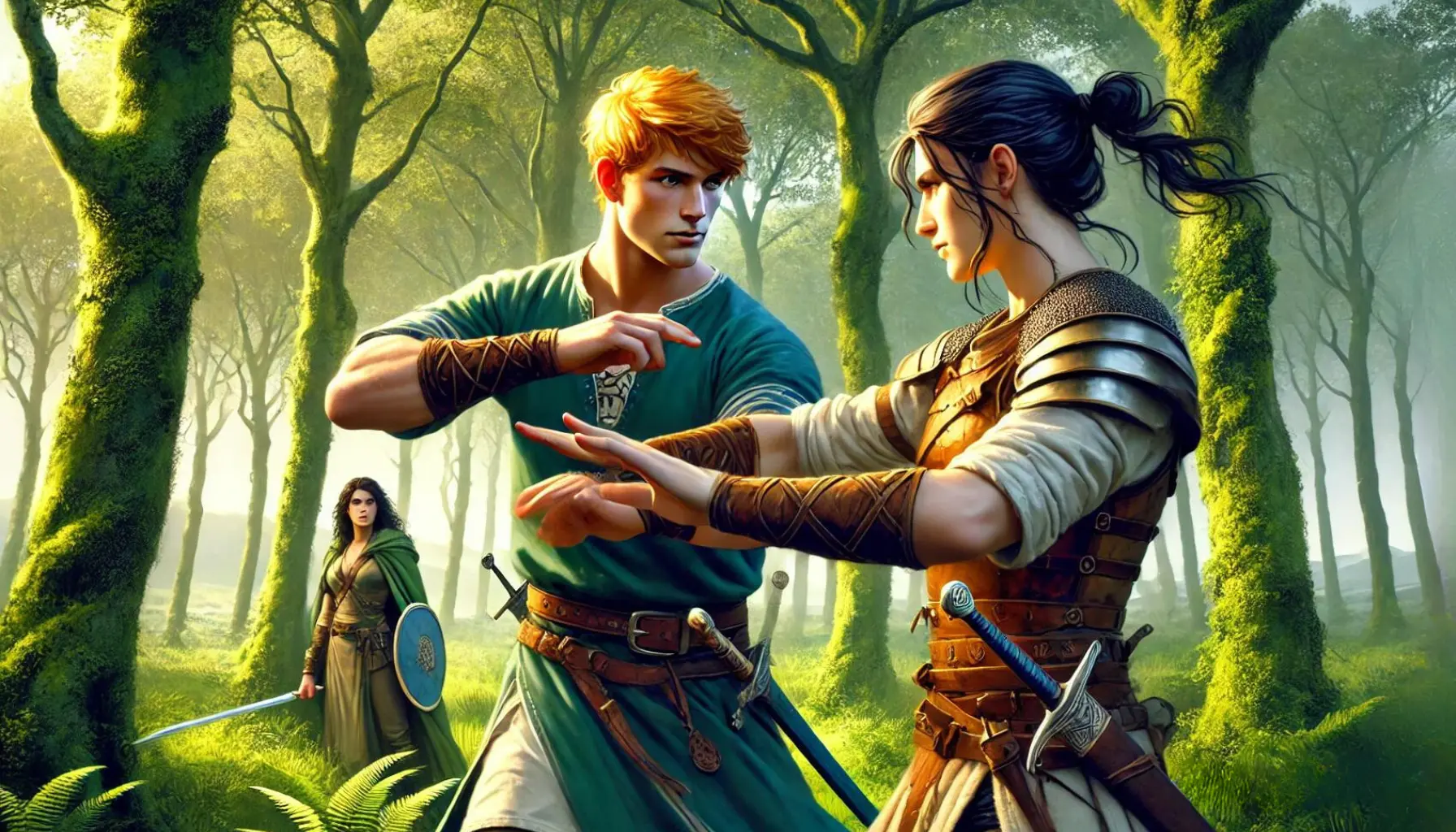
Fionn mac Cumhaill was born to Cumhall, the leader of the Fianna, and Muirne, the daughter of the druid Tadg mac Nuadat. His birth had unique circumstances. Cumhall abducted Muirne, leading to a conflict with Tadg. This conflict resulted in Cumhall’s death in battle. After Cumhall’s death, Muirne faced danger, as her family did not support her relationship with Cumhall.
To protect Fionn, Muirne entrusted him to a warrior woman named Liath Luachra. Liath Luachra raised him in secrecy to keep him safe from enemies. Fionn grew up learning the skills of a warrior, gaining strength and courage. Liath Luachra trained him in fighting and survival.
Later, Fionn studied under the druid Finnegas. Finnegas was a wise and knowledgeable teacher. He taught Fionn about poetry, lore, and druidic knowledge. During his time with Finnegas, Fionn gained the wisdom of the Salmon of Knowledge. He accidentally tasted the fish while cooking it for Finnegas, which gave him great wisdom.
Throughout his early life, Fionn faced many challenges. Despite these hardships, he grew into a skilled and wise leader. His upbringing shaped him into a hero, ready to lead the Fianna. Fionn’s story shows his journey from a hidden child to a legendary figure in Irish mythology. His early experiences and the people who guided him played crucial roles in his development.
Understanding the Fenian Cycle
The Fenian Cycle, also known as the Fionn Cycle or Ossianic Cycle, is one of the four major cycles of Irish mythology. This collection of tales primarily revolves around the hero Fionn Mac Cumhaill and his warrior band, the Fianna.
The Fenian Cycle is set during the 3rd century AD. The stories are a blend of oral traditions, historical accounts, and Christian influences. These were recorded by medieval monks in The Book of the Dun Cow and The Book of Leinster.
The central figure of these tales is Fionn Mac Cumhaill. They also include his son Oisín, grandson Oscar, Diarmuid, Goll mac Morna, and the Fianna. This group of warriors, led by Fionn, played a big part in many battles and quests. Their stories highlight loyalty, courage, and the wisdom of the druids that guided them.
The Legendary Tales of Fionn Mac Cumhaill
Myth: The Boyhood Deeds of Fionn
This myth tells the story of Fionn Mac Cumhaill’s early adventures. As a child, Fionn had to hide his identity to protect himself from his enemies. He lived with two wise women who trained him in the arts of hunting and fighting. They taught him how to survive in the wild and become a skilled warrior.
The Death of Aillén

The Death of Aillén is a famous story from Irish mythology. Aillén was a magical creature who terrorized Tara by breathing fire and putting everyone to sleep with his music. Every year, he would burn down the great hall.
Fionn Mac Cumhaill decided to stop him. To stay awake, Fionn pressed the point of his spear against his forehead. When Aillén arrived, Fionn used his bravery and quick thinking to kill him, saving Tara from further destruction. This act of courage made Fionn a hero and secured his place as the leader of the Fianna.
Fionn showed bravery and cleverness from a young age. He encountered many challenges, including fierce animals and dangerous enemies. He also learned about the magical and mystical world around him. One of his early heroic acts was defeating a fire-breathing creature called Aillén, who terrorized Tara every year.
The story of his boyhood shows how Fionn grew into a wise and powerful leader, destined for great things in Irish mythology.
Avenging His Father’s Death
Fionn’s father, Cumhall, was the leader of the Fianna, a band of warriors. Cumhall was killed in a battle against Goll mac Morna, who then took control of the Fianna.
As a young man, Fionn learned about his father’s death and sought to reclaim his rightful place as the leader of the Fianna. To prove his worth, he trained in the arts of war and wisdom. Fionn eventually confronted Goll mac Morna and, through a series of events and challenges, demonstrated his bravery and leadership skills.
Fionn’s actions and the support he gained from others allowed him to avenge his father’s death and reclaim the leadership of the Fianna. This story highlights themes of justice, honour, and the importance of rightful succession in Irish mythology.
Myth: The Giant’s Causeway
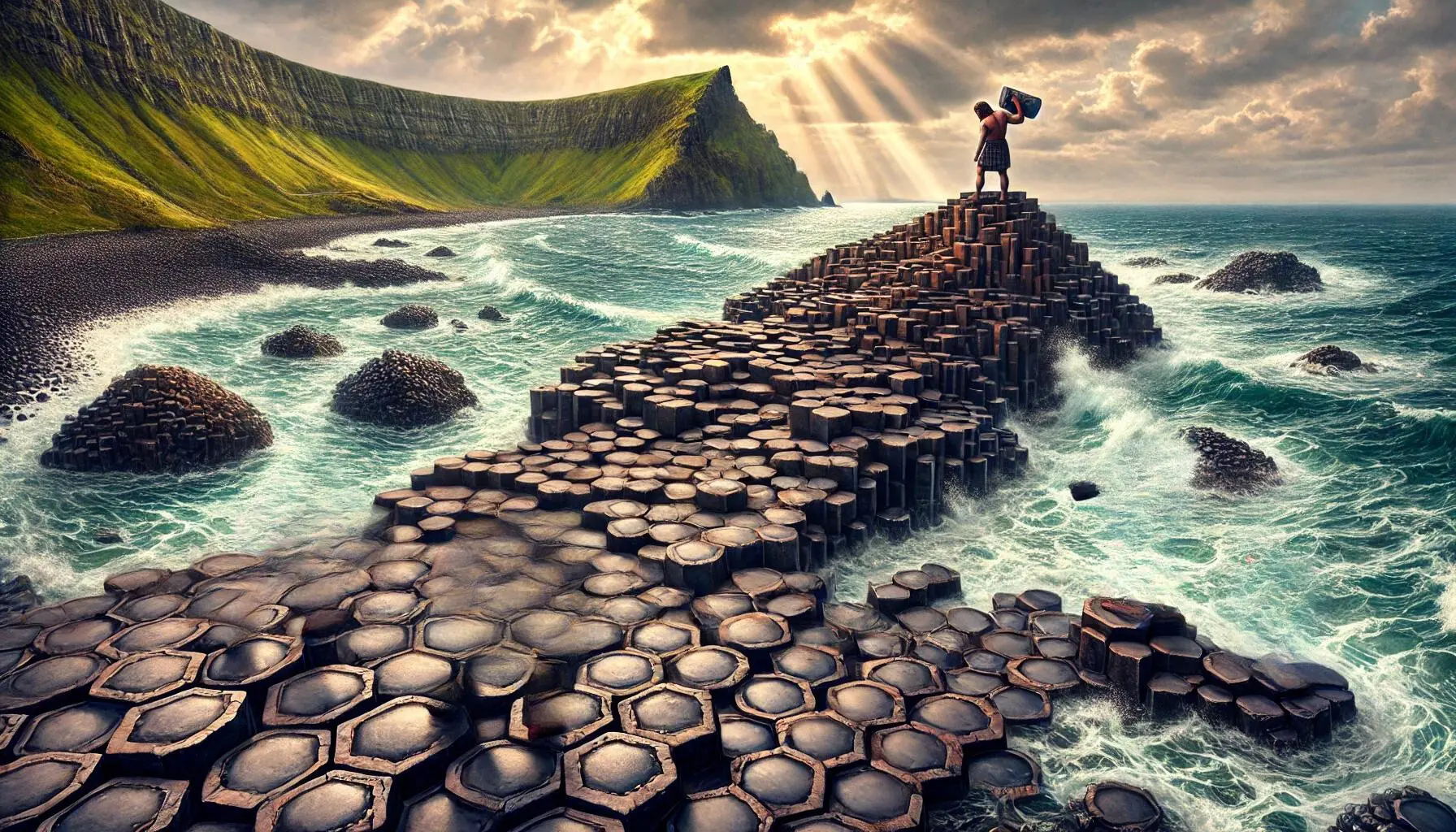
The Giant’s Causeway is a famous natural wonder in Northern Ireland. It’s made up of thousands of hexagonal basalt columns that look like stepping stones. According to legend, Fionn Mac Cumhaill created the Giant’s Causeway.
The story goes that Fionn, a giant and warrior, had a rivalry with another giant named Benandonner. Benandonner lived across the sea in Scotland. To challenge him, Fionn decided to build a path, or causeway, across the water. He used large stones to create this pathway, allowing him to reach Benandonner.
When Fionn reached Scotland, he realized that Benandonner was much bigger and stronger than him. Fionn quickly ran back home to Ireland. He needed a clever plan to avoid fighting the giant. Fionn’s wife, Oonagh, came up with an idea. She dressed Fionn as a baby and put him in a giant cradle.
When Benandonner arrived, he saw the “baby” and thought, “If this is the size of Fionn’s child, then Fionn must be enormous!” Scared, Benandonner ran back to Scotland, destroying the causeway behind him to prevent Fionn from following. This is why similar rock formations can be found on the Scottish side, known as Fingal’s Cave.
The legend of the Giant’s Causeway explains the unique rock formation and also showcases Irish storytelling. It highlights themes of cleverness and bravery, as Fionn used his wits to outsmart a stronger opponent. The story adds a magical element to this natural site, making it a popular attraction for visitors. The Giant’s Causeway remains a symbol of Ireland’s rich mythological heritage.
Myth: The Salmon of Knowledge
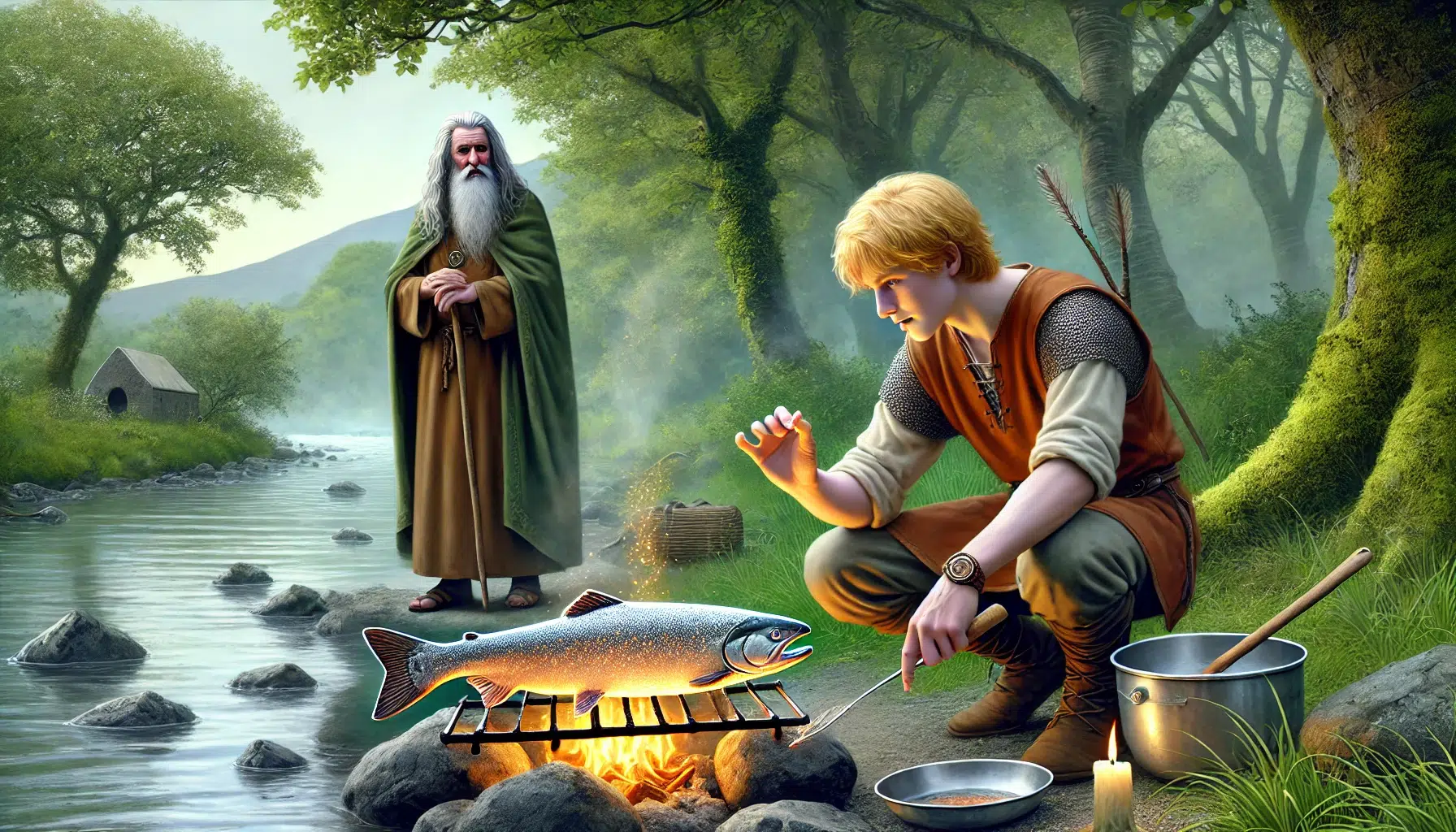
The Salmon of Knowledge is a famous story in Irish mythology. It centres around Fionn Mac Cumhaill and a magical salmon. According to the legend, the salmon gained all the world’s knowledge by eating hazelnuts that fell into the Well of Wisdom.
A wise old druid named Finnegas spent years trying to catch this special fish. He believed that whoever ate the salmon would gain its wisdom. One day, Finnegas finally caught the salmon and asked Fionn, his young student, to cook it for him. Finnegas warned Fionn not to eat any part of the fish.
While cooking, Fionn touched the hot fish with his thumb to check if it was done. The heat burned him, and he instinctively put his thumb in his mouth to ease the pain. By doing this, Fionn accidentally tasted the salmon’s skin. Instantly, he gained the Salmon of Knowledge’s wisdom.
Finnegas realized that Fionn had received the fish’s power. Instead of being angry, he accepted that Fionn was destined to gain this wisdom. From that moment on, whenever Fionn needed knowledge, he would suck his thumb to access the salmon’s wisdom.
This story shows the importance of wisdom and destiny in Irish culture. Fionn’s accidental gain of knowledge made him a legendary figure, known for his insight and leadership. The Salmon of Knowledge remains a powerful symbol of wisdom in Irish mythology. It teaches that true knowledge can come from unexpected places and events.
Other Tales or Myths
The Battle of Gabhra
The Battle of Gabhra is a famous event in Irish mythology. It was a major conflict between the Fianna, led by Fionn Mac Cumhaill’s grandson, Oscar, and the High King of Ireland. The battle occurred due to tensions and conflicts between the Fianna and the ruling powers.
Many great warriors fought in this battle, and it resulted in significant losses on both sides. Oscar, a hero of the Fianna, died in the battle, marking a tragic end for many characters. The Battle of Gabhra is remembered as a turning point, leading to the decline of the Fianna.
The Battle of Ventry (Cath Fionntrá)
This battle, also known as Cath Fionntrá, is a legendary event in Irish mythology. It tells the story of a great battle between the Fianna, led by Fionn Mac Cumhaill, and an invading army from overseas. The invaders, led by King Dáire Donn, sought to conquer Ireland.
Fionn and the Fianna fought bravely to defend their land. The battle lasted for a long time and involved many fierce fights. In the end, the Fianna emerged victorious, protecting Ireland from foreign rule. The Battle of Ventry showcases the courage and skill of Fionn and his warriors.
The Chase of Síd na mBan Finn
“The Chase of Síd na mBan Finn” is an exciting tale from Irish mythology. It follows Fionn Mac Cumhaill and his warriors as they chase a magical boar. The boar leads them to Síd na mBan Finn, a mystical otherworldly place inhabited by enchanting women.
Fionn and his men face various challenges while pursuing the boar. They encounter magical beings and strange landscapes. The story highlights Fionn’s bravery and leadership, as well as the magical elements of Irish myths. “The Chase of Síd na mBan Finn” showcases the rich and mysterious world of Irish folklore.
Characteristics and Attributes of Fionn Mac Cumhaill
Fionn mac Cumhaill is a legendary hero known for his unique characteristics and abilities.
One of his most famous traits is his wisdom, granted by his magic thumb. By sucking his thumb, Fionn gains insight and knowledge, making him a seer. This ability helps him solve problems and foresee events.
Fionn is also a skilled warrior and hunter. He shows great martial prowess, excelling in battle and strategy. His bravery and combat skills make him a respected leader of the Fianna. Fionn’s strength and agility are unmatched, and he often uses his talents to protect his people and land.
He has a deep connection with nature, shown through his bond with his hounds, Bran and Sceólang. These loyal companions share a strong, mystical link with Fionn. Together, they hunt and explore the wild, showing Fionn’s respect for the natural world. His connection to nature also helps him navigate the forests and landscapes of Ireland.
Fionn is known for his healing abilities. People believe he has “healing hands,” which can cure injuries and ailments. This gift adds to his reputation as a wise and compassionate leader. Fionn’s healing powers make him not just a warrior but also a caregiver for his followers.
Fionn mac Cumhaill embodies many admirable qualities. He combines wisdom, bravery, and compassion, making him a complex and revered figure in Irish mythology. His skills and attributes continue to inspire stories and legends, showing his lasting impact on culture and tradition.
The Role of Magic and the Supernatural
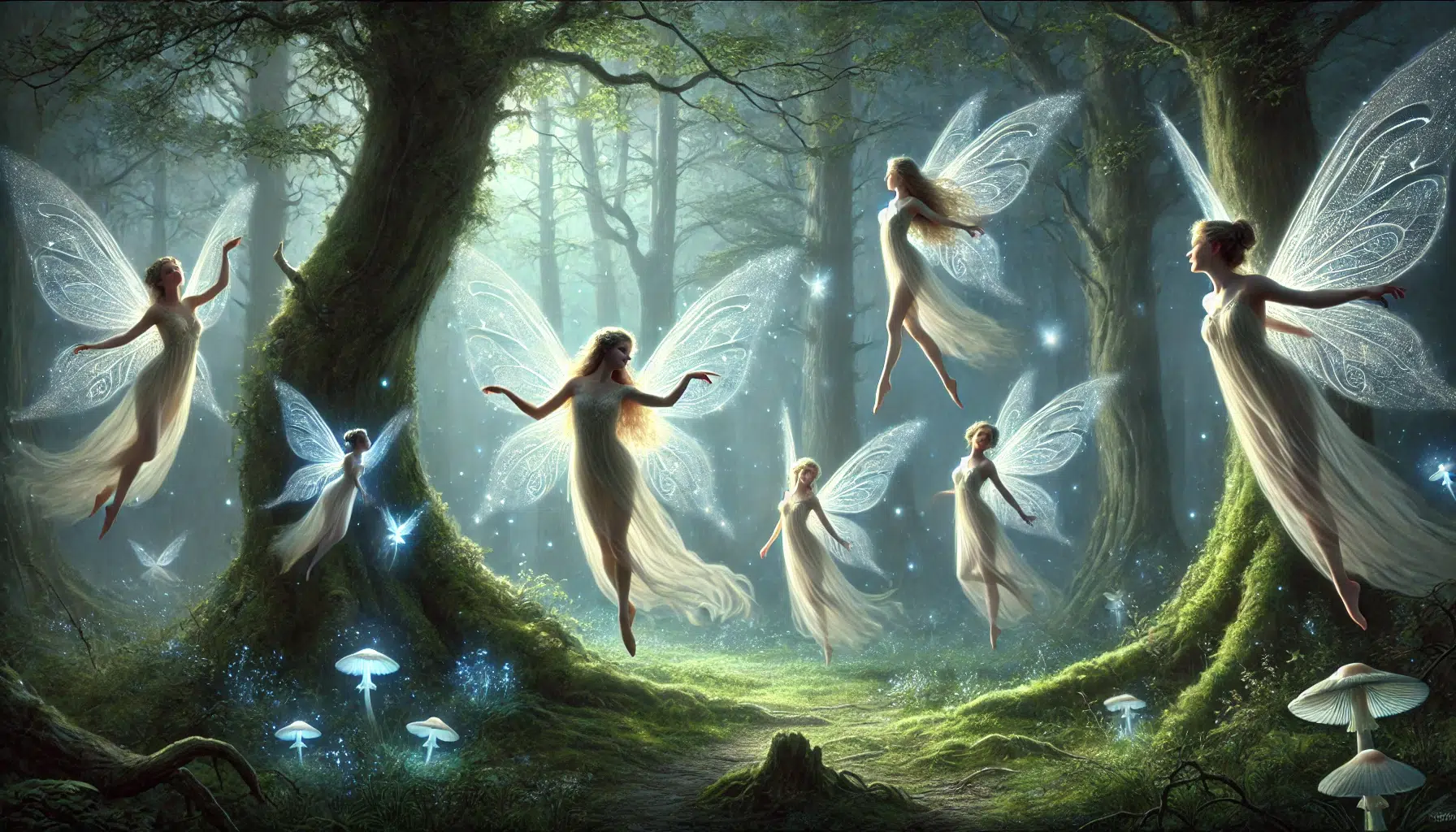
Fionn Mac Cumhaill’s stories are full of Celtic magic and mystery. Supernatural beings play big roles in these tales. They make the stories exciting and give us a glimpse into old Irish beliefs. They also show how important magic is in Irish stories.
Druids
Druids are key figures in these stories. They possess great magical knowledge and often guide others. They connect the real world with the magical one, using their deep understanding of nature and ability to predict the future. Druids help bridge the gap between the everyday and the mystical.
Supernatural Beings – Aos Sí, or Fairies
The Aos Sí, or fairies, often appear in Fionn’s adventures. These beings can be helpful or tricky, depending on the story. Their magical nature shows how thin the line is between our world and the magical one in Celtic tales. The Aos Sí add an element of surprise and wonder to the stories.
Celtic Magic
Celtic magic is a major part of Fionn’s legends. It includes spells, visions, and miracles, which often change Fionn’s path and shape his future. These magical elements show the powerful influence of the supernatural in his life.
Irish Enchantments
Irish enchantments, like spells and magical items, are also important. Objects like cloaks of invisibility and magical weapons play key roles in the tales. These items highlight the value placed on magic and special artifacts in Irish culture.
The magical elements in Fionn’s stories do more than just entertain. They connect the real world with the mysterious one, creating a rich tapestry of Irish folklore. This blend of the ordinary and the supernatural is a defining feature of these ancient tales.
Sites in Ireland Associated with Fionn Mac Cumhaill
Ireland’s landscapes are more than just beautiful; they’re filled with the stories of Fionn Mac Cumhaill, a legendary Irish hero. These sites are key to understanding his tales and mix history with mythology. They attract visitors from all over the world.
- Giant’s Causeway: Legend says Fionn Mac Cumhaill made this amazing rock formation as stepping-stones to Scotland. He wanted to challenge his rival. Now, the Giant’s Causeway is a UNESCO World Heritage Site, showing nature’s beauty and myth.
- Hill of Allen: This site is believed to be Fionn Mac Cumhaill’s home. It overlooks Kildare’s plains. The Hill of Allen was a key spot in many stories, linking to Ireland’s ancient warrior tales.
Visiting these places connects you to Ireland’s stories of giants and heroes. Each site, rooted in folklore, links the past to today’s Irish culture. They offer a bridge between history and the present.
Continuing Legacy of Fionn Mac Cumhaill
The continuing legacy of Fionn Mac Cumhaill remains strong in Irish mythology. As a legendary warrior and leader of the Fianna, Fionn embodies bravery, wisdom, and honour. His tales continue to inspire stories and legends, highlighting his adventures and the values he stood for.
Fionn’s legacy includes his famous son, Oisín, known for his own adventures and poetry. The stories of Fionn and the Fianna celebrate their heroic deeds, magical encounters, and deep connection to nature. These tales are part of the Fenian Cycle, a collection of Irish myths that showcase the culture and traditions of ancient Ireland.
Fionn’s influence extends beyond mythology. His name is still well-known in Ireland and around the world. The stories of his bravery and wisdom continue to captivate audiences, keeping the legend of Fionn Mac Cumhaill alive for future generations.
Conclusion
Fionn Mac Cumhaill stands as a central figure in Irish mythology. His stories, filled with bravery, wisdom, and magical elements, continue to fascinate people today. As a leader of the Fianna, Fionn showed great courage and honour, making him a legendary hero.
The tales of his adventures, from his boyhood deeds to his interactions with mystical beings, highlight important values and lessons. These stories not only entertain but also offer a glimpse into the rich cultural heritage of Ireland.
Fionn’s legacy endures, inspiring generations with his heroic exploits and wise decisions. His mythological presence remains a testament to the enduring power of storytelling and the deep connection between myth and culture.