
Famous Roman Myths: From the Creation of Rome to Hero Horatius
Famous Roman myths and mythology is a collection of stories that explain the origins, values, and traditions of ancient Rome. These myths feature gods, heroes, and legendary events that shaped Roman culture and identity. While influenced by Greek mythology, Roman myths have their own unique twists, emphasizing Rome’s greatness and destiny.
Central to these stories are the Roman gods, who were believed to watch over the city and its people. From Jupiter, the king of the gods, to Mars, the god of war, these deities played a key role in Roman life. Myths like the founding of Rome by Romulus and Remus, and the heroic journey of Aeneas, connected Romans to their divine heritage and reinforced their belief in their city’s future.
Roman myths not only entertained but also taught important lessons about bravery, loyalty, and leadership, leaving a legacy that continues to inspire today.
The Influence of Greek Mythology on Roman Mythology

The Roman Gods and Goddesses

The Roman gods and goddesses played a central role in shaping the myths and culture of ancient Rome. These deities, believed to influence every aspect of life, were seen as protectors of the city and its people. Many Roman gods were inspired by their Greek counterparts but adapted to reflect Roman values and society.
Jupiter, the king of the gods, ruled over the skies and ensured justice, while Juno, his wife, watched over women and marriage. Mars, the god of war, symbolized strength and the Roman spirit of conquest. Venus, the goddess of love and beauty, was also linked to Rome’s origins through her son Aeneas.
Each deity had their domain, from Minerva’s wisdom to Neptune’s control of the seas, shaping stories that explained nature, fate, and Rome’s destiny. These gods were more than myth; they were a vital part of Roman identity.
Famous Roman Myths Involving The City of Rome
The Creation of Rome: Romulus and Remus
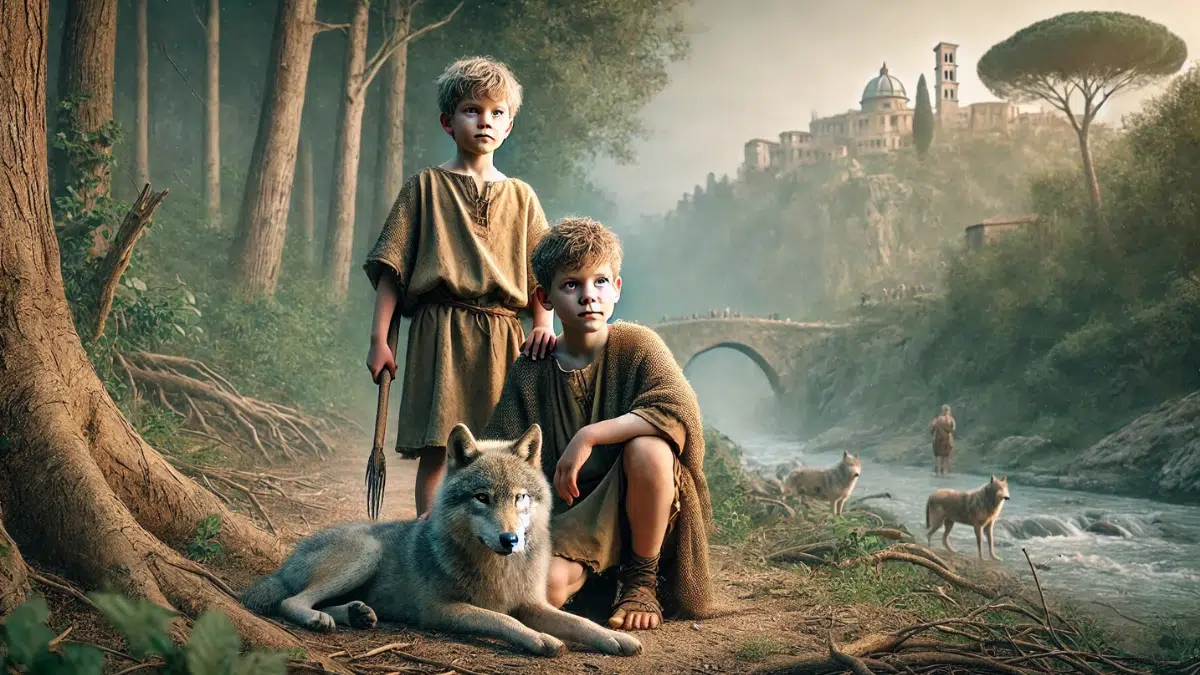
A long time ago, there were twin brothers named Romulus and Remus, sons of Mars, the god of war. They were born to a princess, but an evil king wanted them gone because he thought they might take his throne. The king ordered them to be left by a river, but they didn’t die. Instead, a she-wolf found them and cared for them, feeding them with her milk.
Later, a kind shepherd discovered the twins and raised them as his own. When Romulus and Remus grew up, they decided to build a new city near the river where they had been saved. But the brothers couldn’t agree on where to put the city or who should rule it. They argued and fought, and sadly, Romulus killed Remus.
Romulus went on to found the city and became the first ruler, which he named Rome, after himself. He worked hard to make Rome strong and powerful, inviting people from all over to live there. Over time, Rome grew into one of the most famous cities in history.
The myth of Romulus and Remus teaches us about bravery, family, and how Rome came to be. It’s still told today as the beginning of one of the greatest civilizations ever.
The Abduction of the Sabine Women

When Romulus founded Rome, there was one big problem: the city didn’t have enough women for families. Romulus invited neighbouring people to a big festival, pretending it was a friendly event. People came to celebrate, bringing their families, including the Sabines, a nearby group.
During the festival, Romulus and his men suddenly grabbed the Sabine women and took them to Rome. The Sabine men were furious and prepared to fight to get their daughters and wives back.
But something surprising happened. The Sabine women convinced their fathers and brothers not to attack Rome. They had started to care for their new husbands and didn’t want more fighting or bloodshed. Instead, they asked everyone to make peace.
The Sabines and Romans agreed to join together as one people, and Rome grew stronger. The women’s bravery stopped a war and helped unite two groups, creating a larger and more powerful community.
This story is one of Rome’s oldest myths, showing how the city grew through challenges. While the idea of taking the women was wrong, the myth focuses on how peace and cooperation helped build Rome’s future. It’s a story about strength, unity, and how people can work together even after difficult beginnings.
Numa Pompilius and the Roman Religion

After Romulus, Rome needed a new leader. The Romans chose Numa Pompilius, a wise and peaceful man. Numa didn’t care about fighting; he focused on making Rome a place where people respected the gods and each other.
Numa believed that religion and good laws would help Rome grow strong. He created many of the traditions Romans followed for centuries. For example, he started the Vestal Virgins, women who kept a sacred fire burning to honour the goddess Vesta, who protected homes and families. He also set up a calendar to organize festivals and worship days.
One of Numa’s most famous stories involves the god Janus. Numa built a temple with doors that stayed open during war and closed during peace. This reminded people of the importance of harmony.
Another story says Numa met the goddess Egeria in a forest. She gave him advice on creating fair laws and religious practices. Numa used her wisdom to help the Romans live better lives.
Numa’s rule was different from Romulus’s. Instead of focusing on battles, he made Rome a place of order and respect for the gods. Romans remembered him as a leader who brought peace and shaped their traditions.
The Rape of Lucretia
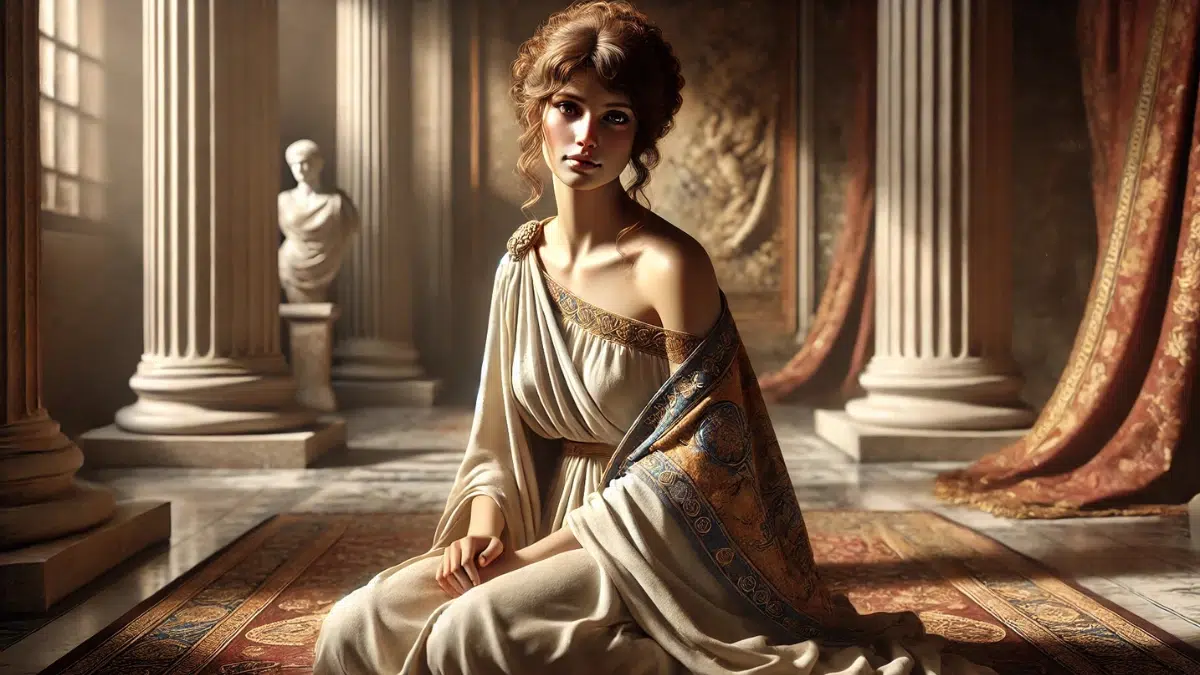
Lucretia was a noblewoman known for her beauty, kindness, and loyalty. She lived during the time when Rome was ruled by kings. Her tragic story is one of the most important in Roman mythology because it led to a major change in Rome’s history.
One night, the son of King Tarquin, Sextus Tarquin, visited Lucretia’s home. He admired her but made a terrible decision—he threatened her and forced her to submit to him. Lucretia was heartbroken and ashamed, even though she had done nothing wrong.
The next day, she called her husband and father to tell them what had happened. She demanded justice but felt she could not live with the shame, so she tragically took her own life. Her death caused an uproar in Rome. Her family and friends, led by a man named Lucius Junius Brutus, swore to overthrow the monarchy.
They succeeded in driving King Tarquin and his family out of Rome. The Romans decided they would never be ruled by kings again. Instead, they created the Roman Republic, where leaders were elected.
Lucretia’s story symbolizes the values of honour and justice. It’s a sad but powerful myth about standing up against tyranny and fighting for freedom.
Famous Roman Myths Involving Aeneas
Venus and Anchises

Venus, the Roman goddess of love and beauty, played a special role in Rome’s history. One of her most famous myths involves her love for a mortal man named Anchises.
The story begins when Jupiter, king of the gods, decided Venus should fall in love with a mortal as a playful trick. Venus saw Anchises, a handsome shepherd, and fell deeply in love. She visited him disguised as a mortal woman and told him she was a princess. Anchises fell in love with her too, and they spent time together in the mountains.
Later, Venus revealed her true identity, warning Anchises never to tell anyone she was a goddess. Anchises promised but couldn’t keep the secret and bragged to his friends. Jupiter punished him for this by striking him with a thunderbolt, injuring him.
Despite this, their love story had an important result: their son, Aeneas, became a great Trojan hero. Aeneas’s journey to Italy connected Rome to the gods and made Venus a key figure in Roman mythology.
This myth reminds Romans of their divine origins and the idea that even gods could feel love, joy, and sorrow just like humans. It also highlights the importance of keeping promises.
Greek Mythology Version of Venus: Aphrodite Goddess of Love, Beauty and Desire
Roman Myth of Aeneas and the Founding of Lavinium
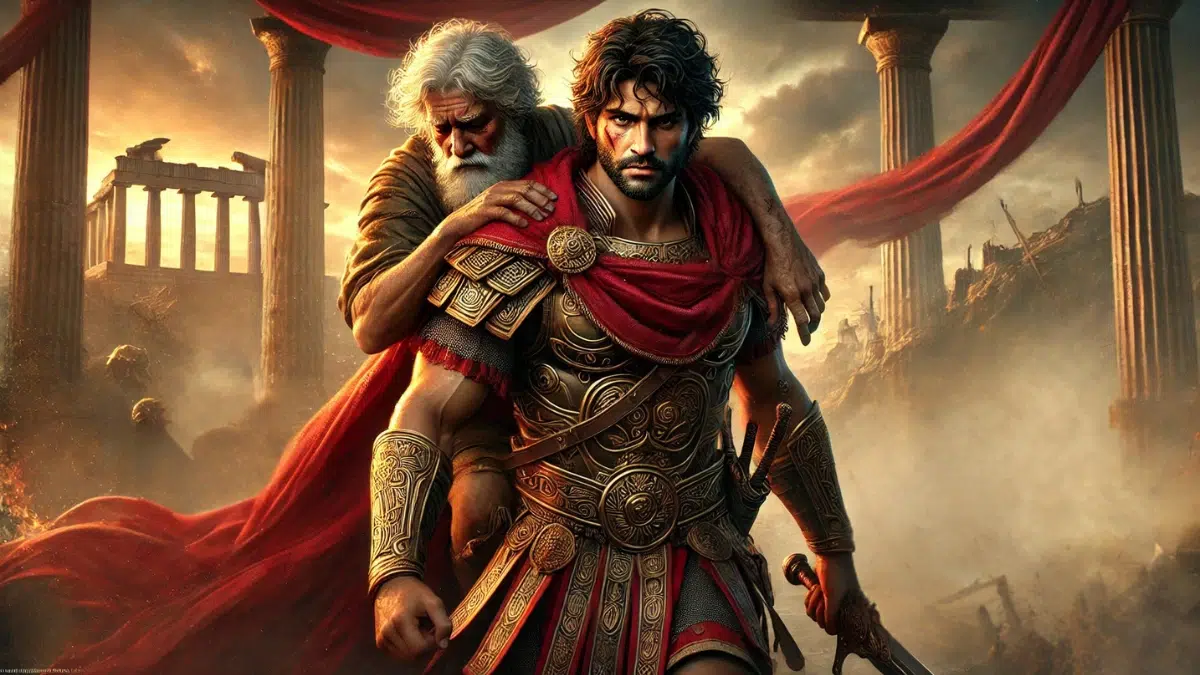
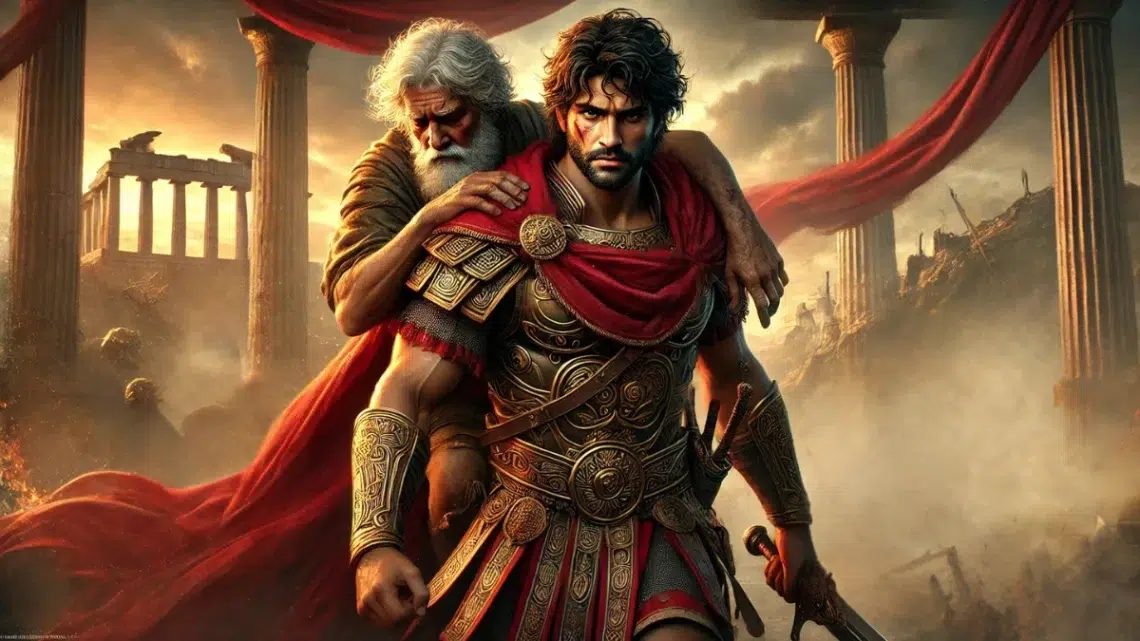
Aeneas was a brave warrior from Troy, a city that was destroyed in a terrible war. When Troy fell, the gods told Aeneas to leave and find a new home. He gathered his family and followers, taking his father and young son with him, and set sail on a long journey filled with dangers.
Aeneas faced storms, angry monsters, and even visited the Underworld to speak with spirits for guidance. Along the way, he stopped in Carthage, where Queen Dido fell in love with him. But Aeneas couldn’t stay—his mission was too important. Heartbroken, Dido cursed Aeneas and his descendants, which later led to the rivalry between Rome and Carthage.
Finally, Aeneas reached Italy. There, he met King Latinus and married his daughter, Lavinia. Aeneas and his people founded a city called Lavinium, named after Lavinia. This city was the first step in creating what would become the Roman Empire.
Aeneas’s story shows courage, loyalty, and following destiny, no matter how hard it might be. Romans believed they were descendants of Aeneas, making his journey an important part of their history and identity!
Greek Mythology Version of the Trojan War: The Trojan War: Heroic Figures and Myths
The Prophecy of the Sibyl of Cumae
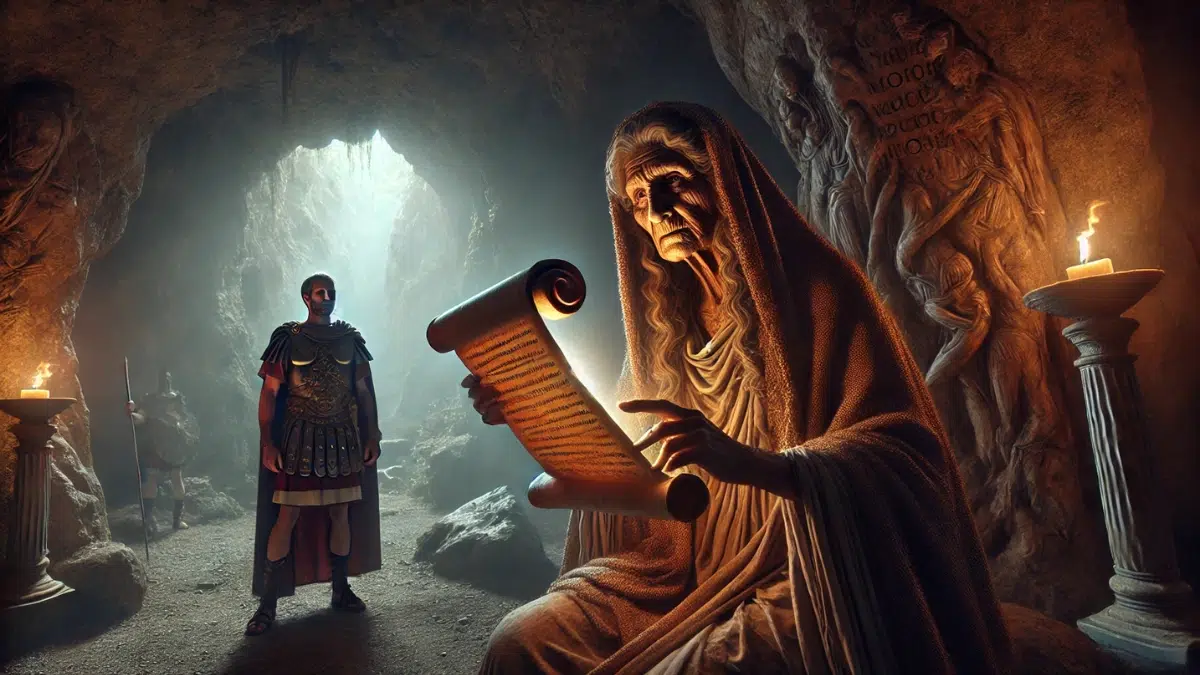
The Sibyl of Cumae was a famous prophetess who lived in a cave near Naples, Italy. She had the gift of seeing the future and often helped heroes and leaders with her visions. One of her most famous stories involves Aeneas, the Trojan hero who would become an important figure in Rome’s founding myths.
When Aeneas arrived in Italy, he sought the Sibyl’s help. She guided him to the Underworld, where he met the spirits of his ancestors and learned about the future of Rome. During this journey, Aeneas saw the souls of future Roman leaders, including Romulus and the great emperor Augustus. These visions encouraged Aeneas to keep going, knowing Rome would become a mighty city.
The Sibyl also gave prophecies about Rome’s greatness and the challenges it would face. Her words became famous and were written down in books called the Sibylline Books. Roman leaders would consult these books during times of crisis, seeking guidance from the gods.
The Sibyl’s story shows the importance of destiny in Roman mythology. Her guidance to Aeneas connected him to Rome’s future, making her a key figure in the city’s legendary beginnings. Her prophecies inspired hope and courage in difficult times.
Famous Roman Myths Involving Heroes

The Twelve Labours of Hercules (Roman Adaptation)
Hercules, called Heracles in Greek myths, was one of the strongest heroes in Roman mythology too. He was half-god, half-human, and known for his incredible strength and bravery.
The most famous Roman myth is about Hercules is the Twelve Labours. These were nearly impossible tasks he had to complete as punishment for mistakes he made while under a curse. Each labour tested his strength, cleverness, and determination.
Some of his tasks included:
- Killing the Nemean Lion with its unbreakable hide. Hercules used the lion’s own claws to defeat it.
- Capturing the Golden Hind, a magical deer sacred to the goddess Diana, without hurting it.
- Cleaning the Augean Stables, which were filthy after years of neglect, in just one day. He did it by redirecting rivers to wash them clean.
- Capturing Cerberus, the three-headed guard dog of the Underworld, and bringing it to the surface.
Each labour showed Hercules’s bravery and quick thinking, inspiring Romans to admire hard work and courage. Romans also saw Hercules as a protector of people and cities. His story reminded them that challenges could be overcome with strength and determination, no matter how impossible they seemed.
Difference from Greek Mythology Version
The Roman story of Hercules is a lot like the Greek story of Heracles, but the Romans made some changes to fit their own culture.
In the Greek version, Heracles is a hero who has to complete 12 hard labours as punishment for things he did while under a curse. His story is about struggles, mistakes, and becoming a god after death.
In the Roman version, Hercules is seen more as a role model. Romans focused on his strength, bravery, and hard work. Instead of focusing on his flaws, they showed him as a protector and a helper. Someone who worked hard to serve others and make the world safer.
Hercules also became a god in Roman myths, but he was worshipped as a symbol of strength and success, especially for soldiers and workers. Some of his adventures were even changed to connect more to Italy and Rome.
The Roman Hercules isn’t just about personal struggles like in the Greek story. He’s about showing strength, being helpful, and working hard—qualities that Romans admired a lot.
Horatius at the Bridge
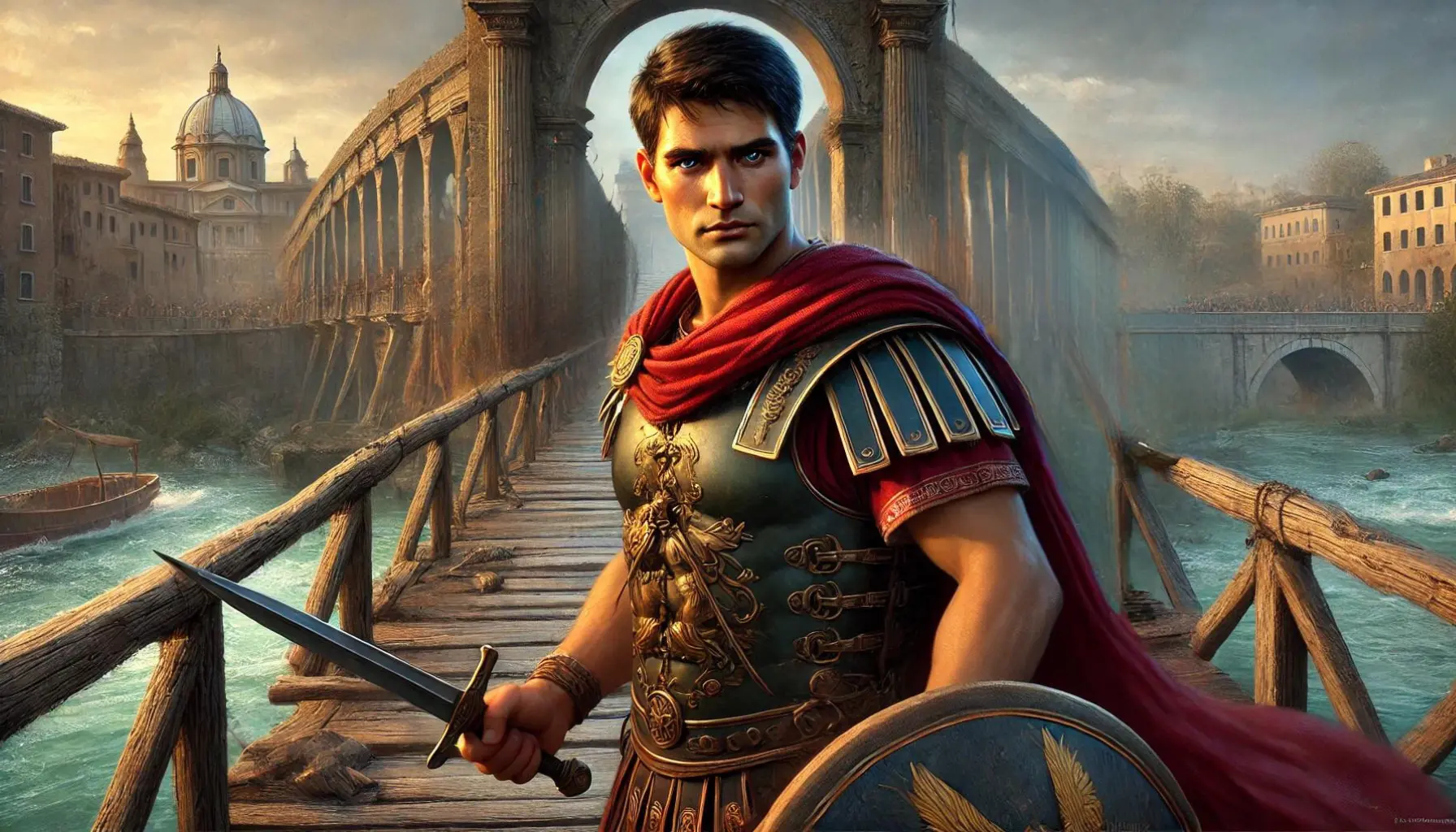
A long time ago, Rome faced an attack by a powerful army from a neighbouring city called Clusium. The enemy, led by King Lars Porsena, planned to invade Rome by crossing the Tiber River using a wooden bridge.
Rome seemed doomed, but one brave soldier, Horatius Cocles, decided to stand his ground. Along with two other soldiers, he blocked the bridge, holding off the entire enemy army. The Romans worked quickly to destroy the bridge behind him, leaving no way for the attackers to enter the city.
As the bridge began to collapse, Horatius told his fellow soldiers to retreat. He stood alone, fighting until the bridge fell. With no way back, Horatius leaped into the river, swimming to safety as arrows flew around him. Miraculously, he survived, and the enemy army was stopped.
Horatius became a Roman hero, remembered for his incredible bravery and sacrifice. His story teaches the value of courage and loyalty to one’s people, even in the face of impossible odds. This famous Roman myth has been told for generations to inspire others. It’s a tale of heroism that still resonates today!
The Triumph of Cincinnatus
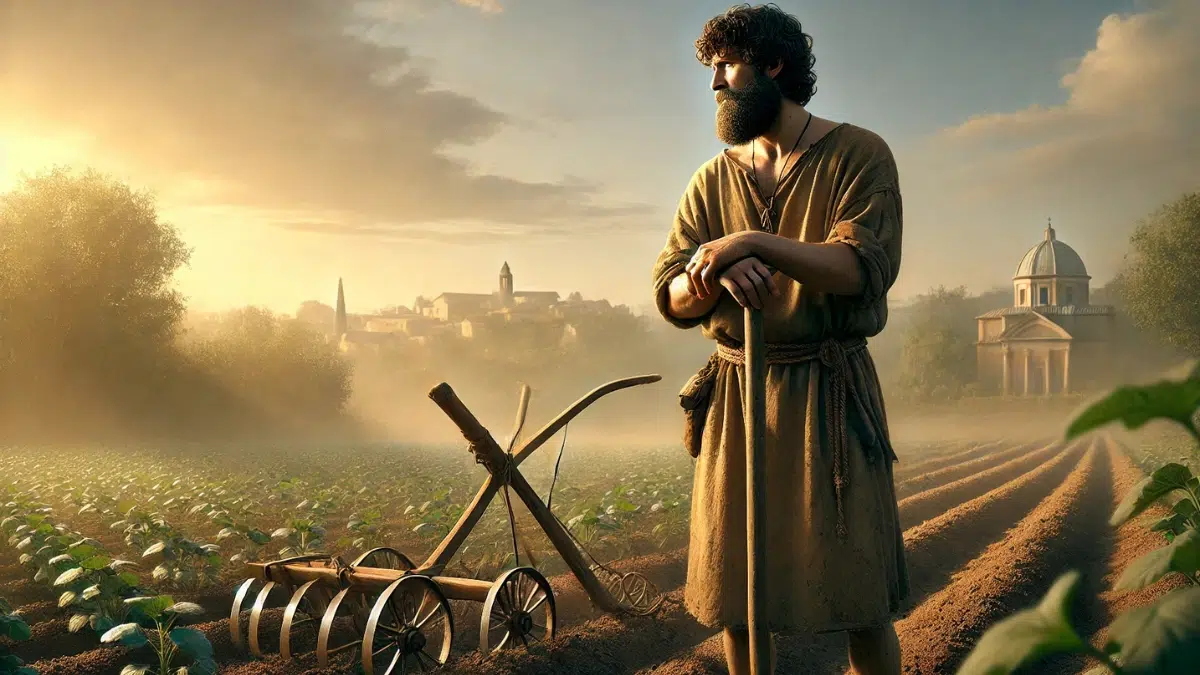
Cincinnatus was a humble Roman farmer who became one of Rome’s greatest heroes. His story is about duty, sacrifice, and leadership.
When Rome was in danger from an enemy attack, the Senate asked Cincinnatus to become dictator. A dictator in ancient Rome was someone given temporary power to lead during a crisis. At the time, Cincinnatus was working on his farm. He left his plow behind and agreed to help.
Cincinnatus quickly organized an army and led them to victory, saving Rome from its enemies. What made him special was what he did next: instead of keeping his power, Cincinnatus gave it up and returned to his farm. He had only ruled for 15 days!
Romans admired Cincinnatus for putting his city before himself. He showed that true leaders care about their people, not about holding onto power. His story became an example of how every citizen should serve Rome with honour and humility.
Even today, Cincinnatus is remembered as a symbol of good leadership and selflessness. His story teaches that power is best used for the good of others and not for personal gain. It’s one of the most famous myths of Roman virtue and civic duty.
Conclusion
Famous Roman myths highlight bravery, loyalty, and the importance of destiny. From the founding of Rome by Romulus and Remus to the heroic deeds of figures like Horatius and Cincinnatus, these myths shaped the values Romans admired most. They also connected Rome to the divine, with gods like Venus and Jupiter playing key roles in its origins and successes.
These stories weren’t just entertainment—they taught lessons about honour, sacrifice, and the power of unity. They inspired the Romans to believe in their destiny as a great civilization. Even today, these myths capture the imagination, reminding us of Rome’s incredible history and the values that helped it grow into one of the most powerful empires the world has ever seen. By sharing these tales, we keep the spirit of Roman mythology alive for future generations to enjoy and learn from.