
Eye of Ra Symbolism and Meaning Explained
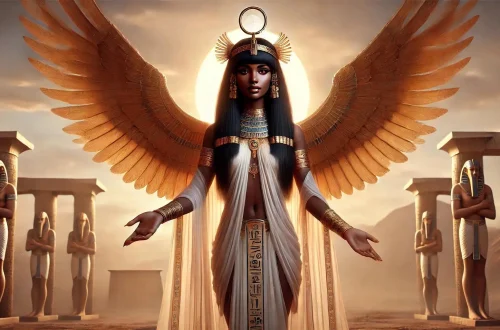
The Eye of Ra is an ancient Egyptian symbol and concept associated with the sun god Ra. It represents Ra’s power, protection, and destructive force. It is often personified as a powerful female deity who acts as Ra’s protector and enforcer.
What does the Eye of Ra really symbolize?
The Eye of Ra represents:
-
Protection
-
Royal authority
-
Solar power
-
Destruction and divine wrath
It is often linked to goddesses such as Sekhmet and Hathor, who embody its fierce and protective energy.
What Is the Meaning of the Eye of Ra?

Ra is one of the most important gods in ancient Egyptian mythology.
He is the god of the sun, which makes him a source of life.
Each day, Ra travels across the sky in his sun boat, bringing light and warmth to the world.
As night falls, he travels through the underworld, fighting off monsters to rise again the next morning.
This daily journey shows his role as a protector and a bringer of light against darkness.
As a powerful protective deity, Ra not only governs the sun but also oversees all creation.
People believe he maintains order in the universe and helps crops grow, which is vital for survival.
Egyptians honour him greatly, and they see him as a king of the gods.
The Eye of Ra, which represents his fierce and watchful side, acts as his agent in the world.
It seeks out threats and destroys them, ensuring safety and health for the people.
The Eye is not just a part of him but also serves as a separate entity that can act on its own.
This connection highlights how Egyptians view the sun: as a vital, protective force that watches over them every day.
Through stories and prayers, Egyptians seek the Eye of Ra’s protection.
They believe it shields them from harm and keeps the natural order.
With Ra’s eye watching, they feel safe from chaos and evil, making Ra a central figure in their spiritual and daily lives.
Origins of the Eye of Ra Symbol
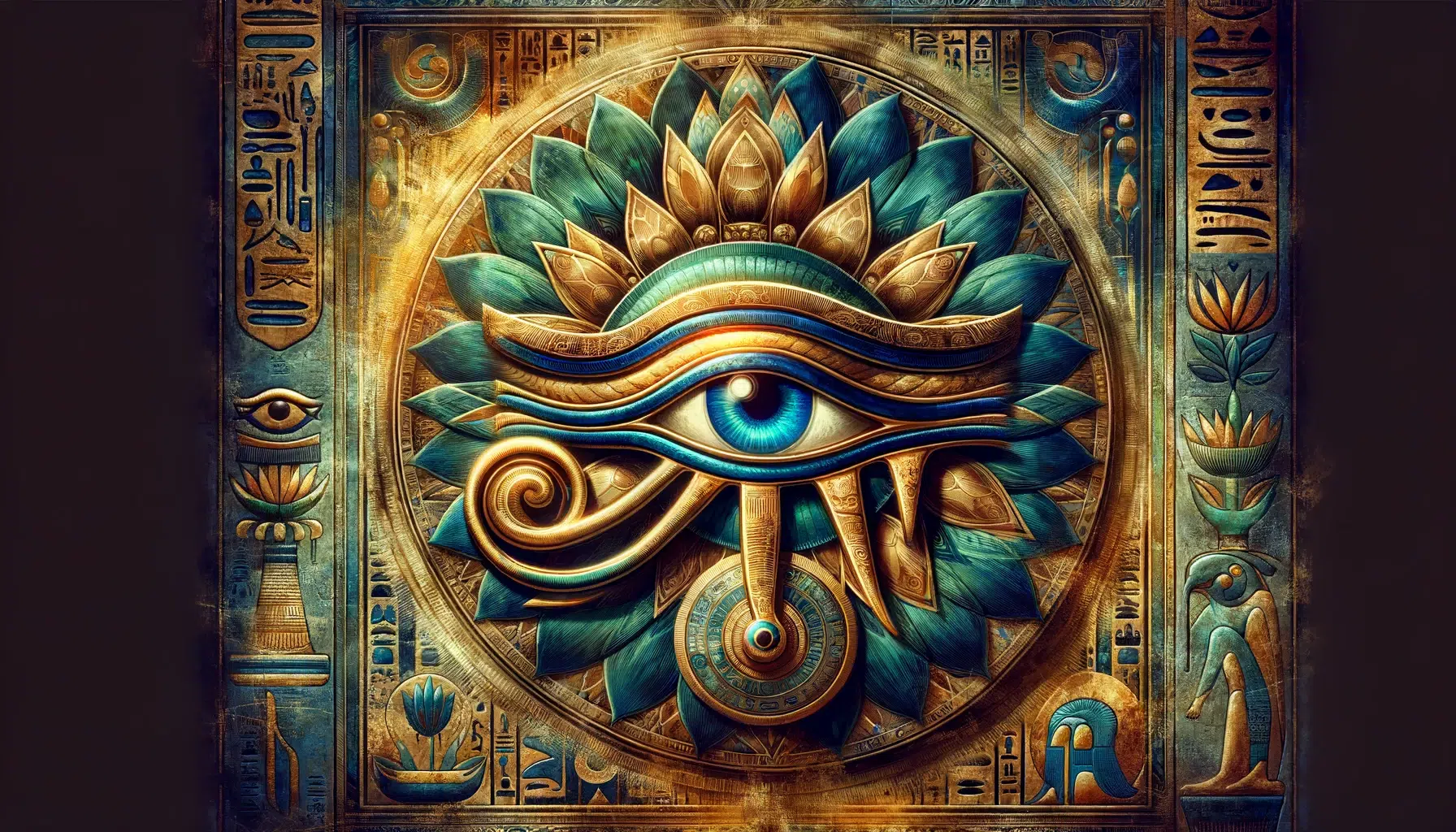
The Eye of Ra has deep roots in ancient Egyptian history. It’s also called the “Udjat” or “Wedjat” eye.
It originates from early Egyptian beliefs about the sun, being both protective and punishing.
Egyptians see the sun as a powerful source of life and energy, which forms the basis of the Eye of Ra’s significance.
In the myths, the Eye of Ra acts as a fierce protector.
It emerges from the belief that the sun god Ra needs a way to defend creation from threats.
The eye serves as his powerful tool in this vital role.
It watches over the world, looking out for danger and offering protection against evil forces.
This symbol also ties closely to the idea of royal power and divine authority.
Pharaohs, or kings of Egypt, often associate themselves with Ra to show their strength and their divine right to rule.
By linking themselves with the Eye of Ra, they claim protection and support from this mighty deity, enhancing their status among the people.
Over time, the it becomes part of many Egyptian rituals and artworks.
It appears in tombs, temples, and on amulets designed to protect the wearer from harm.
These amulets feature the eye symbol, which people believe carries the power of Ra to protect them from illness, accidents, and evil spirits.
It holds a special place in Egyptian culture as a symbol of watching, protecting, and maintaining order.
Thereby reflecting its origins tied to the sun and its life-giving and protective qualities.
Which Goddesses Represent the Eye of Ra?
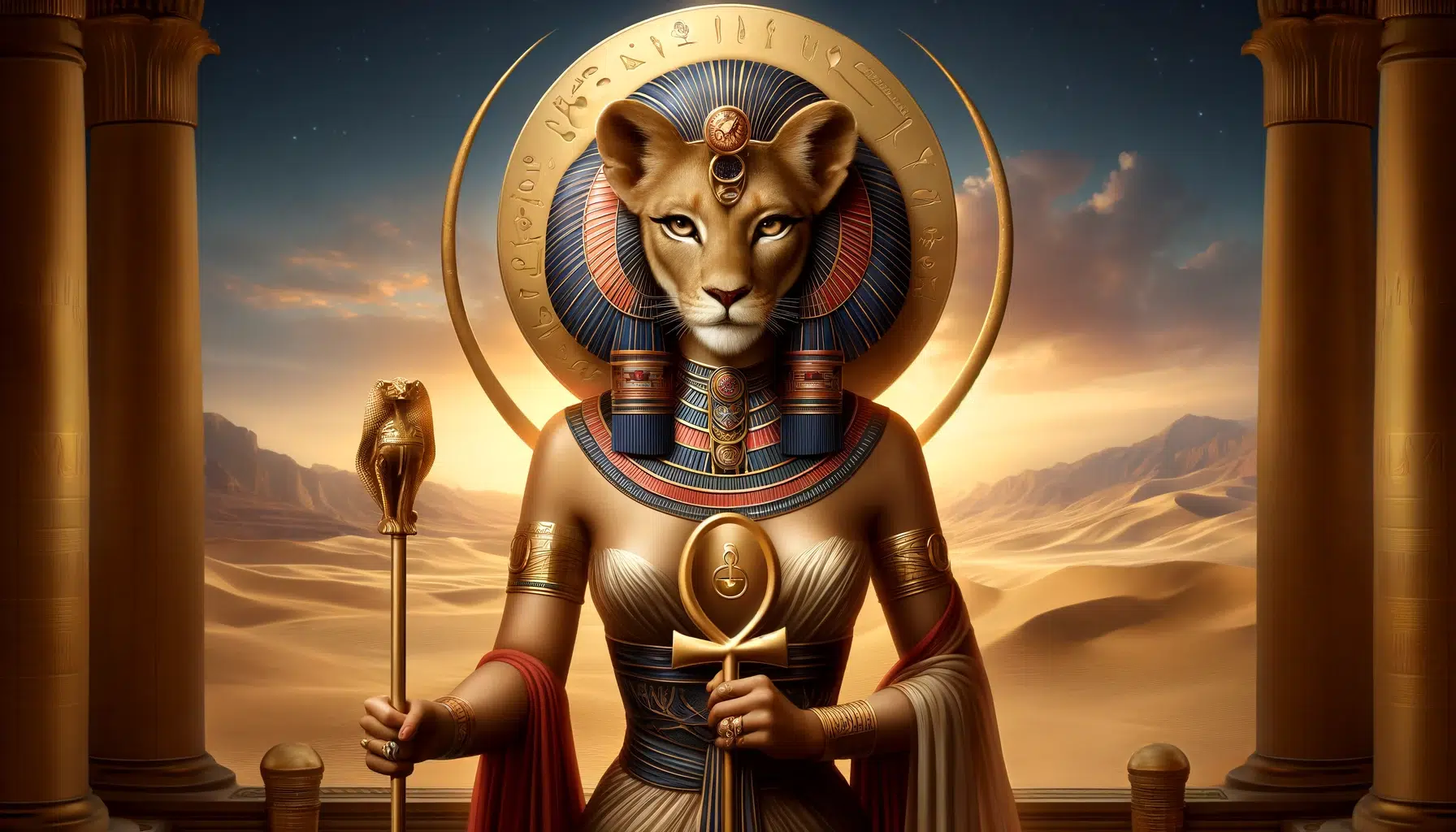
The Eye of Ra is the sun god’s female counterpart. It often appears as divine goddesses in his story.
The Eye of Ra holds a special place in Egyptian mythology and connects with several goddesses like Sekhmet, Hathor, and Bastet, Uadyet, and Mut.
Each goddesses represents the Eye of Ra in different forms and stories, showing the eye’s versatile power and roles.
Sekhmet
Sekhmet as the daughter of the sun god, Ra, is among the more important of the goddesses in the Egyptian Pantheon.
Ra created Sekhmet from his eye, giving her the power to cause great harm. This makes her a fierce warrior goddess from the start.
Sekhmet acts as the vengeful manifestation of Ra’s power, the Eye of Ra.
She fights chaos and evil, defending the order of the world.
In a story, Ra sends his eye as Sekhmet to earth. This was to punish humans for not following his commands.
The female energy in the Eye of Ra represents growth and life.
The ancient Egyptians saw the sun this way. They thought the sun symbolizes birth and fertility.
Hathor and Bastet
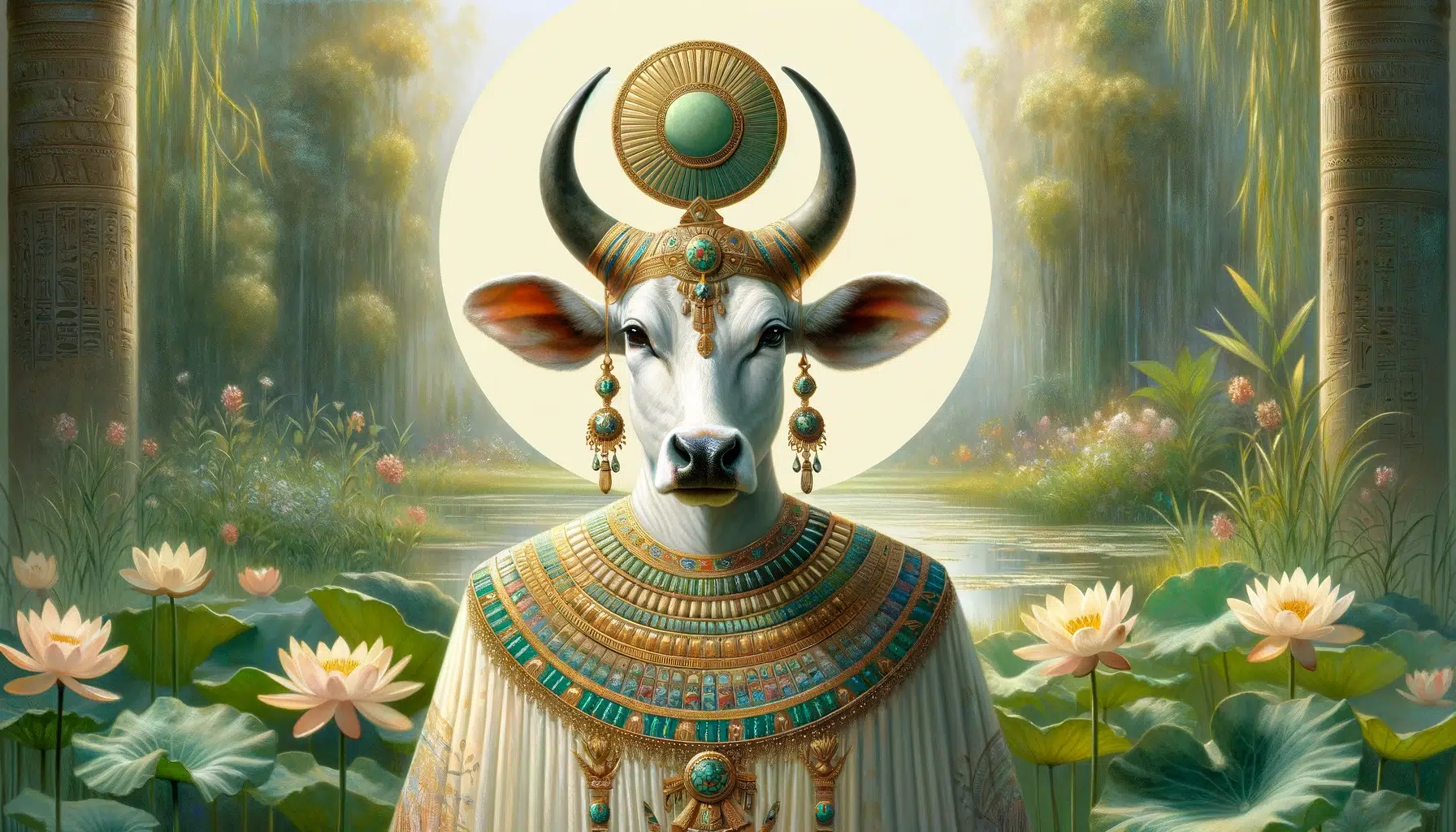
Hathor, depicted as a cow or a woman with cow horns, shows a gentler aspect of the Eye of Ra.
She represents motherhood, love, and joy, and is known as the Sky Goddess.
Hathor uses the eye’s power to watch over and nurture the people and the land, ensuring peace and prosperity.
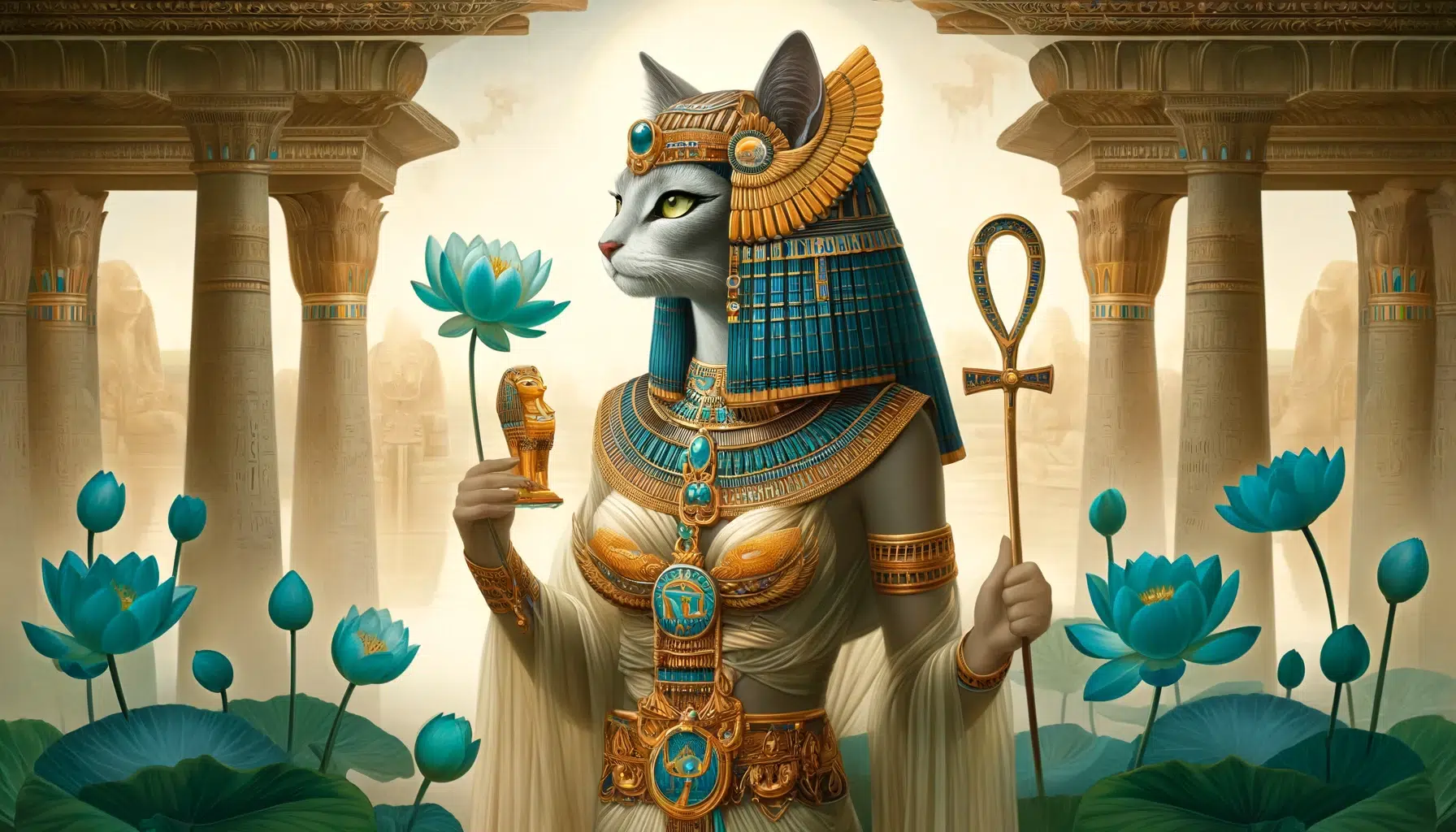
Bastet, seen as a cat or lioness, highlights the eye’s role in home protection and fertility.
She guards homes from evil spirits and disease, using the eye’s watchful power to keep places safe and secure.
Together, these goddesses and their connection to the Eye of Ra illustrate how this mighty symbol extends its protection and blessings.
Each tailored to the needs of the people and the gods.
What Does the Eye of Ra Symbolize?
The Eye of Ra is a powerful symbol in ancient Egyptian culture, representing protection, royal authority, and good health.
This symbol appears in many forms, often depicted as a stylized eye that watches over the people, keeping them safe from harm.
As a symbol of protection, the Eye of Ra acts like a guardian.
It looks out for dangers and fights off threats to the community.
Egyptians believe wearing amulets or placing this symbol around their homes keeps them safe.
In terms of royal power, the Eye of Ra connects directly to the sun god Ra, who is the king of all gods.
By associating with this symbol, pharaohs, or Egyptian kings, show that they have divine support.
They use the Eye of Ra to demonstrate their ability to protect and lead their people, just as Ra protects the world.
Lastly, the Eye of Ra stands for good health.
Egyptians trust that the Eye helps prevent illness and promotes healing.
It plays a crucial role in medical spells and treatments, providing a spiritual boost to physical healing processes.
This blend of protection, royal power, and health makes the Eye of Ra a central symbol in Egyptian life.
What Does the Eye of Ra Look Like?

Distinctive Shape The Eye
The Eye of Ra features prominently in Egyptian art and hieroglyphs, showcasing its deep symbolism and importance.
The Eye of Ra has a unique shape. It resembles a human eye made to look like a falcon’s face, an important bird in old Egyptian art.
This is similar to those found around the eye of Horus, another significant Egyptian deity.
These markings include a long, swooping line that represents the falcon’s eyebrow and a spiral below the eye reflecting the falcon’s markings.
You can see it in jewelry, tattoos, and art.
People love it for its beauty and its meaningful falcon symbolism.
The Colours of the Eye
The sun emblem, a yellow or red disk, is the Eye of Ra in Egyptian art.
It shows the sun’s key role in Egyptian beliefs.
Artists often depict the Eye of Ra with a rich mix of gold and blue colors, symbolizing its divine power and protective qualities.
Gold stands for the eternal and indestructible nature of the gods.
Blue represents the sky and water, elements crucial to life in Egypt.
In hieroglyphs, the Eye of Ra represents the concept of ‘seeing’ and ‘watching.‘
It appears in texts and carvings, especially those related to protection and health.
Egyptians believe that the Eye sees all, ensuring the safety and well-being of those it watches over.
This widespread use in art and hieroglyphs highlights how integral the Eye of Ra is to the daily and spiritual lives of ancient Egyptians.
Thus embodying protection, divine watchfulness, and royal power.
Famous Myths About the Eye of Ra
Story of the Distant Goddess
One key myth involving the Eye of Ra is the story of the Distant Goddess.
This tale begins when the Eye of Ra, taking the form of the goddess Sekhmet, leaves Egypt.
Feeling neglected, she wanders far away, causing great concern because her absence leaves the land without her protection and the sun’s life-giving power.
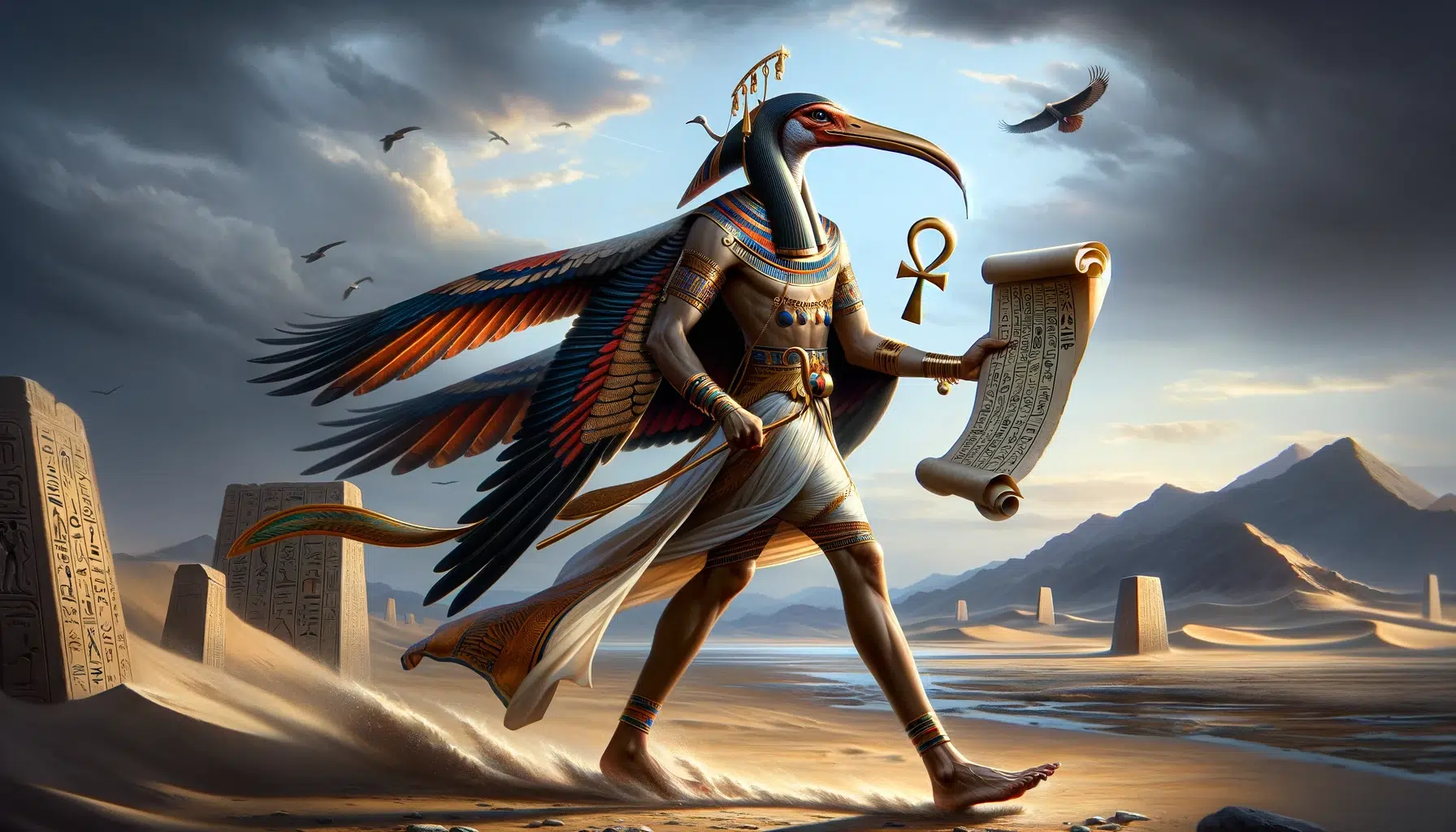
To bring her back, Ra sends another god, usually Thoth, to find her and persuade her to return.
Thoth finds Sekhmet in a distant land, living as a fierce lioness.
He cleverly convinces her to come back to Egypt, not through force but by appealing to her pride and importance to the people and the land.
Upon her return, the people celebrate, and her return marks a time of renewal and strengthening for Egypt.
This story symbolizes the sun’s journey in the sky, disappearing at night and returning at dawn, which brings rejuvenation and life to the world.
This myth highlights the Eye of Ra’s role as a force of protection and rebirth, essential for maintaining order and health in the world.
It teaches about the importance of harmony and the consequences when balance disrupts.
The Destruction of Humanity

Another gripping myth involving the Eye of Ra is the story of the destruction of humanity.
This story starts when humans begin to plot against Ra, who is the king of all gods and people.
Upset by their betrayal, Ra decides to unleash his Eye, in the form of the goddess Sekhmet, to deal with the rebels.
Sekhmet descends upon the earth with fierce anger.
She goes on a rampage, destroying those who have turned against Ra.
Her power is so great that she almost wipes out all of humanity. Alarmed by the destruction, Ra decides to stop her before no one is left.
To calm Sekhmet and stop the carnage, Ra orders that a vast amount of beer be dyed red to resemble blood and poured over the fields.
Mistaking it for blood, Sekhmet drinks the beer, becomes intoxicated, and forgets her anger.
This act saves the remaining humans from total destruction.
This myth teaches about the balance of power and the consequences of human actions.
It also shows the Eye of Ra as not only a protector but also a force of divine retribution.
The Creation of the Milky Way

One fascinating myth involving the Eye of Ra is about the creation of the Milky Way.
This story shows how the Eye of Ra, sometimes just called Ra’s tears, brings life to the earth.
According to the myth, when Ra cries, his tears fall to the ground.
As these tears touch the earth, they transform into the first humans.
This act shows the power of Ra’s emotions and connects the god directly with the creation of humanity.
The tears of Ra not only give life but also show the bond between the divine and humans.
Each tear that becomes a person highlights the sacredness of life and the care that the gods have for the world.
The myth also serves as a reminder of humanity’s divine origin and the gods’ ongoing role in human affairs.
By linking the creation of people to the tears of a god, the story underscores the idea that all life is precious and connected to the divine.
This tale celebrates the Eye of Ra as a source of life and creation, essential for the flourishing of humanity.
The Healing of Horus

The myth of the Healing of Horus showcases the protective and restorative powers of the Eye of Ra.
In this story, Horus, the young god of the sky, engages in a fierce battle with Set, the god of chaos and disorder.
During their fight, Set damages Horus’s eye, a significant injury as his eye represents the moon and is a source of his power.
To help Horus, the gods call upon the Eye of Ra for its healing abilities.
The Eye, with its divine power, restores Horus’s damaged eye.
This act not only heals Horus but also symbolizes the restoration of order and balance, as Horus can continue to oversee the night sky.
This healing process underscores the Eye of Ra’s role beyond just protection.
It highlights its capacity to heal and renew, ensuring that the forces of good can continue to maintain balance against chaos.
The myth serves as a reminder of the ongoing struggle between order and chaos and the protective and healing support the gods provide to maintain harmony in the universe.
Book of the Amduat

The Book of the Amduat is an ancient Egyptian text that describes the sun god Ra’s nightly journey through the underworld.
This journey happens in his magical sun boat, and it takes twelve hours, matching the twelve hours of night.
Each hour in the underworld is a different stage filled with challenges and adventures.
As Ra moves through these stages, he encounters various gods, demons, and spirits.
Some of these beings are friendly and help Ra on his journey, providing protection and guidance.
Others are dangerous and try to stop him, representing the forces of chaos and destruction.
One of the main threats Ra faces is Apophis, a giant serpent that tries to swallow the sun boat, aiming to bring eternal darkness to the world.
Each hour of Ra’s journey is important because it represents the battle between order and chaos.
By successfully navigating the underworld and defeating his enemies, Ra ensures that the sun rises each morning, bringing light and life back to the world.
This myth teaches about the cycle of day and night and the eternal struggle to maintain balance in the universe.
Eye of Ra vs Eye of Horus
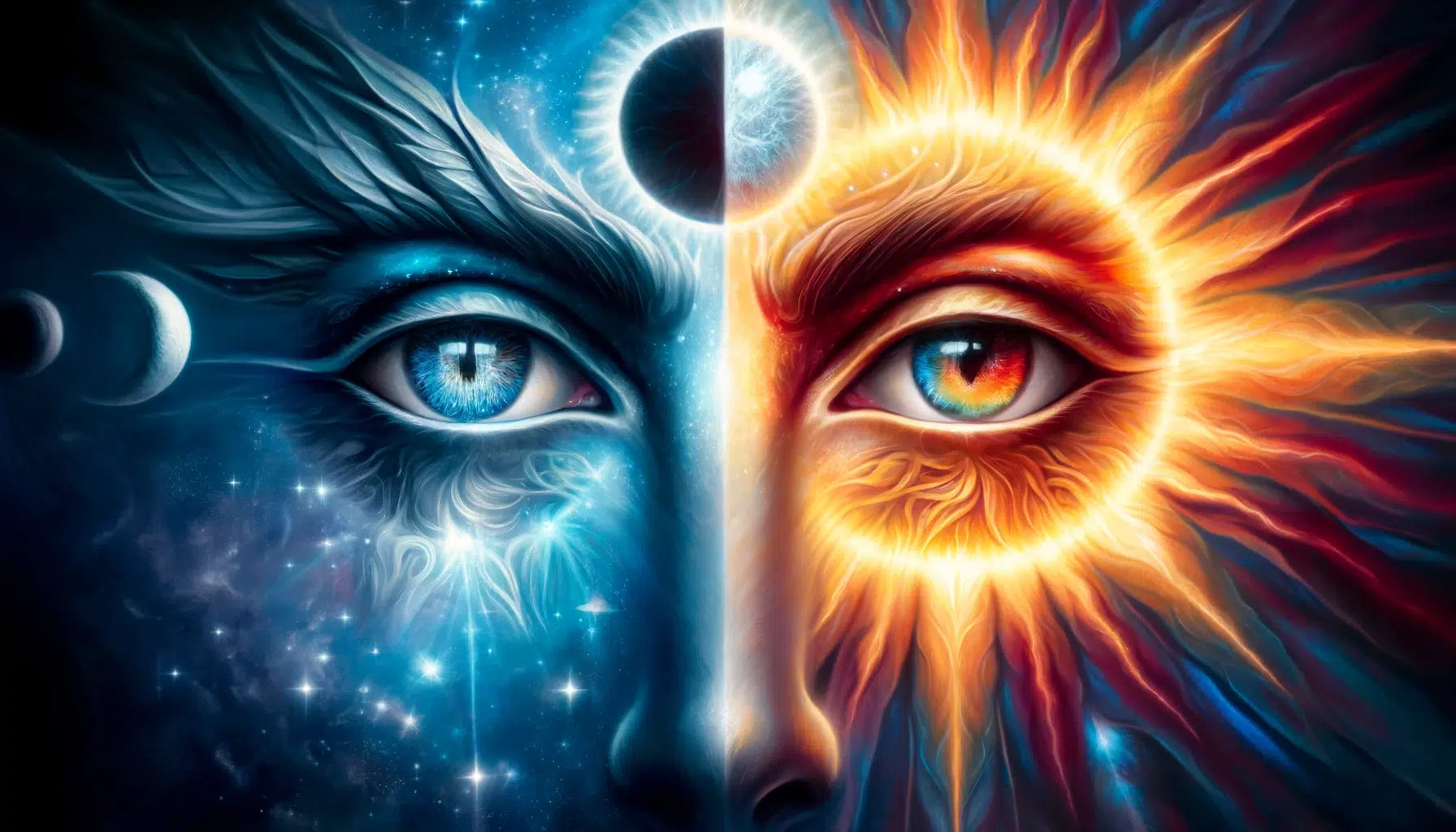
The Eye of Ra and the Eye of Horus are two powerful symbols, each representing different aspects of life and protection.
The right eye, The Eye of Ra, reflects the sun. It symbolizes power, fierceness, and protection.
It acts as a guardian against evil and chaos.
This eye reflects the strength and wrath of the sun god Ra, showing his role as a protector of order.
The left eye, the Eye of Horus, has links to the moon. It represents healing, restoration, and well-being.
It comes from the myth where Horus loses his left eye (Eye of Horus) or was hurt in a battle with Set, the god of chaos and disorder.
The gods heal his eye, symbolizing recovery and the triumph of good over evil.
This eye highlights the nurturing and restorative powers of Horus.
Together, these eyes illustrate the dual nature of the universe according to Egyptian beliefs.
The Eye of Ra brings power and protection during the day, while the Eye of Horus brings healing and renewal at night.
This balance reflects the Egyptian understanding of harmony between different forces, ensuring stability and protection around the clock.
The Eye of Ra in Magic and Rituals
Magical Amulets and Spells
Over time, the Eye of Ra came to symbolize protection, healing, and restoration.
The Eye of Ra plays a crucial role in Egyptian magic and rituals.
People use this powerful symbol in amulets and spells to protect themselves from harm.
The Eye of Ra amulets are popular items that many Egyptians wear or place in their homes.
These amulets carry the Eye’s protective power, believed to shield the wearer from evil and danger.
In addition to amulets, the Eye of Ra appears in various spells.
These spells often aim to bring health and safety to people.
For example, in healing spells, magicians invoke the Eye of Ra’s power to cure illnesses and mend injuries.
This shows the belief in the Eye’s ability to restore and maintain well-being.
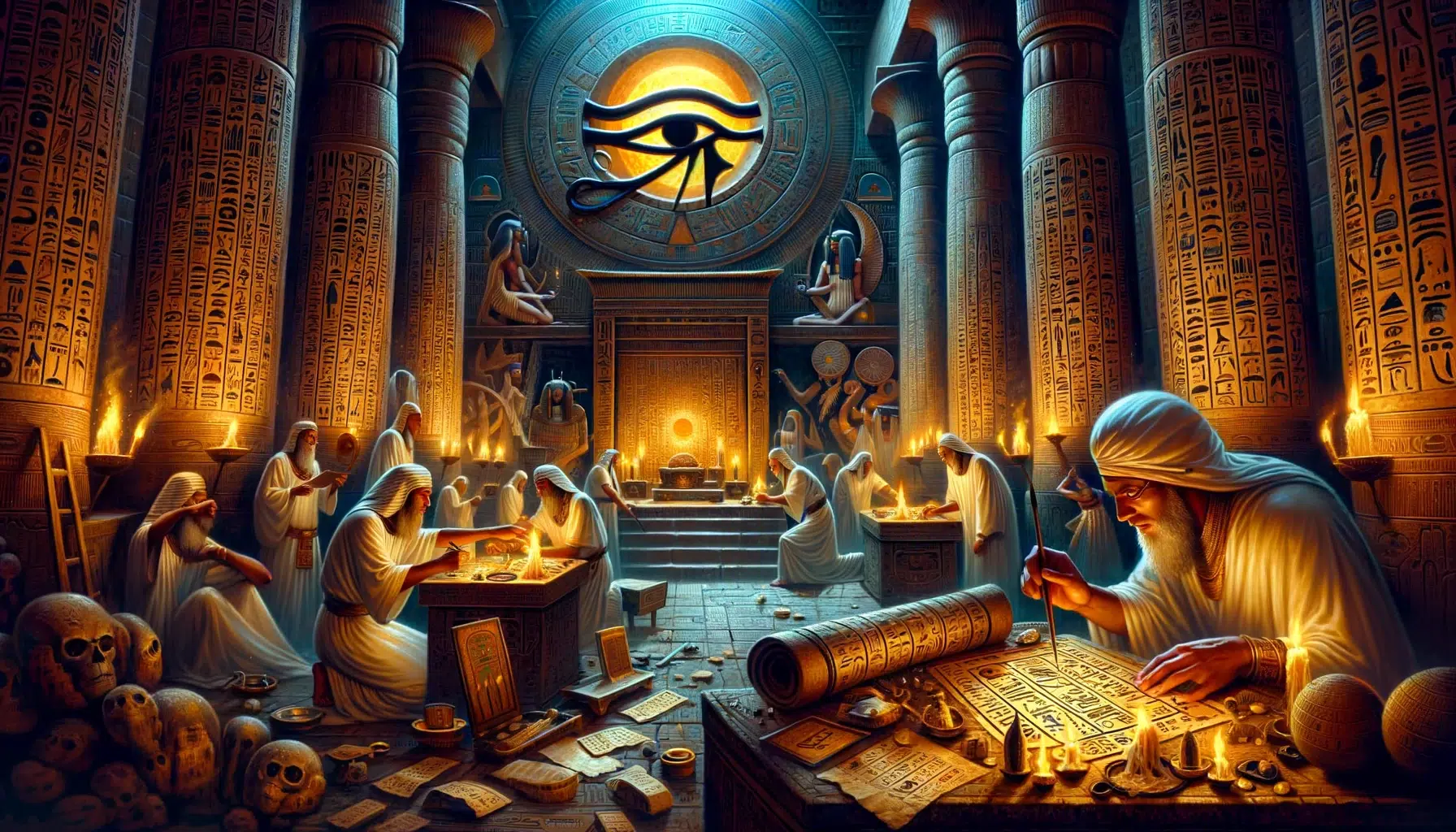
Also, during important rituals, priests use symbols and images of the Eye of Ra to ensure the ceremony’s success.
They believe that the Eye watches over the ritual, keeping away bad influences and inviting positive energy.
This widespread use of the Eye of Ra in magic and rituals demonstrates its significance as a source of protection, healing, and good fortune.
This reflects how deeply Egyptians value safety and health in their spiritual practices.
Protection Rituals of the Eye of Ra
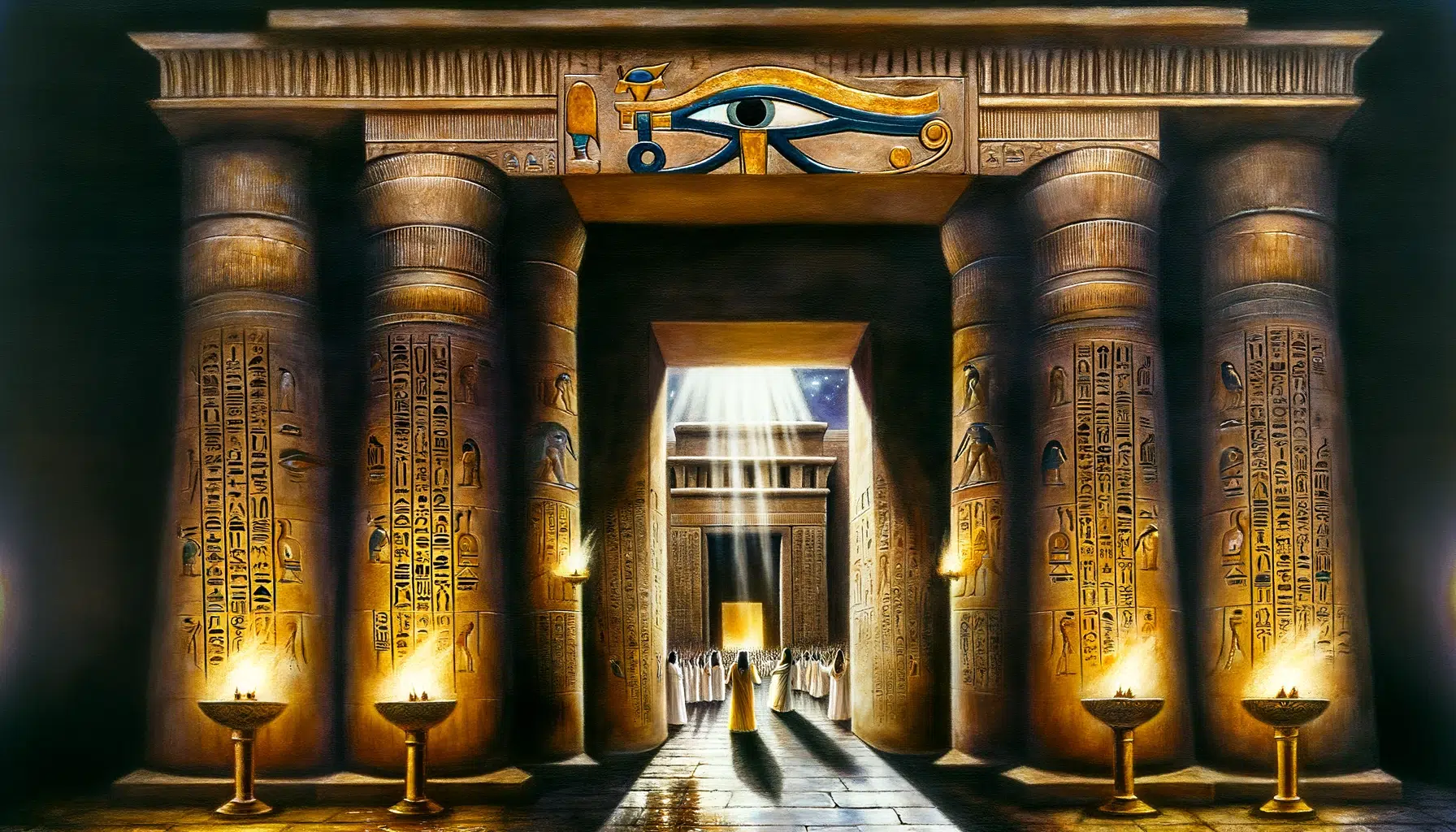
The Eye of Ra holds a vital role in Egyptian rituals, especially for protection and healing.
In rituals for protection, priests and magicians often draw or carve the Eye of Ra on walls, objects, and documents.
They believe this symbol watches over them and wards off any threats or negative forces.
This practice ensures that homes, temples, and even important papers remain under the Eye’s vigilant protection.
The eye was also put on the entrances of temples.
This showed they believed the eye’s power watched over and protected those inside.
They thought it also kept away bad energy and kept peace.
Healing Rituals of the Eye of Ra
For healing rituals, the Eye of Ra is just as crucial. Healers and priests use the symbol in their practices to invoke the Eye’s healing powers.
They paint the Eye on bandages or recite prayers and spells that mention the Eye to help the sick recover faster.
The belief is that the Eye of Ra can restore health and fend off illnesses.
These rituals show the deep trust Egyptians place in the Eye of Ra as a powerful ally in maintaining safety and promoting healing.
It reflects their reliance on divine powers to manage life’s uncertainties and challenges, emphasizing the Eye’s role as a guardian and healer in their lives.
Egyptians wore the Eye on jewelry for its ability to protect from negative energy.
This symbol was important in funerary practices.
They thought it guarded the soul after death, ensuring it wasn’t harmed.
The Eye of Ra was a big part of their culture, seen as a strong protector and healer.
Final Thoughts on Ra
The eye holds a significant place in ancient Egyptian culture and continues to captivate people today.
As a symbol of protection, health, and royal authority, it represents the power of the sun god Ra and his watchful care over the world.
The Eye of Ra appears in myths, art, and rituals, always serving as a guardian against evil and misfortune.
Its influence stretches beyond ancient Egypt, inspiring similar symbols in various cultures and finding a place in modern pop culture.
From jewelry designs to movie plots, the Eye of Ra remains a symbol of fascination and reverence.
Its enduring legacy shows how ancient symbols can cross time and cultures, keeping their meanings alive and relevant in the modern world.