Crossbows and Compound Bows: Choose the Right Equipment
Introduction to Archery and Its Evolving Equipment
Archery, an age-old practice of using a bow to shoot arrows, has evolved significantly through the centuries.
Early bows made from wood and sinew have given way to sophisticated designs that enhance precision and power.
Modern archery equipment comes in various forms, including the traditional recurve bow, the innovative compound bow, and the powerful crossbow.
Each type has been refined over time, integrating advanced materials such as carbon fiber and composite polymers.
Moreover, accessories like stabilizers, sights, and release aids have advanced the sport, making archery accessible to a broader range of enthusiasts.
Understanding the Crossbow: History, Mechanics, and Modern Use
The crossbow, an ancient weapon, has evolved since its emergence in China around the 5th century BC.
It served as a pivotal armament in medieval warfare, with its invention revolutionizing archery by enabling greater power and requiring less physical strength than traditional bows.
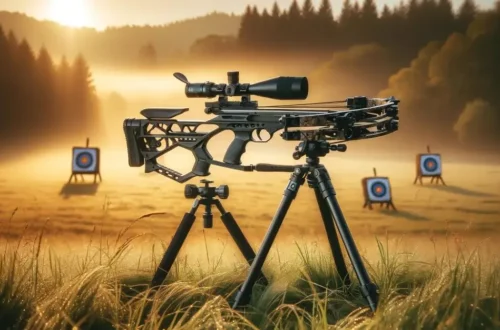
Crossbows use a horizontal bow-like assembly mounted on a stock to shoot projectiles, called bolts or quarrels.
This mechanism allows for potential energy to be stored within the bow, which is released when the trigger is pulled, propelling the bolt.
In today’s world, crossbows are popular in hunting and precision sports, favored for their ease of use and accuracy.
They embody a blend of historical significance and modern engineering, strong choices for enthusiasts and hunters alike.
Learn about: Crossbows and Longbows – Pros and Cons
Diving into the Compound Bow: Innovations and Technical Aspects
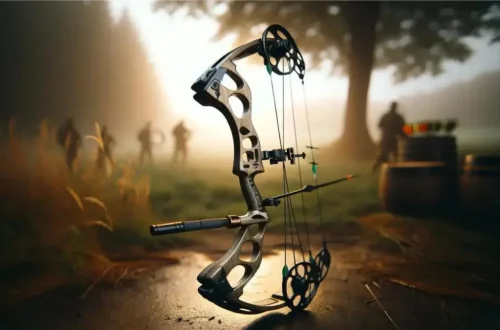
The compound bow is a modern bow that stands out due to its innovative levering system, typically involving cams and cables.
These mechanical features enable the bow to store more energy efficiently, making it less strenuous for archers to hold at full draw.
Manufacturers continuously refine the design, focusing on:
- Energy Efficiency: The cams are the muscle of the bow, designed to deliver a smooth draw cycle and powerful shot.
- Adjustability: Compound bows offer a range of customization options, including draw weight and length, catering to individual archer’s needs.
- Materials: Lightweight yet robust materials such as carbon composites and aircraft-grade aluminum are commonly employed.
- Accuracy: Enhanced precision is achieved through technical advancements like vibration dampening systems and improved sight mechanisms.
These technical aspects define the compound bow as a cutting-edge option for enthusiasts looking for a modern archery experience.
Comparing Crossbows and Compound Bows: The Power and Speed Debate
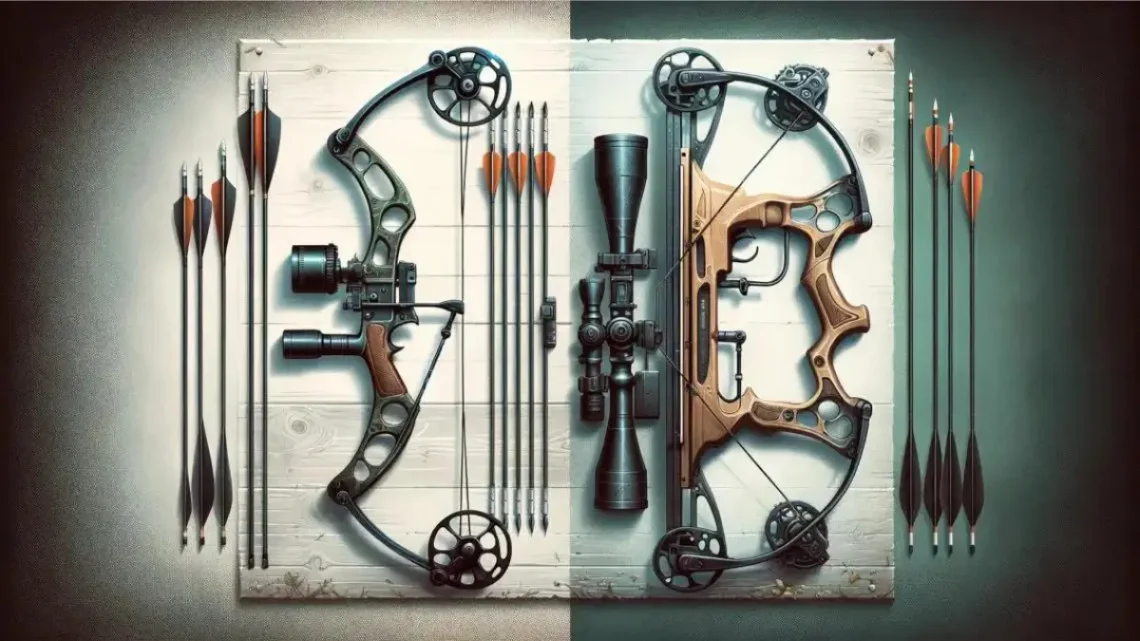
When evaluating the power and speed of crossbows versus compound bows, several factors come into play.
- Crossbows typically have a shorter power stroke than compound bows but are engineered to deliver high bolt speeds due to their mechanical advantage.
- The inclusion of cams in compound bows allows for efficient energy storage, resulting in high arrow speeds and significant power upon release.
- Crossbows often boast higher draw weights, which can translate to faster projectile velocity; however, it also means they require more strength or a cocking device to load.
On the other hand, the skill and physical strength of the archer using a compound bow impact its performance potential, influencing the speed and power the arrow will have.
Ease of Use and Learning Curve: Which Bow Is Better for Beginners?
For individuals embarking on their archery journey, ease of use is crucial.
Compound bows present a learning curve due to their complex design, which incorporates cams and cables, requiring precise tuning and maintenance.
Beginners may find mastering the draw-weight adjustments and aiming technique challenging.
- Compound bows:
- Steeper learning curve
- Require tuning and maintenance
- Heavier and more complex than crossbows
In contrast, crossbows offer a more straightforward experience.
With mechanisms similar to a firearm, they are generally easier for novices to handle and shoot accurately after minimal instruction.
- Crossbows:
- Easier to learn and use
- Minimal initial instruction required
- More user-friendly for beginners
Thus, crossbows may be considered the better option for beginners seeking a user-friendly introduction to archery.
Accuracy and Precision: Analyzing the Performance of Crossbows and Compound Bows
Both crossbows and compound bows offer unique levels of accuracy and precision.
The crossbow is renowned for its accuracy due to the reduced influence of human error while aiming.
Its rifle-like design allows for steady aim, which is beneficial for beginners or those with less upper body strength.
- Crossbows:
- Provide remarkable accuracy with less skill required for a steady hold.
- Allow for aiming aids similar to rifle scopes, which enhance precision.
- Are typically heavier, stabilizing the shot.
Compound bows, with their technical design of cams and cables, offer increased precision for experienced archers.
Mastering the compound bow’s draw requires skill, but this can lead to exceptional accuracy.
- Compound Bows:
- Demand skill and practice to achieve top precision.
- Feature adjustable draw lengths and weights to fit the shooter.
- Give a more hands-on and organic shooting experience, refining the archer’s technique and accuracy.
Hunting with Bows: Suitability of Crossbows and Compound Bows for Different Game
When selecting bows for hunting, one must consider the type of game being pursued.
- Crossbows:
- Excel in delivering high-power shots, making them suitable for larger game such as deer or elk.
- Their ease of use and accuracy at greater distances can provide an advantage for novice hunters or those with physical limitations.
- The relatively long reload time is a factor to consider when quick follow-up shots may be necessary.
- Compound Bows:
- Offer more challenge and a traditional archery experience, favored by experienced bowhunters.
- Their lighter weight and compact size are beneficial for stalking smaller, quicker game like rabbits or turkeys.
- They require more skill and strength to operate effectively, particularly for sustained periods, which adds to the hunting experience.
The Portability Factor: Weight and Size Considerations for Archers
When choosing between a crossbow and a compound bow, archers must consider portability.
Crossbows often weigh more and are bulkier, making long treks cumbersome.
They are efficient for hunters who remain stationary or in blinds. Compound bows are lighter and easier to carry, favored by archers who stalk their prey or traverse rugged terrain.
Size also plays a role; a compact bow may be preferable for maneuvering in dense forests or tight spaces.
Archers should evaluate the balance between their physical capability and the demands of their archery activities.
Maintenance and Upkeep: Caring for Crossbows and Compound Bows
Maintaining a crossbow or compound bow requires diligence.
Owners must regularly inspect strings and cables for wear, waxing them to prevent fraying.
Limbs should be checked for cracks or splinters, while cams and pulleys on compound bows need oil for smooth operation.
Crossbows demand bolt tracks be free of debris, and trigger mechanisms should be clean and lightly lubricated.
Storing equipment in a cool, dry place away from direct sunlight is crucial to prevent material degradation.
By adhering to a consistent maintenance routine, archery enthusiasts ensure their bows remain accurate and functional.
Legal Considerations and Hunting Regulations for Crossbows and Compound Bows
When selecting between a crossbow and compound bow, it’s imperative to understand the legal context and hunting regulations that govern their use.
These can vary significantly based on location:
- Age Restrictions: Some areas have minimum age requirements for hunting with these bows.
- License Requirements: A specific bow hunting license may be necessary beyond a standard hunting permit.
- Seasonal Restrictions: Certain game may only be hunted during set seasons, with crossbow use sometimes further restricted.
- Equipment Specifications: Regulations may dictate the minimum draw weight and other specifications for legal use.
- Game Laws: Different types of game might be off-limits for crossbow hunters.
Compliance with local wildlife conservation laws is key. Hunters must do their due diligence in understanding and adhering to these regulations to avoid legal penalties and ensure ethical hunting practices.
Cost Analysis: Investing in Crossbows vs. Compound Bows
When choosing between crossbows and compound bows, cost is a significant factor.
Crossbows are typically more expensive due to their complexity and additional mechanics.
Initial investment includes:
- The crossbow itself
- Sights or scopes
- Additional accessories like cocking devices
Compound bows are generally less pricey, but additional costs like:
- High-quality arrows
- Sights
- Stabilizers
- Rests
Maintenance costs for compound bows can be lower; however, replacing strings and cables can be comparable for both.
It’s crucial to consider long-term costs for repairs, upgrades, and maintenance beyond the initial purchase.
Customization and Accessories: Tailoring Your Bow to Your Needs
Both crossbows and compound bows can be personalized with a wide array of accessories to enhance performance and comfort.
Compound bows offer:
- Adjustable draw lengths and weights for a custom fit
- A variety of stabilizers to reduce vibration
- Customizable sights for improved accuracy
- Exchangeable arrow rests
Crossbows can be tailored with:
- Different scopes for enhanced precision
- Attachable cranks for easier draw
- Various bolt weights and fletchings for specific purposes
- Noise dampening systems for stealthier hunting
Accessories can transform your bow into a tailor-made tool, reflecting your personal style and requirements.
User Experiences and Community Insights: What Veteran Archers Have to Say
Veteran archers often emphasize personal preference when choosing between crossbows and compound bows.
Experienced users note that crossbows:
- Offer ease of use, especially for beginners or those with physical limitations
- Allow for longer aiming periods without muscle fatigue
- Are excellent for precision shooting due to their rifle-like structure
However, compound bow enthusiasts point out:
- The satisfaction of mastering the skillful draw and release technique
- Greater maneuverability and versatility in various archery styles
- The traditional archery experience that hones instinctive shooting skills
Both communities agree that the best choice is aligned with individual archery goals, physical capabilities, and the type of hunting or target shooting one intends to pursue.
Making the Choice: Factors to Consider Before Purchasing
When deciding between a crossbow and a compound bow, several elements must be taken into account:
- Purpose: Determine whether you’re targeting game hunting, competitive shooting, or casual practice.
- Physical Strength: Compound bows require more physical strength to draw, whereas crossbows are easier to handle for those with limited strength.
- Skill Level: Compound bows demand a higher skill level and more practice to master, making crossbows a more accessible option for beginners.
- Mobility: Crossbows are heavier and less portable than compound bows, which can be a crucial factor in long hunting expeditions.
- Legal Restrictions: Check local regulations as some areas have specific rules concerning the use of crossbows for hunting.
- Budget: Compound bows can be less expensive initially but may require additional investment in accessories.
Each factor is essential to ensure that the chosen archery equipment suits the individual’s needs and preferences.
Safety Measures and Best Practices in Archery
Whether using a crossbow or a compound bow, adhering to safety measures and best practices is crucial:
- Always point the bow and arrow in a safe direction, especially when loading or unloading.
- Inspect equipment before use for any damage that could cause a malfunction.
- Use appropriate safety gear, such as arm guards, finger tabs, and eye protection.
- Ensure a clear downrange area before shooting to avoid accidental injuries.
- Never dry fire a bow; it can cause damage to the equipment and injury to the archer.
- Maintain proper shooting form and follow the manufacturer’s instructions to minimize strain.
- Keep your focus on safety at all times and educate others on safe practices.
Conclusion: Equipping Yourself with Knowledge for the Best Archery Experience
To optimize your archery endeavors, thoroughly educate yourself on both crossbows and compound bows.
Acknowledge that:
- Crossbows excel in ease of use and precision with less physical demand, ideally suiting beginners or those with physical limitations.
- Compound bows offer a traditional archery experience, with greater customization and skill development opportunities, favored by enthusiasts seeking a challenge.
- Local regulations may influence your choice, as bow hunting laws vary extensively.
Armed with the right knowledge and equipment tailored to your personal needs, you can ensure a fulfilling and successful archery experience.