Cernunnos: Celtic God of Nature and Life & Death
Cernunnos, the horned god with antlers, is a key figure in Celtic nature worship. This symbolizes the deep bond between humans and nature. In places where Celtic traditions thrive, like the famous Gundestrup cauldron, artifacts display his importance.
Historical sources, like carvings and relics, show Cernunnos as a protector of nature, sitting cross-legged, animals surrounding him. This reflects his role in the animal kingdom and the cycle of nature. As a central figure, he stands for fertility, life, and the connection between humans and nature. Often depicted with antlers, he represents fertility and the wild. His image is a key part of ancient stories and modern spiritual beliefs.
Cernunnos is also seen as a god of fertility and a guardian of wild places. His images and symbols show the Celts’ deep respect for nature. This is seen in many cultural depictions across Celtic regions. It shows his important role in ancient religion.
Learn more about Celtic mythology and history:
- Celtic Mythology Gods & Legends in Archery
- Scáthach – Mystic Warrior Goddess of Celtic Lore
- Cu Chulainn: Tale of Ireland’s Greatest Hero
- Boudica: Celtic Warrior Queen Who Defied Rome
Origins and the Cernunnos Name
Cernunnos is thought to be an ancient deity, possibly from the Bronze Age or earlier. The name “Cernunnos” comes from a Latin inscription on the Pillar of the Boatmen in Paris, dating to the 1st century CE. It means “Horned One” in Gaulish, referring to his stag antlers.
During the Roman conquest of Gaul, Cernunnos’ worship influenced Roman religious practices. He often merged with Roman gods like Mercury, showing traits of both Celtic and Roman deities. As Christianity spread, Cernunnos’ strong pagan influence led to his demonization. He became a symbol of the Antichrist in Christian art and medieval manuscripts.
The Many Roles of Cernunnos
Cernunnos is a god of nature, fertility, animals, wealth, life, and death. His rich symbolism shows his importance in ancient Celtic and Gallo-Roman religion.
Roles include, god of:
- Nature and the Wilderness
- Fertility
- Animals
- Wealth & Prosperity
- Life and Death
- Hunting and the Forest
Cernunnos, known as the “lord of wild things,” connects deeply with nature and the wilderness. He embodies the untamed aspects of the natural world, often shown with animals like stags, serpents, and bulls.
As a god of fertility, Cernunnos symbolizes life cycles and abundance. He often holds a cornucopia or coins, representing prosperity and wealth.
He acts as a mediator between humans and animals, harmonizing the natural world. Cernunnos is also linked to material wealth, as shown by coins and the cornucopia. He connects with commerce and trade, especially with sailors.
Cernunnos represents the cycle of life and death, guiding souls to the afterlife and symbolizing reincarnation. In some traditions, he is also a god of hunting, showing both the giving and taking of life. This reflects his complex nature as a deity of the wild.
In some traditions, Cernunnos is also seen as a god of hunting This dual nature as both a giver and taker of life reflects his complex character as a deity of the wild.
Connection to the Underworld
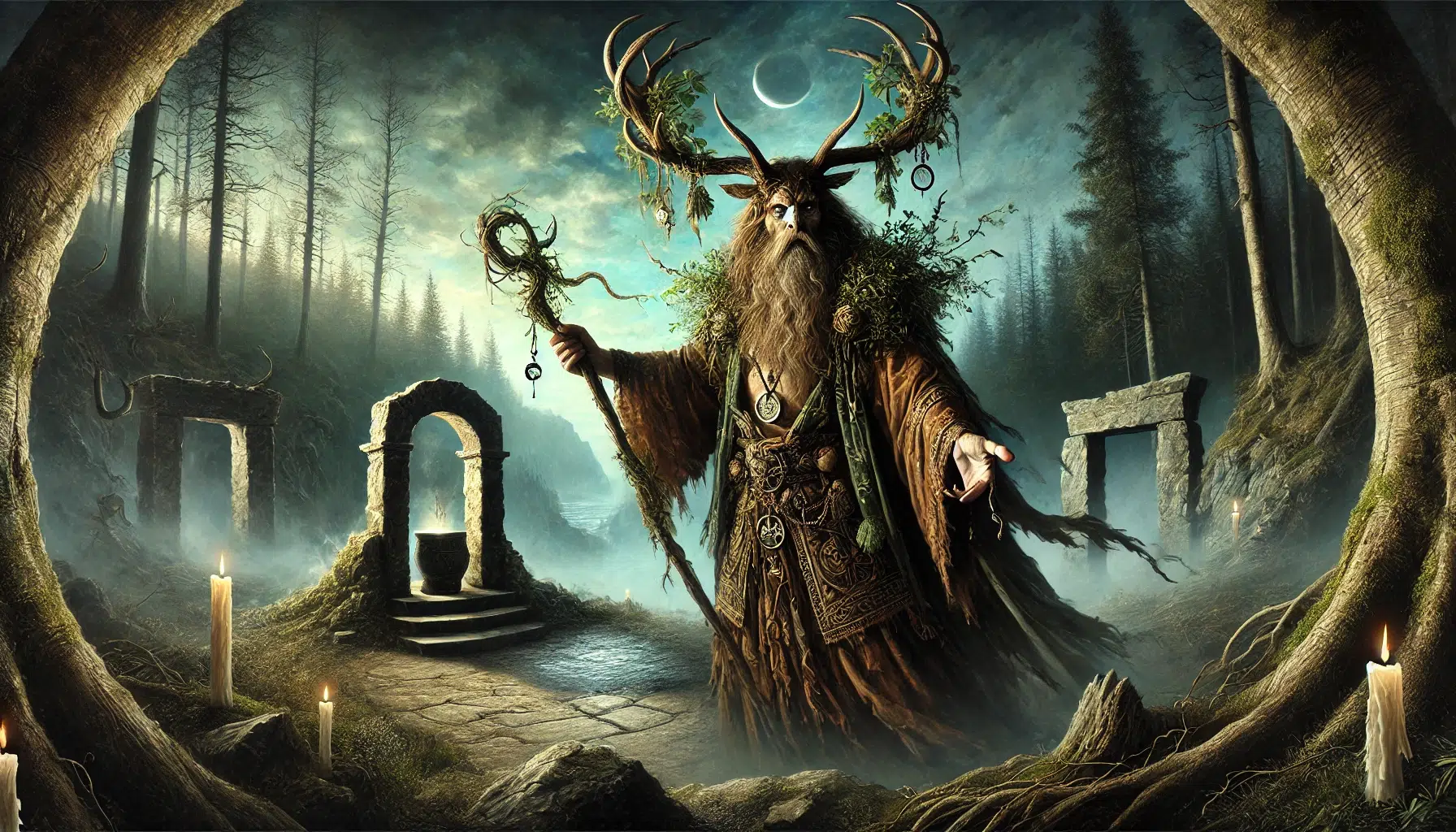
Cernunnos is sometimes seen as a god with a connection to the underworld. People believe he can move freely between the worlds of the living and the dead. This ability makes him a powerful figure in mythology. He may hold the key to the underworld, symbolizing his role as a guide for souls.
In many cultures, deities linked to the underworld have important roles in the cycle of life and death. Cernunnos embodies this idea by overseeing transitions and rebirth. His connection to animals and nature also ties him to the idea of regeneration. Just as the seasons change, life and death are part of a natural cycle.
Cernunnos may also act as a protector of souls, helping them find peace. His role could include guiding the dead through the underworld or ensuring they reach their final resting place. This aspect of his character shows his importance in the spiritual world.
Cernunnos’ link to the underworld highlights his complex nature. He is not just a god of the wilderness but also a guardian of the spiritual realm. This dual role makes him a unique and powerful deity in mythology.
Psychopomp Role
Cernunnos is sometimes seen as a psychopomp, a figure who guides souls to the afterlife. In this role, he helps spirits transition from the world of the living to the realm of the dead. His connection to nature and cycles of life and death makes him a fitting guide for this journey.
Cernunnos may be depicted as comforting the dead, ensuring their safe passage to the afterlife. This aspect of his character highlights his importance not just in the physical world but also in the spiritual realm. It underscores his role in the natural cycle of birth, life, death, and rebirth.
Cernunnos and Fertility Rites
Cernunnos has deep links to fertility and the cycle of life. This connection is celebrated during spring, especially at Beltane, a major pagan festival.
Beltane is a festival focusing on fertility and new beginnings. People call upon Cernunnos to bring fertility and plenty. They perform rituals like lighting fires and dancing to honour him.
These rituals are more than just symbolic. They show the belief that nature and its gods could affect human life and crops. Cernunnos is asked to bless the land for a good harvest and healthy animals. People make offerings and pray to him, showing their dependence on nature and the gods.
Today, neo-pagans and Wiccans still celebrate Cernunnos in spring and fertility rituals. They keep the tradition alive, honouring the cycle of life and fertility. By celebrating Beltane and other rites, they pay tribute to Cernunnos and his role in life.
Symbols of Cernunnos
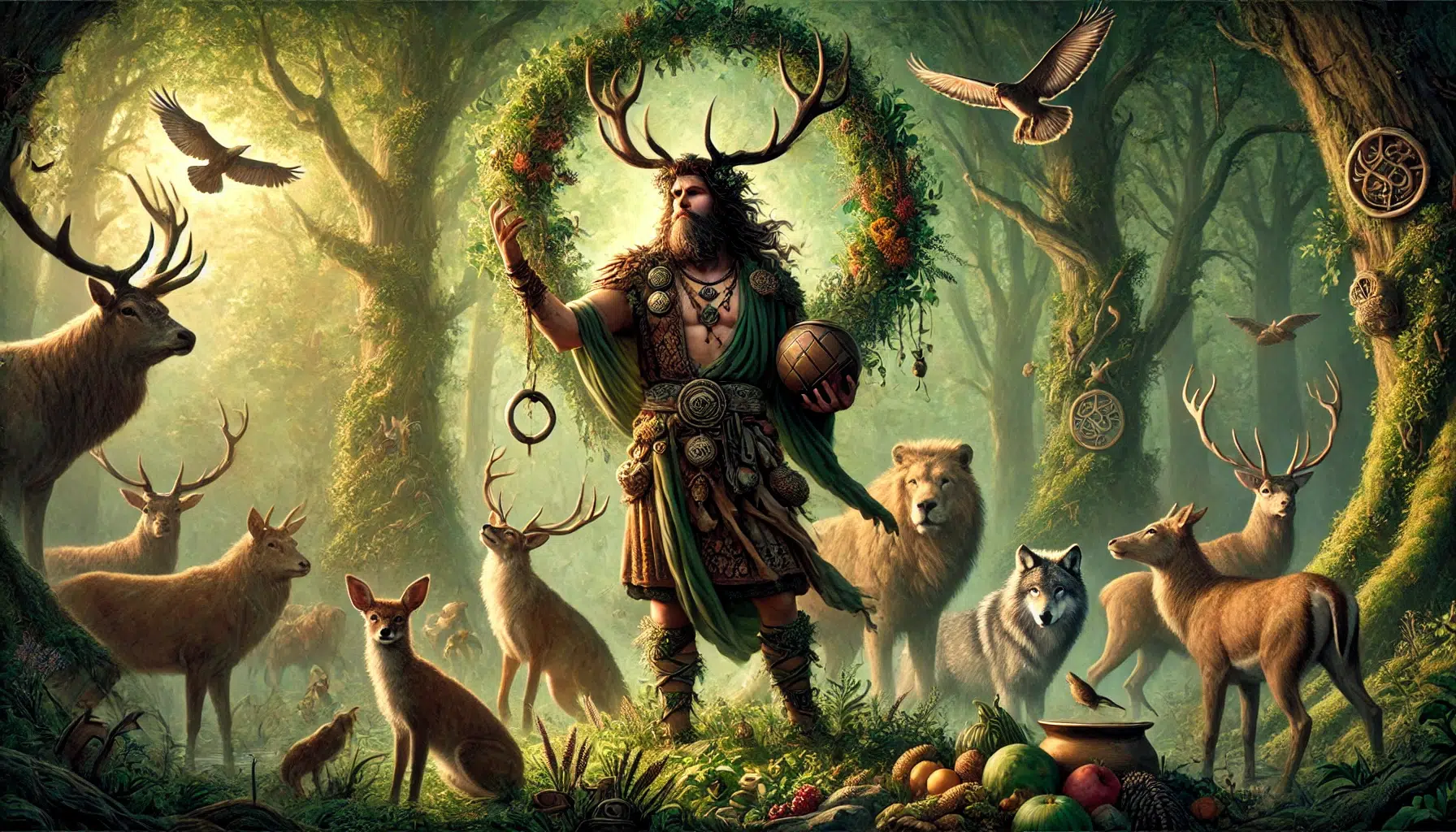
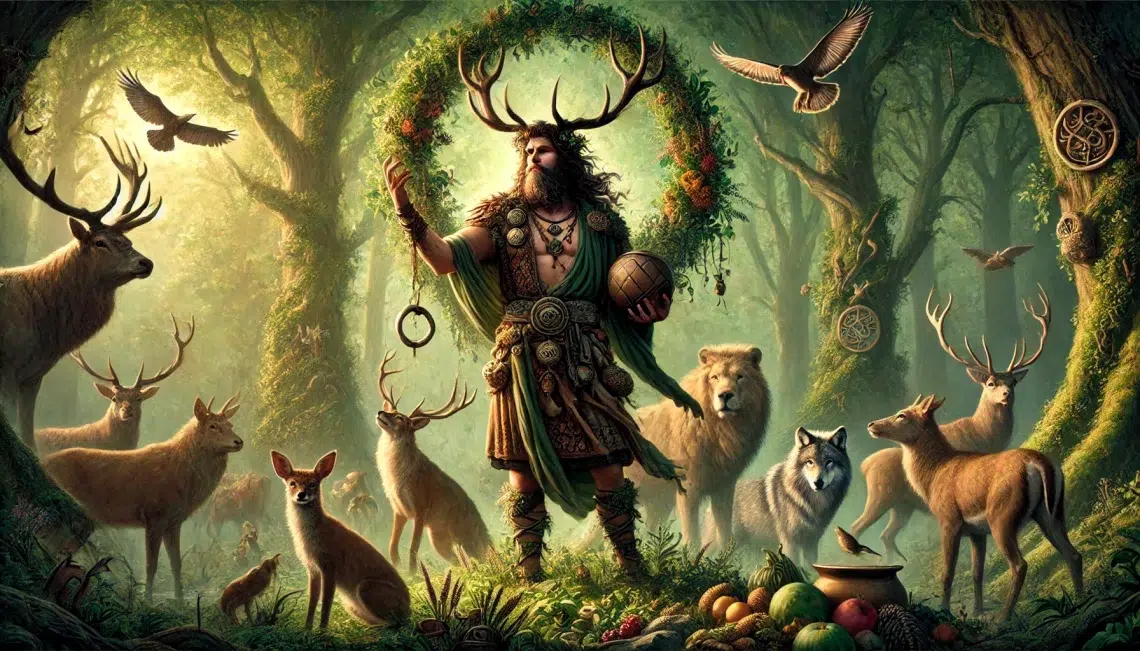
Cernunnos, the god of animals, is known for his deep connection to nature and animals. He is often shown with antlers on his head. These antlers symbolize strength, virility, and the ability to thrive in tough environments.
Another key symbol of Cernunnos is the torc, a neck ring that stands for nobility and power. It’s often seen around his neck or in his hands. This shows his high status and respected place in Celtic culture.
Serpent symbolism is also big in Cernunnos’ depiction. He’s often shown with serpents, which stand for rebirth, change, and deep wisdom. These serpents highlight his control over life and death cycles.
Together, the antlers, torc, and serpents tell a story of Cernunnos as the god of animals and a nature protector. They show a god deeply connected to both the physical and spiritual worlds. He represents life, power, and renewal.
Cernunnos is frequently depicted in Celtic art as a seated, cross-legged figure with antlers, often accompanied by animals such as stags, horned serpents, dogs, and bulls. He is usually shown holding or wearing a torc, a traditional Celtic necklace symbolizing nobility and status. Some depictions also show him holding a bag of coins or a cornucopia, symbolizing wealth and abundance.
The Significance of Horns in Ancient Cultures
Horns have been important in many ancient cultures, symbolizing spiritual power and significance.
In early Mesopotamia, horned crowns show divine authority and protection. Horns have links to fertility and nature, showing the power of horned deities in Northern Europe.
In ancient times, horns on figures or deities meant more than just decoration. The Egyptian god Khnum, with ram horns, is a creator, symbolizing fertility and new beginnings. Similarly, the Hindu god Shiva, with a crescent moon horn, shows the cycle of time and the universe.
The Celtic horned god Cernunnos also shows the importance of horns. His antlers stand for life, death, and rebirth, important in nature’s cycles. This was similar to how horns were used in other pagan traditions for ceremonies. Thus calling on the horned deities’ power and protection.
Horns have a deep spiritual meaning across cultures. They appear in deity images and rituals, standing for power, fertility, and nature’s forces.
Cernunnos: Myths and Folklore
Cernunnos, the mysterious forest god, is a key figure in many Celtic myths and folklore stories. He connects deeply with the natural world and nature spirits. In these stories, he acts as a bridge between humans and the forests, showing his deep link to nature.
The Cycle of Death and Rebirth of Cernunnos
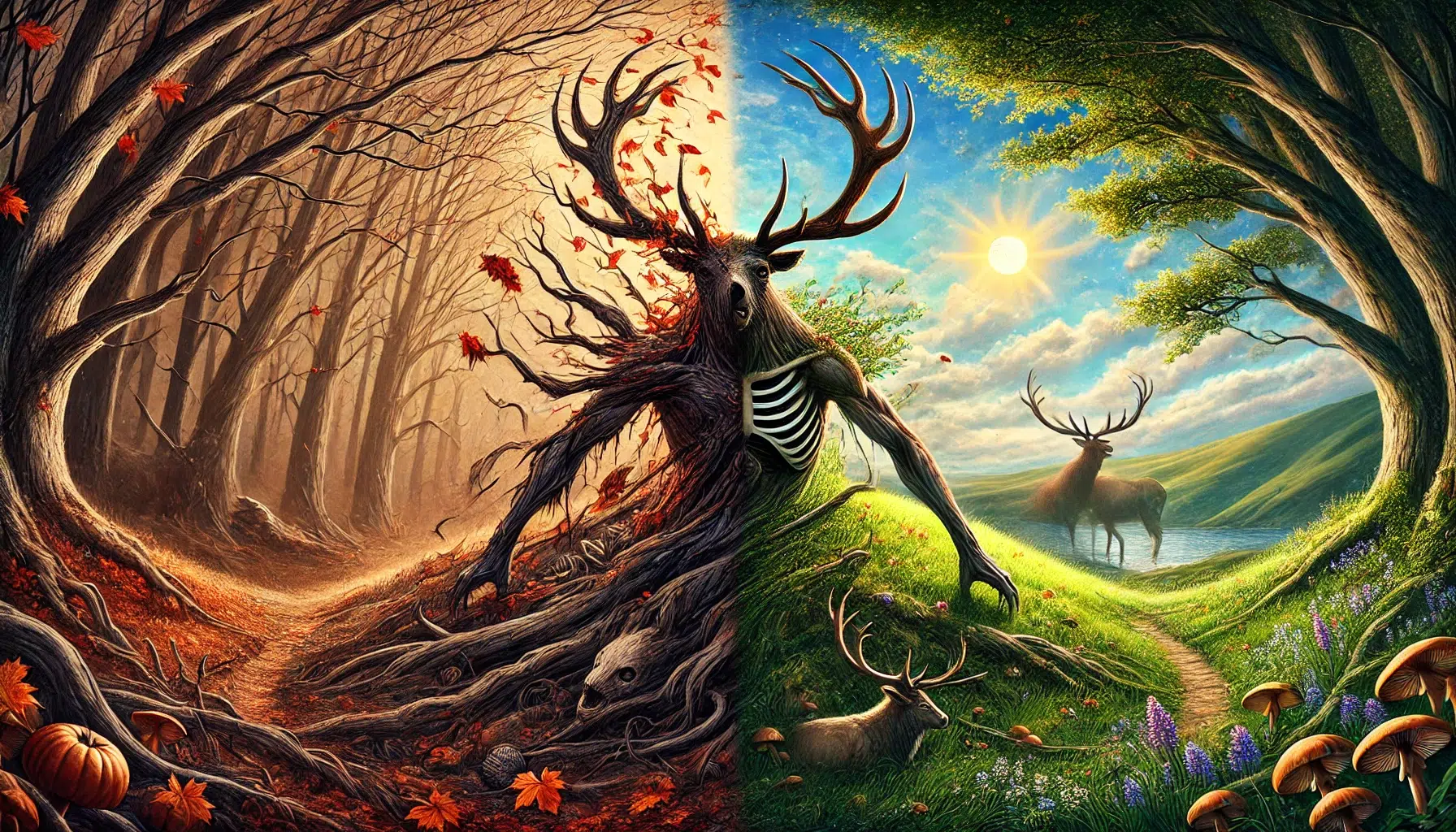
Cernunnos is a strong symbol of nature’s constant changes. He guards the cycle of life, showing us the flow from growth to decay and then renewal. His link with life and death shows how all living things change and grow.
According to this myth, Cernunnos dies and decays in the fall, his body swallowed by the earth. This sacrificial death is necessary for the fertility of the land, as it allows new life to be born. His rebirth in the spring heralds the renewal of life and the growth of crops.
Every year, the Earth changes in ways that reflect Cernunnos’ journey. In spring, he brings new life as nature wakes up. Summer is full of growth and energy, which he watches over with kindness.
Autumn shows us decay, teaching us about the fleeting nature of things in nature’s cycles. Winter is a time of rest, where the seeds of renewal sleep, ready for spring.
The balance of life and death in Cernunnos’ world is not an end. It’s a transformation that’s key to nature’s balance. Cernunnos, a seasonal god, is honored across cultures. His legacy shows our deep understanding of nature’s complex dance.
Marriage to the Goddess of Spring
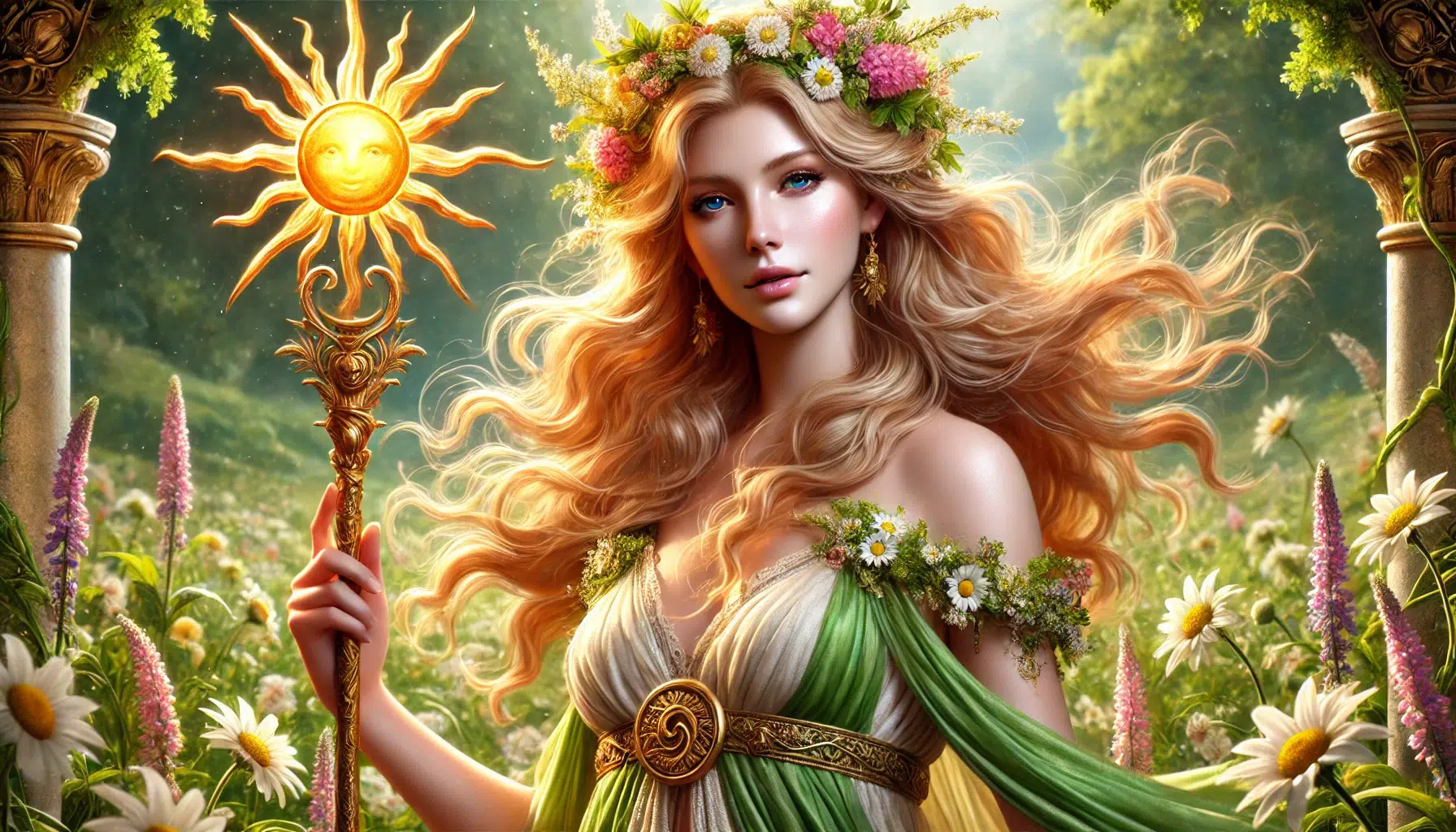
In some modern interpretations, Cernunnos marries the goddess of spring, who is often identified with the festival of Beltane. This union symbolizes the coming together of male and female energies, representing fertility and new life. The marriage signifies the rebirth of the land after winter, bringing growth and abundance.
Legend of The Wild Hunt
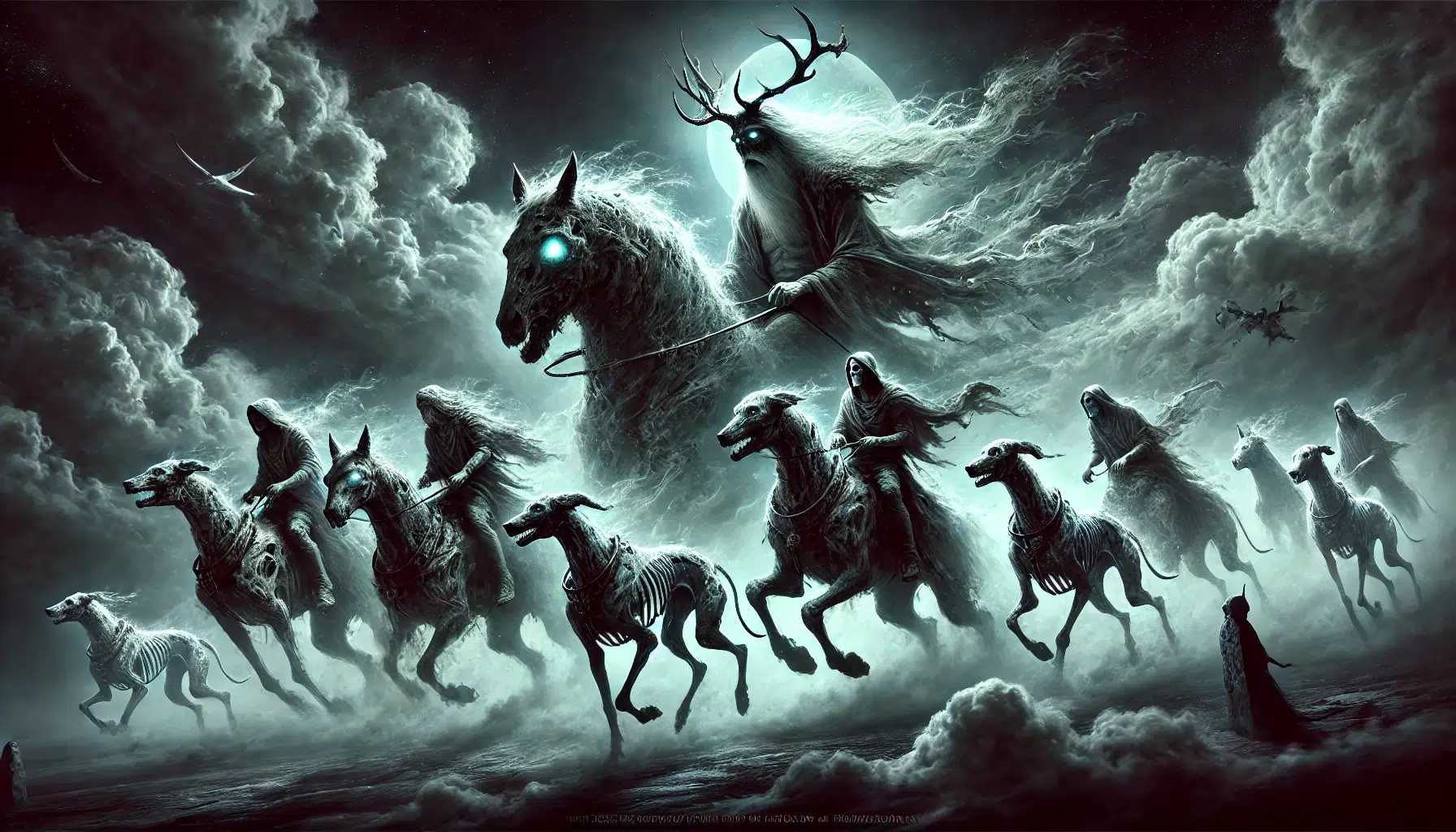
The Legend of the Wild Hunt tells of a ghostly group of hunters that ride through the night sky. This eerie procession is led by a supernatural figure, sometimes Cernunnos, the horned god. They are often seen with spectral hounds and spirits, creating an intimidating sight.
People believe the Wild Hunt appears during storms or at night, especially in the winter. Witnessing the hunt is considered an ominous sign, often bringing bad luck or misfortune. Some stories say the Wild Hunt captures wandering souls or hunts down evildoers. Those who see it might get swept away or cursed, adding an element of danger.
The hunt symbolizes chaos, the unknown, and the boundary between life and death. It is also connected to nature’s wild, untamed aspects, reflecting Cernunnos’ role as a god of the wilderness. The legend varies across cultures but always includes the theme of a powerful, otherworldly hunt.
The Wild Hunt’s imagery and stories continue to capture the imagination, appearing in various myths and folklore. It reminds people of the mystery and unpredictability of the supernatural world. This legend showcases the power and fear associated with ancient deities and spirits.
Folklore With Connections to Cernunnos

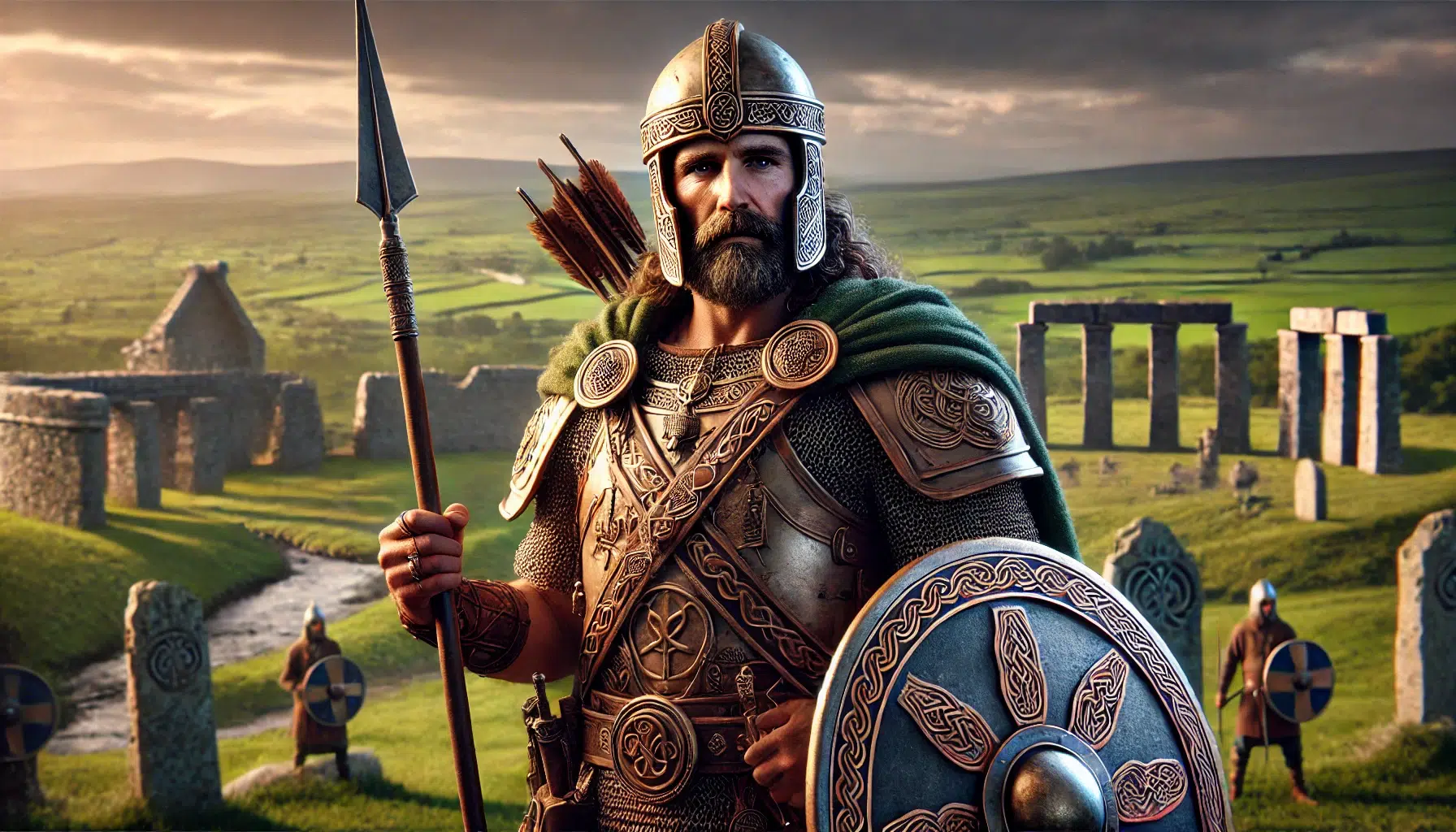
Herne the Hunter
Modern Pagan Interpretations
In contemporary pagan traditions, Cernunnos is the “Lord of the Wilds” or “God of Wild Places.”
These titles and myths have no historical basis but have become popular in modern spiritual practices. Neo-pagans celebrate Cernunnos as a symbol of natural power, fertility, and the cycle of life and death.
While the historical myths of Cernunnos are sparse and fragmented, these stories illustrate his legacy as a powerful symbol of nature, fertility, and the wild.
Cernunnos God in Wicca
In today’s world of paganism, Cernunnos has become more popular. This ancient Celtic god has horns representing nature, wildlife, and the cycle of life. People following Wicca and other earth-based beliefs welcome him into their spiritual lives.
Wicca is a modern pagan, witchcraft religion that developed in the early to mid-20th century. It draws upon a diverse set of ancient pagan and 20th-century hermetic motifs for its theological structure and ritual practices.
In Wicca, Cernunnos is a key figure of male divinity. He balances the female power of the earth mother. This shows how nature has both sides that work together.
In Wiccan ceremonies, he stands for the wild side of nature. He symbolizes fertility, strength, and the bond between all living things. His image appears in rituals at the solstices and equinoxes, celebrating life’s cycles. These rituals often include giving natural items like leaves and flowers to honour him.
Cernunnos brings a deep respect for nature into modern paganism and Wicca. He helps followers connect deeply with the earth and its cycles.
Historical Depictions of Cernunnos
Cernunnos in the Gundestrup Cauldron
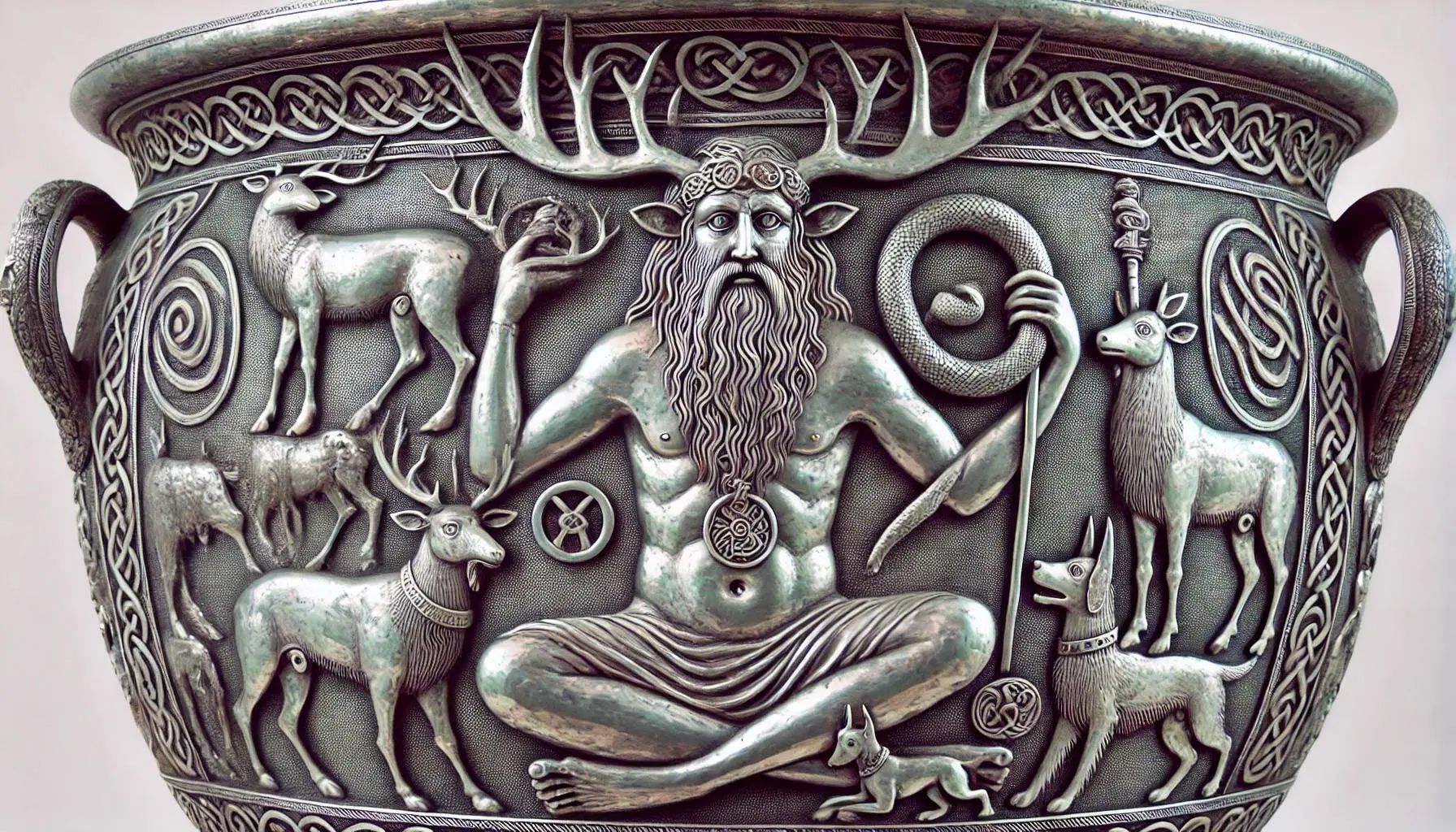
One of the most famous depictions of Cernunnos is on the Gundestrup Cauldron, a silver vessel dating back to the 1st century BCE. Found in Denmark, he is shown with antlers, sitting cross-legged. In one hand, he holds a serpent; in the other, a torc, a type of necklace.
Animals surround him, including a stag and a bull. This scene shows his connection to nature, animals, and the cycles of life. The image also highlights his role as a protector of the natural world.
The Gundestrup Cauldron gives us important clues about how people honoured and worshipped Cernunnos. It shows his importance in Celtic mythology and art.
Pillar of the Boatmen
The Pillar of the Boatmen is a 1st-century CE monument in Paris. It includes an inscription and image of Cernunnos, the Celtic god.
Cernunnos is shown with antlers, holding a purse of coins, symbolizing wealth and prosperity. He stands among other gods, showing his importance in the Celtic pantheon.
The monument also includes inscriptions in Latin, which highlight the mix of Roman and Celtic cultures. The Boatmen, who built the pillar, were a guild of river workers. They honoured Cernunnos and other gods, seeking their protection and blessings. The pillar shows how different cultures blended in ancient Paris.
Val Camonica Rock Art
The earliest known depictions of Cernunnos appear in the rock art of Val Camonica, northern Italy. These carvings date back to around 400 BCE.
In these images, Cernunnos has antlers, highlighting his connection to nature and animals. He often stands or sits among other symbols, showing his importance in local beliefs.
The Val Camonica rock art also includes other scenes of daily life and rituals. These carvings provide valuable insights into the beliefs and practices of ancient people in the region. They show how Cernunnos was an important figure in early Celtic religion.
Comparing Cernunnos with Other Nature Deities

Cernunnos is often compared to other gods from Greek mythology. As a Celtic god, Cernunnos has links to nature, animals, and fertility. He has antlers and represents life, death, and rebirth.
Pan, a Greek god, is a half-goat, half-man figure who represents the wild, shepherds, and flocks. He also has links to nature, fertility, and music.
Artemis, Greek goddess of hunting, protector of wildlife has associations to the moon and fertility. Faunus, a Roman god like Pan, looks after the forest, fields, and fertility. He represents nature and rural life.
Silvanus, a Roman god, protects woods and fields. He stands for agriculture and the boundaries of fields. These gods and goddesses share roles as protectors and symbols of nature and fertility, connecting them to the natural world.
Each deity has roots in their specific cultural and religious context, which shapes their attributes and roles. Cernunnos is distinctly Celtic, while Pan and Artemis are Greek, and Faunus and Silanus are Roman.
Cernunnos is typically male, while Artemis is female and some note Pan as gender-fluid. While all these deities have associations with nature, their specific domains can vary. Artemis is also a moon goddess and Pan has links to music.
All these deities have strong connections to nature and the wilderness, embodying the untamed aspects of the natural world. Many of these deities have associations with fertility and the cycles of life and death, reflecting the natural processes of growth and decay.
Animals also play a significant role in the symbolism of these deities, whether it’s Cernunnos’ stags and serpents, Pan’s goats, or Artemis’ deer.
Cernunnos in Popular Culture
Cernunnos, the mysterious horned god of Celtic mythology, is still popular today. He appears in many modern stories, influencing art and media. His image is in fantasy books and art, showing his lasting impact.
Authors like J.R.R. Tolkien and Neil Gaiman have used Cernunnos in their stories. Tolkien’s Middle-earth and Gaiman’s American Gods bring back the old Celtic myths. This shows how these ancient stories still touch our lives.
Cernunnos has also been in movies and TV shows. Marvel’s Thor: The Dark World uses Celtic symbols for the bad guy’s place, hinting at Cernunnos. He’s also been in films and series about witchcraft and old religions, adding to their cultural feel.
Music is another way Cernunnos lives on. Bands like Led Zeppelin and Fleetwood Mac have written songs about old myths and nature gods. Their music brings out the mystical side of Cernunnos.
The art world also celebrates Cernunnos. Artists today use old symbols to make new art that looks like the god’s. These pieces bring back ancient stories and mix them with today’s culture.
As artists keep finding inspiration in Cernunnos, his stories stay alive. His myth keeps changing, influencing new people and keeping his spirit alive. This cycle of new stories keeps Cernunnos relevant and exciting for us all.
Conclusion
This horned deity shows a deep link with nature. Over time, Cernunnos has been a strong symbol of life, death, fertility, and balance in nature.
His lasting impact on modern pagans and Wiccans shows how important he is. Cernunnos’ cultural legacy highlights the deep spiritual roots of Celtic beliefs.
Cernunnos with his antlers, show his strength and link to animals. His symbols, like fertility rites, show his role in nature. His stories and symbols still affect today’s spirituality, proving his lasting cultural impact.
In conclusion, Cernunnos’ mark on spirituality is more than just old stories. It shows our deep respect for nature and life’s mysteries. Through Cernunnos, the Celtic legacy inspires and guides those seeking to connect with the world. They do this through ancient wisdom and living in harmony with nature.