Celtic Mythological Cycle: Ireland’s Gods and Magical Beings
Introduction to the Celtic Mythological Cycle
The Celtic Mythological Cycle explores Ireland’s gods, supernatural beings, and early inhabitants. These myths focus on creation, magic, and cosmic balance. They reveal the origins of the Irish people and their connection to divine forces.
Central to this cycle are the Tuatha Dé Danann, a magical race with incredible powers. These beings represent wisdom, skill, and mastery of the natural world. Myths often describe their battles with the Fomorians, a race symbolizing chaos and destruction. These conflicts highlight the eternal struggle between light and darkness.
The Mythological Cycle contains some of Ireland’s oldest stories, dating back to the pre-Christian Celtic era (1000 BCE–300 CE). Early oral traditions shaped these myths, which Christian monks later recorded in medieval manuscripts. Despite Christian influences, the stories retain strong connections to Ireland’s pagan past.
These myths offer timeless themes of resilience, transformation, and the importance of harmony. The Mythological Cycle serves as a foundation for Irish mythology, celebrating Ireland’s rich spiritual and cultural heritage.
Cycles in Celtic Mythology
Celtic mythology divides into four main cycles, especially in Irish tradition:
- Mythological Cycle: Focuses on the gods and the origins of the Irish people, featuring deities like the Tuatha Dé Danann.
- Ulster Cycle: Centres on the hero Cú Chulainn and the kingdom of Ulster, highlighting themes of heroism and warfare.
- Fenian Cycle: Chronicles the adventures of the hero Fionn mac Cumhaill and his band of warriors, the Fianna.
- Historical Cycle: Also known as the Cycle of Kings, it recounts the deeds of historical and legendary kings of Ireland.
Celtic mythology is full of stories passed down through generations. These myths feature gods, heroes, magical creatures, and epic adventures. Here are some of the most famous myths in Celtic mythology.
Celtic Mythological Cycle
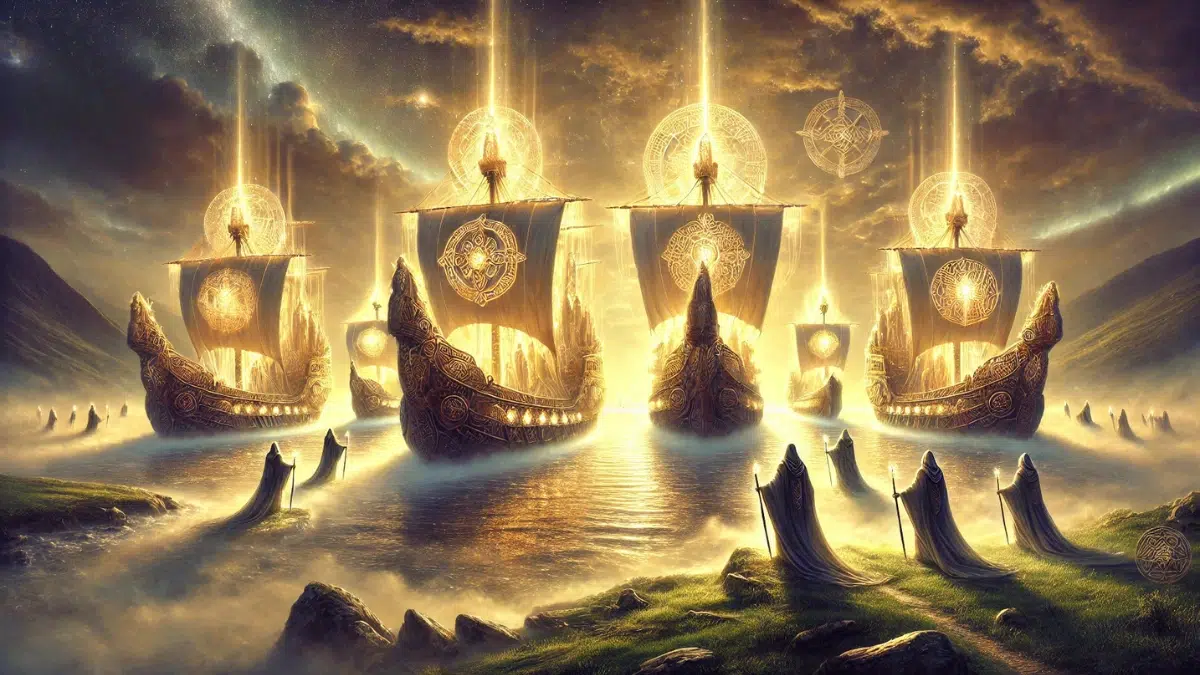
This cycle explores the origins of the Irish people and their gods, focusing on the Tuatha Dé Danann, a supernatural race associated with magic and wisdom. These stories delve into creation myths and battles between divine forces.
The Tuatha Dé Danann
The Tuatha Dé Danann stand as one of the most important groups in Irish mythology. They represent gods, warriors, and skilled artisans who embody wisdom, magic, and strength. Their name translates to “People of the Goddess Danu,” linking them to divine origins and the forces of nature.
The Tuatha Dé Danann arrive in Ireland on magical ships, seeking to rule the land. They face and defeat the Fir Bolg, the island’s first inhabitants, in the first Battle of Moytura. Despite their victory, they continue to face challenges, especially from the Fomorians, a race symbolizing chaos and destruction. In the second Battle of Moytura, the Tuatha Dé Danann defeat the Fomorians, securing their rule.
Prominent members include Lugh, the god of many skills, Nuada, the king with a silver hand, and the Dagda, a leader connected to abundance. The Morrigan, a goddess of war and prophecy, also plays a key role in their myths, representing transformation and fate.
The Tuatha Dé Danann symbolize the balance between light and dark, order and chaos. They use their wisdom and power to maintain harmony in the world. Their stories celebrate themes of resilience, leadership, and the importance of connection to the natural and mystical worlds. These myths continue to shape Ireland’s cultural identity.
Nuada and the Silver Hand
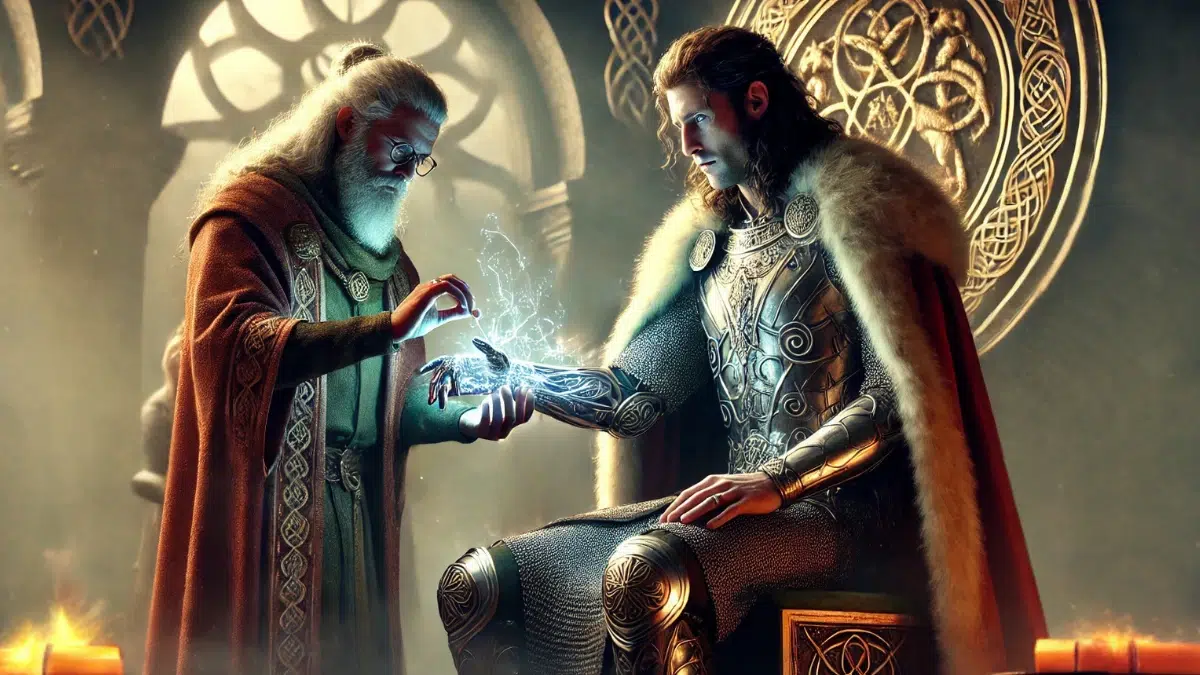
Nuada, a king of the Tuatha Dé Danann, represents leadership, resilience, and strength. His story begins during the first Battle of Moytura, where the Tuatha Dé Danann fight the Fir Bolg for control of Ireland. In the battle, Nuada loses his hand, an injury that creates a significant challenge.
Irish law requires a king to be physically whole, so Nuada must step down as leader. The Tuatha Dé Danann appoint Bres, a king with ties to the Fomorians, to replace him. However, Bres proves to be a poor ruler, lacking generosity and fairness, which causes unrest among the Tuatha Dé Danann.
Nuada’s story changes when a skilled healer and craftsman named Dian Cécht creates a silver hand for him. This magical hand restores Nuada’s ability to lead, and he regains the throne. With Nuada as king again, the Tuatha Dé Danann prepare for the second Battle of Moytura, where they face the Fomorians.
Nuada’s silver hand symbolizes healing, resilience, and the strength to overcome adversity. His story highlights the importance of leadership and fairness in maintaining harmony. Nuada inspires through his ability to adapt and continue serving his people, making his tale an essential part of the Celtic Mythological Cycle.
The Harp of Dagda
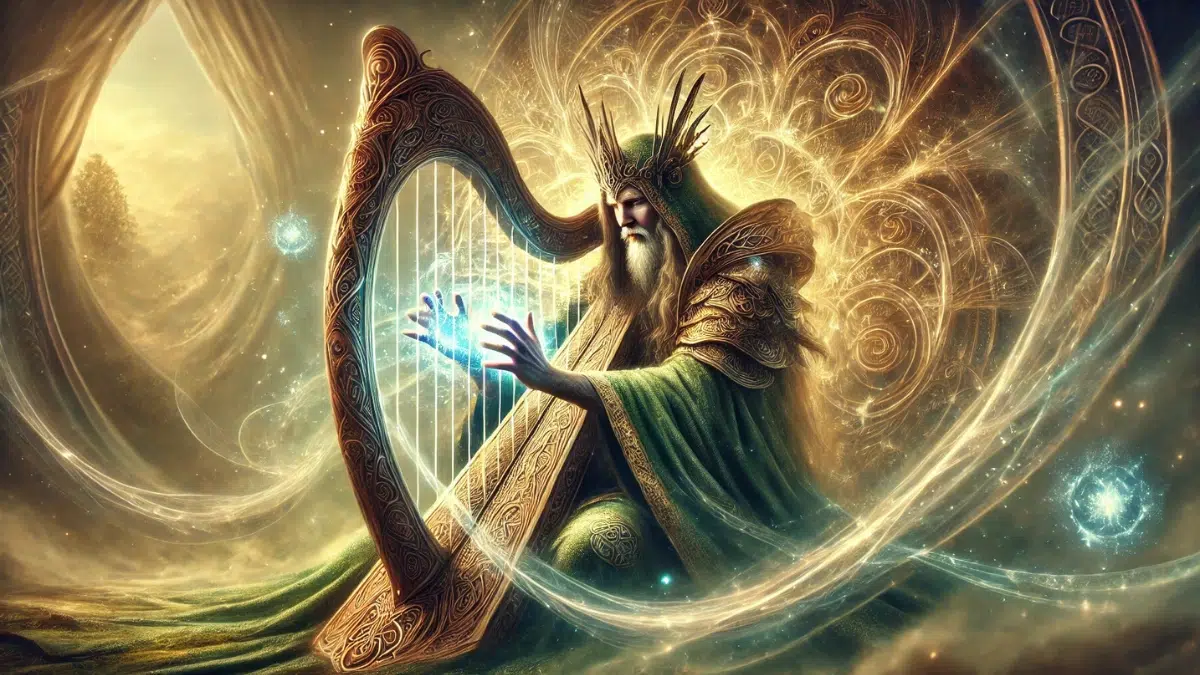
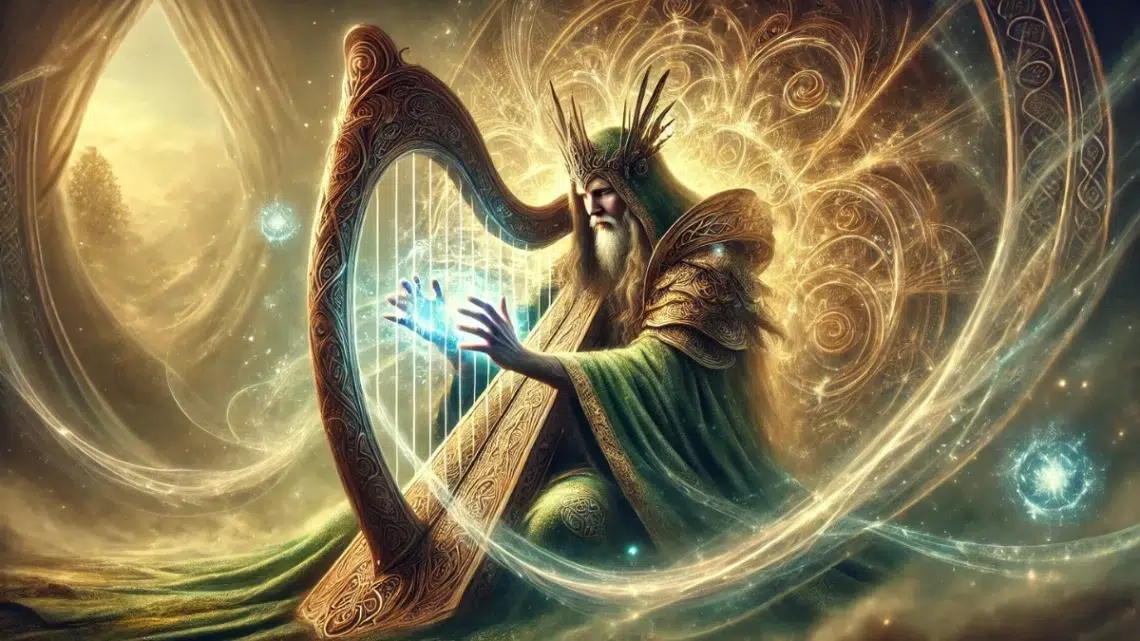
The Harp of Dagda stands as a powerful symbol of music, emotion, and control in Irish mythology. The Dagda, a chief of the Tuatha Dé Danann, owns a magical harp with incredible abilities. This harp plays music that can inspire joy, bring tears, or lull anyone to sleep.
During a conflict with the Fomorians, they steal the harp to weaken the Tuatha Dé Danann. Without the harp, the Dagda loses a vital tool for uniting his people and lifting their spirits. Determined to retrieve it, the Dagda sets out with Ogma, a fellow warrior, and the goddess Lugh.
The group finds the harp hanging on the wall of a Fomorian hall, surrounded by their enemies. The Dagda calls to the harp using a secret command, and it flies into his hands. As the Fomorians attack, the Dagda plays three magical tunes. The first brings sorrow, making the enemies weep. The second brings laughter, leaving them unable to fight. The third puts them all to sleep, allowing the Dagda and his allies to escape.
The Harp of Dagda represents the power of art and music to influence emotions and create harmony. This myth highlights the Dagda’s wisdom and leadership, showing how creativity can overcome challenges. It remains a timeless tale of resilience and the unifying power of music.
The Battle of Moytura (Cath Maige Tuired)
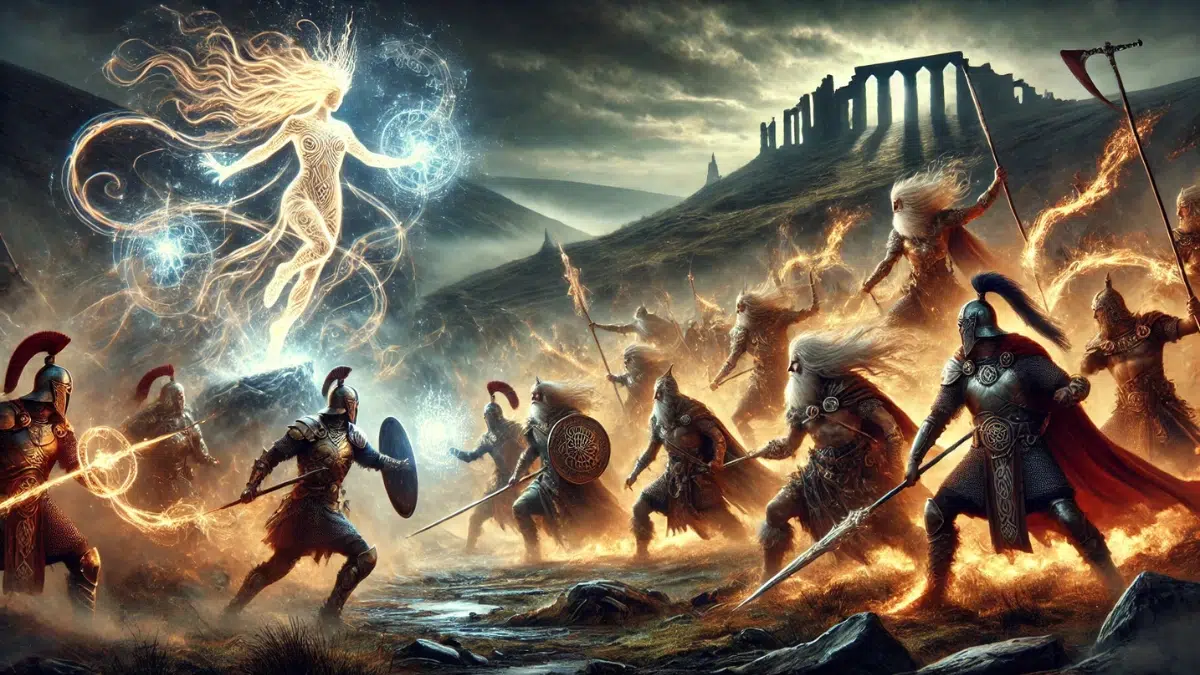
The Battle of Moytura tells the story of two epic battles fought by the Tuatha Dé Danann, Ireland’s divine and magical race. These battles shape their rise to power and establish their rule over Ireland. The first battle occurs between the Tuatha Dé Danann and the Fir Bolg, the land’s original inhabitants.
The Tuatha Dé Danann seek to settle peacefully but demand part of the land. The Fir Bolg refuse, leading to war. Despite fierce fighting, the Tuatha Dé Danann emerge victorious, but their leader, Nuada, loses his hand in battle. Because Irish law requires a king to be physically perfect, Nuada steps down until a silver hand restores his ability to lead.
The second battle, the most famous, involves the Tuatha Dé Danann and the Fomorians, a chaotic and destructive race. Lugh, a god of many skills, becomes the hero of this conflict. Using strategy and courage, Lugh defeats Balor, the Fomorian leader, ensuring victory for the Tuatha Dé Danann.
The Battle of Moytura highlights themes of leadership, resilience, and the struggle between order and chaos. It shows the Tuatha Dé Danann’s strength, wisdom, and connection to Ireland’s destiny. This myth remains a cornerstone of the Celtic Mythological Cycle, celebrating courage and the balance of power.
The Dagda and the Cauldron of Plenty
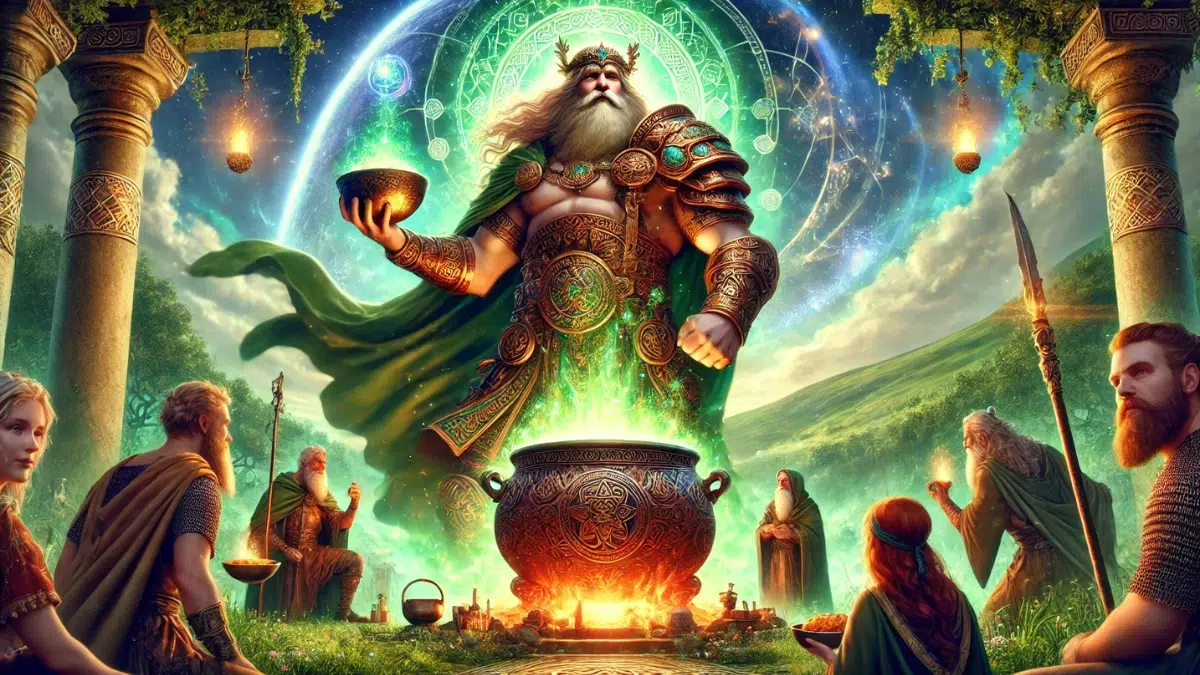
The Dagda, a chief of the Tuatha Dé Danann, embodies strength, wisdom, and abundance. One of his most famous symbols is the Cauldron of Plenty, a magical vessel that never empties. The cauldron provides endless food, ensuring that no one in his kingdom ever goes hungry.
The Dagda’s cauldron represents generosity and the power to sustain life. It serves as one of the Four Treasures of the Tuatha Dé Danann, along with the Stone of Destiny, the Spear of Lugh, and the Sword of Nuada. The cauldron’s magic reflects the Dagda’s role as a protector and provider for his people.
In addition to the cauldron, the Dagda carries a massive club that can kill with one end and revive with the other. These dual abilities show his connection to life and death, as well as his responsibility to maintain balance.
One story describes the Dagda using his cauldron during times of war and hardship. He feeds his warriors and strengthens them for battle. The cauldron ensures that no matter the challenges, the Tuatha Dé Danann remain strong and united.
The Dagda and his cauldron highlight themes of leadership, abundance, and the importance of sharing resources. His myth reflects Ireland’s deep respect for balance, wisdom, and the power of generosity.
Lugh’s Arrival and Triumph
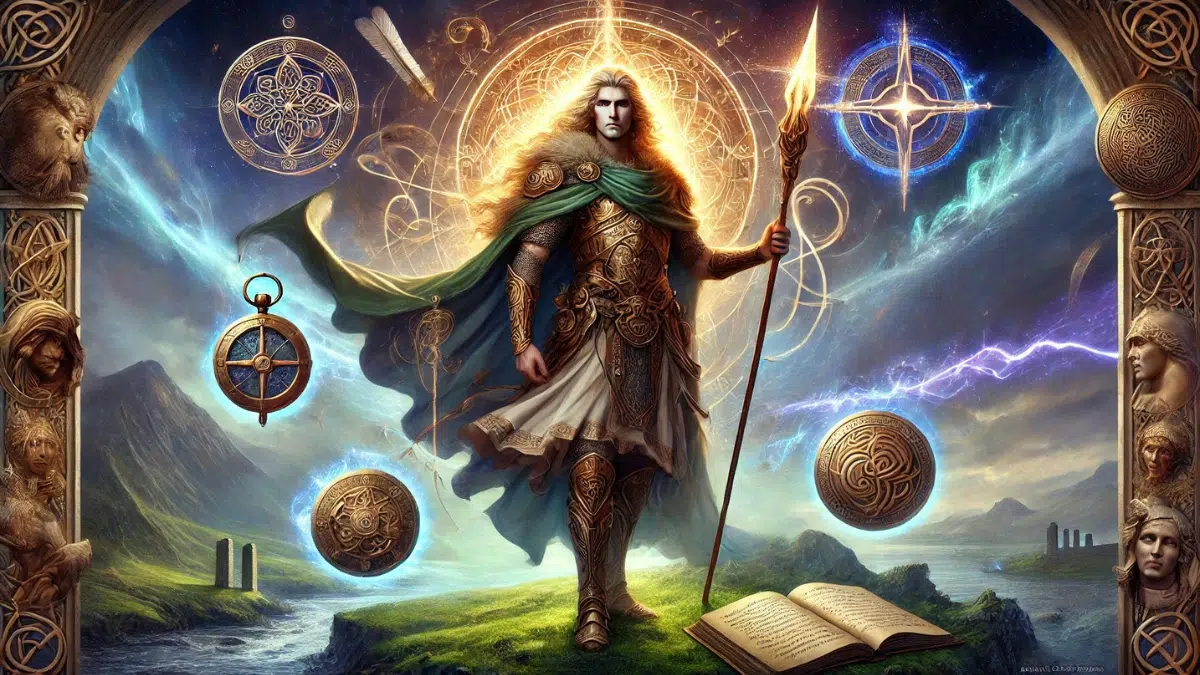
Lugh, a god of many talents, plays a crucial role in the myths of the Tuatha Dé Danann. Known as Lugh of the Long Arm, he masters skills like combat, strategy, poetry, and craftsmanship. His arrival marks a turning point for the Tuatha Dé Danann during their struggle with the Fomorians, a destructive and chaotic race.
When Lugh arrives at Tara, the seat of the Tuatha Dé Danann, he seeks entry to join their ranks. The gatekeeper questions him, demanding proof of his worth. Lugh impresses everyone by showcasing his diverse talents, earning his place among the gods.
During the second Battle of Moytura, Lugh becomes the key to the Tuatha Dé Danann’s victory. He takes command and inspires the gods with his leadership and skill. In the battle’s climactic moment, Lugh faces Balor, the powerful Fomorian leader with a deadly eye that can destroy anything in its gaze. Using cunning and precision, Lugh kills Balor, ensuring the Tuatha Dé Danann’s triumph.
Lugh’s story highlights themes of versatility, leadership, and courage. His ability to adapt and excel in many areas symbolizes the importance of knowledge and skill in overcoming challenges. Lugh’s myth continues to inspire as a tale of resilience and the value of determination.
The Morrigan’s Prophecy
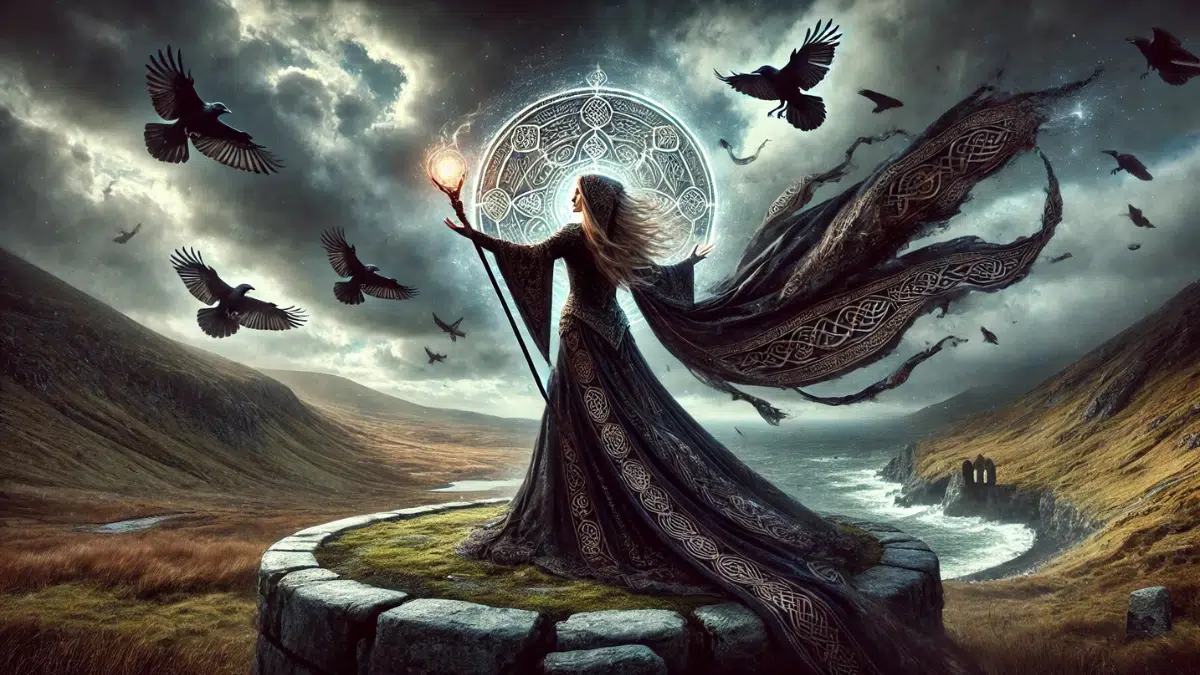
The Morrigan, a powerful goddess of war and fate, plays a central role in the Celtic Mythological Cycle. Known for her ability to shape the future, she delivers prophecies that influence the course of Ireland’s history. The Morrigan embodies transformation, destruction, and renewal, connecting her to the cycle of life and death.
After the second Battle of Moytura, where the Tuatha Dé Danann defeat the Fomorians, the Morrigan speaks her most famous prophecy. She stands over the battlefield and declares a vision of Ireland’s future. Her words celebrate the victory but also warn of challenges yet to come. She foretells peace and prosperity but reminds her audience that such blessings require vigilance and strength.
The Morrigan’s prophecy reflects her dual nature as both a bringer of destruction and a protector of life. Her connection to the land and its people underscores her importance in Irish mythology. As a goddess, she represents the balance between chaos and order, ensuring that neither overwhelms the other.
This prophecy resonates deeply in Irish culture, reminding people of the need for courage, resilience, and the wisdom to adapt. The Morrigan’s words continue to inspire and stand as a powerful symbol of Ireland’s enduring spirit and connection to the divine.
The Children of Lir
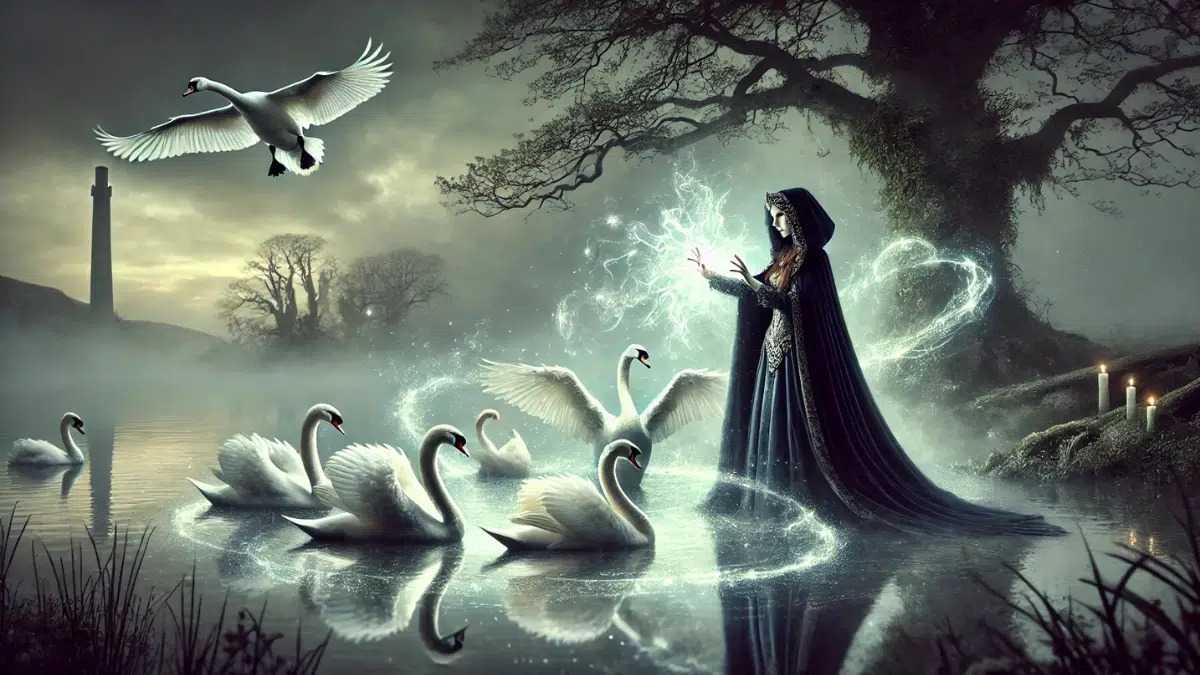
The Children of Lir tells one of the most beloved and tragic stories in Irish mythology. Lir, a member of the Tuatha Dé Danann, has four children who live happily under his care. However, tragedy strikes when Lir’s wife dies, and he marries Aoife, her sister.
Aoife grows jealous of Lir’s love for his children. In her anger, she uses magic to transform them into swans. She curses them to spend 900 years as swans, divided into three centuries on different waters. Despite their transformation, the children retain their human voices and continue to sing beautifully.
The curse leaves them separated from their family and home. However, their bond remains unbroken, and they find comfort in each other’s company. As time passes, they witness the changes in Ireland, including the arrival of Christianity.
The curse ends when a Christian bell rings, symbolizing the new faith. The children return to their human forms but age rapidly, becoming frail and weak. They soon pass away, finding peace together in the afterlife.
The Children of Lir explores themes of love, jealousy, resilience, and transformation. This tale reflects Ireland’s deep connection to nature, family, and spiritual renewal, remaining a cherished story in Irish mythology.
The Voyage of Bran
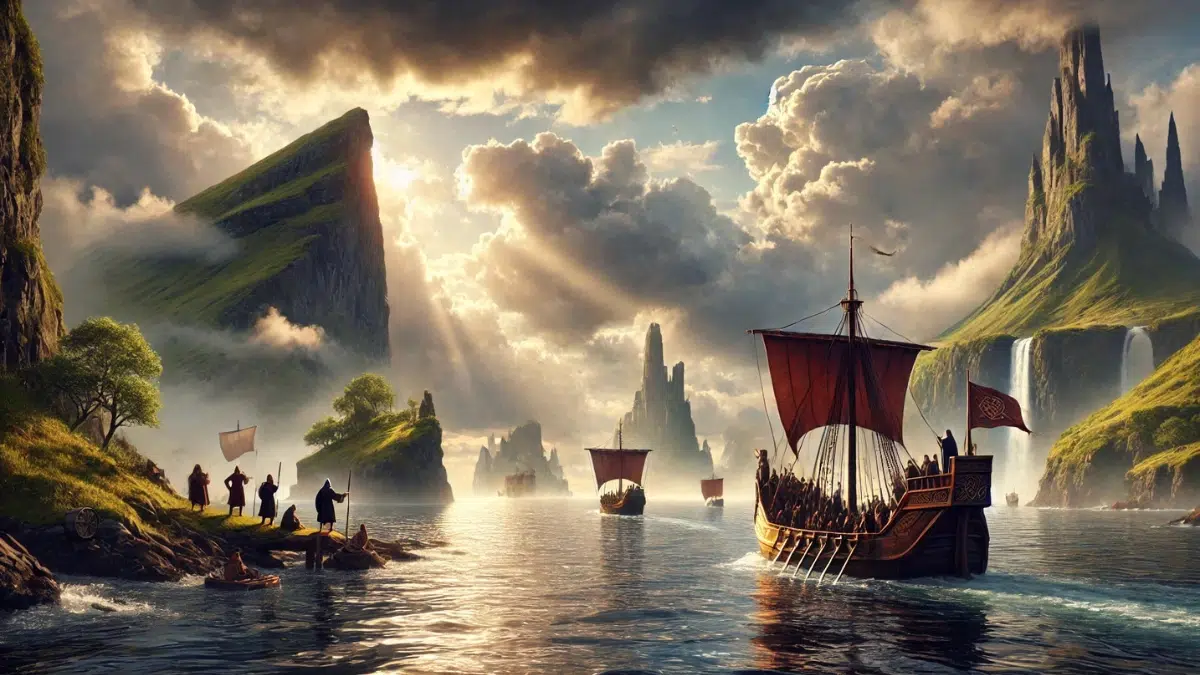
The Voyage of Bran tells a story of adventure, mystery, and exploration into the Otherworld. Bran, the son of Febal, begins his journey after hearing a mysterious and enchanting song. This song describes a magical land filled with beauty, joy, and endless abundance. Inspired by the vision, Bran gathers a group of companions and sets sail to find this mystical realm.
As they journey across the sea, Bran and his crew encounter extraordinary islands. Each island represents a unique and strange experience. They find one island where laughter never ends, and another where giants live. These stops reveal the wonders and dangers of the Otherworld.
Eventually, Bran reaches the promised land, a place of eternal happiness and peace. However, the journey continues to test their resolve, as time flows differently in this magical world. Longing for home, Bran decides to return to Ireland. When they arrive, they discover that centuries have passed in the mortal world.
The voyage ends with Bran choosing to stay at sea, knowing he no longer belongs in the world he left. His story explores themes of curiosity, transformation, and the search for meaning beyond ordinary life. The Voyage of Bran remains a powerful and mystical tale in Irish mythology, celebrating the connection between humanity and the unknown.
Conclusion to the Celtic Mythological Cycle
The Celtic Mythological Cycle connects Ireland’s ancient beliefs, gods, and supernatural beings with its cultural identity. These myths reveal themes of creation, balance, and transformation. They offer timeless lessons about resilience, leadership, and the ongoing struggle between light and darkness.
Central figures like the Tuatha Dé Danann and their battles with the Fomorians symbolize the balance between order and chaos. These stories highlight Ireland’s connection to the divine and its rich spiritual traditions. While Christian monks recorded the myths, they still reflect Ireland’s pagan heritage and cultural roots.
The Mythological Cycle inspires audiences with tales of bravery, wisdom, and cosmic harmony. It offers a glimpse into how early Irish people viewed the world and their place in it. These myths continue to resonate, showing the power of storytelling in preserving history, spirituality, and identity.
By sharing and celebrating these myths, we honour the legacy of Ireland’s earliest stories and their enduring impact on Irish culture.