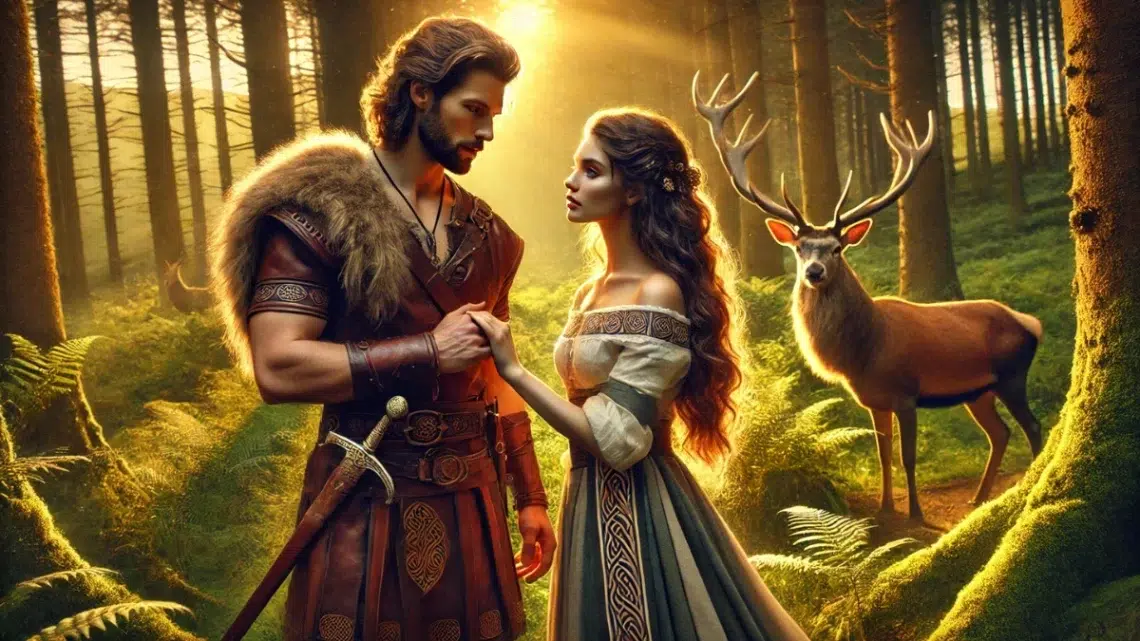
Celtic Fenian Cycle: Fionn mac Cumhaill and the Fianna Myths
Introduction to the Celtic Fenian Cycle
The Fenian Cycle tells stories of adventure, loyalty, and heroism centred on Fionn mac Cumhaill and his warriors, the Fianna. These myths highlight the strong bond between humans and nature, as well as the challenges of leadership and friendship. The Fianna serve as protectors of Ireland, defending it from supernatural threats and invaders.
Fionn mac Cumhaill, the leader of the Fianna, embodies wisdom, courage, and fairness. Myths like The Salmon of Knowledge describe how Fionn gains his legendary wisdom, while tales like The Chase of Diarmuid and Gráinne explore the complexities of love and loyalty. The Fianna’s adventures show their bravery and their commitment to each other and the land they defend.
The Fenian Cycle reflects a balance between epic battles, romance, and personal growth. These stories connect deeply to Irish culture, focusing on values like honour, bravery, and respect for nature. Written versions, like The Acallam na Senórach, preserve these myths while adding Christian influences.
The Fenian Cycle offers timeless lessons about community, courage, and the strength found in unity. These myths continue to inspire through their celebration of loyalty, leadership, and the enduring spirit of adventure.
The Four Cycles of Irish Myths
Mythological Cycle
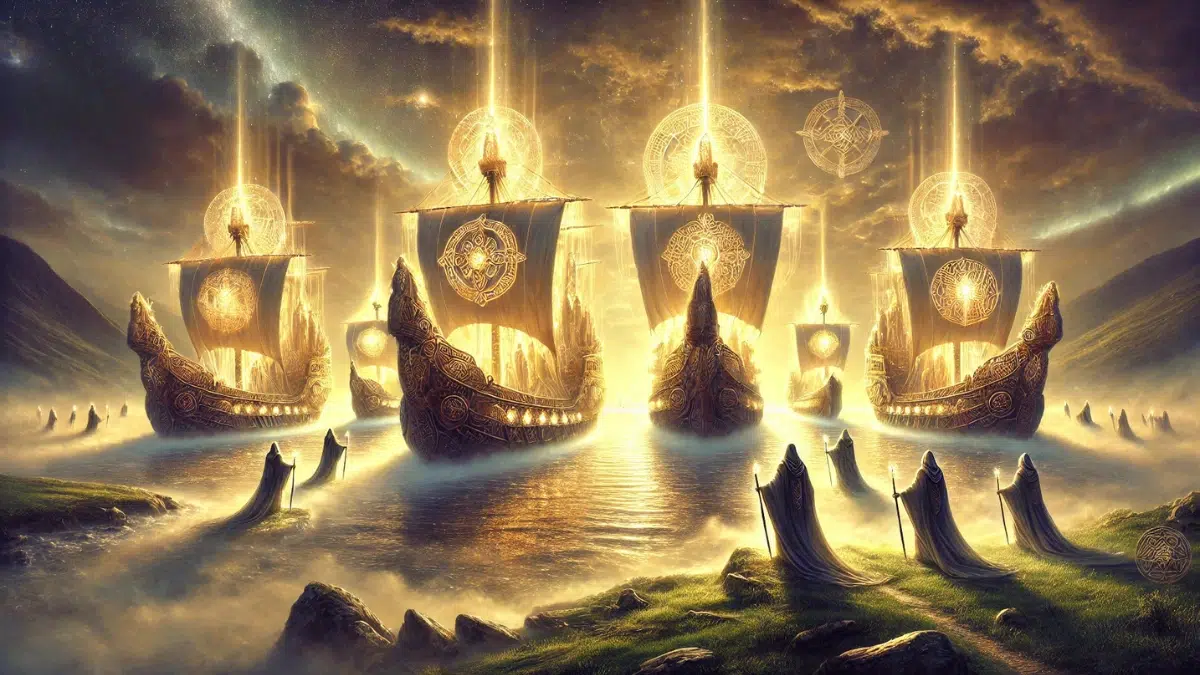
The Mythological Cycle tells stories about Ireland’s gods and explain the origins of the Irish people. The myths in this cycle are the oldest, dating to Ireland’s pre-Christian Celtic era (about 1000 BCE–300 CE).
The Tuatha Dé Danann, a magical race with incredible powers, feature prominently. Key tales describe battles between the Tuatha Dé Danann and their enemies, the Fomorians.
These stories focus on themes like creation, magic, and the fight to balance light and darkness. Christian monks recorded many of these stories during the Middle Ages, blending them with Christian symbolism.
Ulster Cycle
The Ulster Cycle features heroic stories of warriors, loyalty, and intense battles, highlights a society led by warriors.
It centres on Cú Chulainn, a brave and skilled fighter in the kingdom of Ulster. There are themes of bravery, honour, and loyalty define this cycle.
This cycle reflects the Iron Age (about 400 BCE–400 CE) and preserves Celtic traditions through characters and events in northern Ireland.
Fenian Cycle
The Fenian Cycle focuses on Fionn mac Cumhaill and his loyal band of warriors, the Fianna. They include adventure and romance, a shift from the warlike Ulster Cycle.
These stories highlight Fionn’s wisdom and leadership in protecting Ireland and tackle supernatural challenges. This cycle often explores the bonds between humans and nature.
These myths come from the early medieval period (about 300–900 CE) in southern Ireland.
Historical Cycle
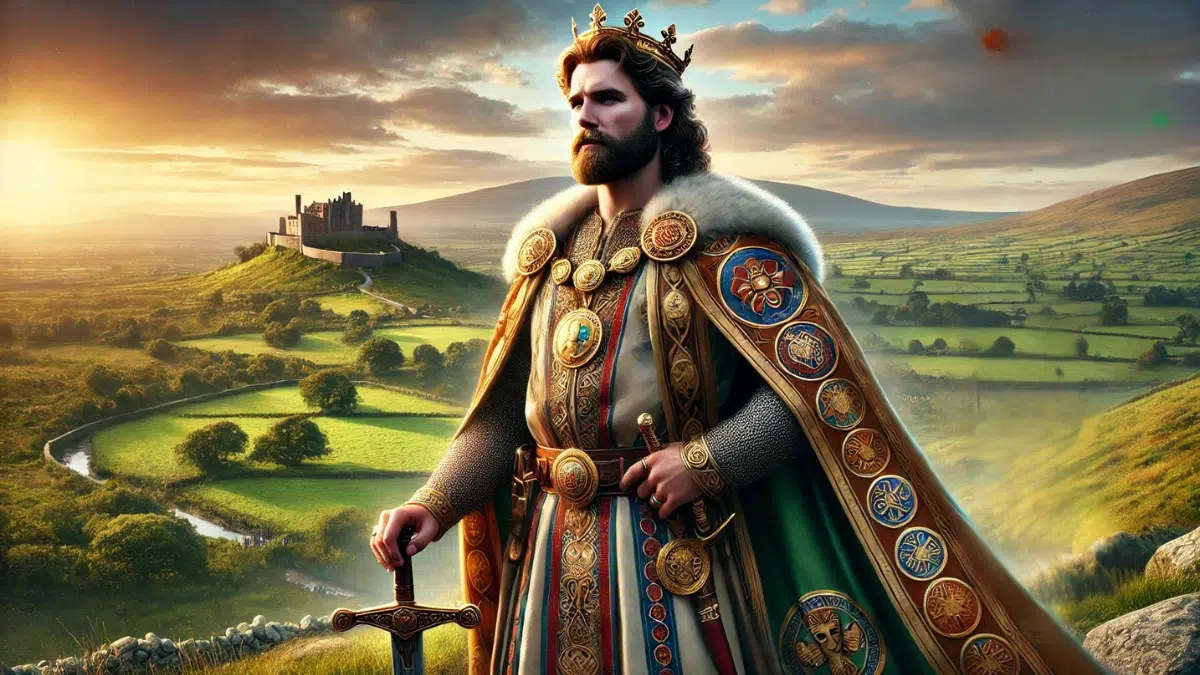
The Historical Cycle, also called the Cycle of Kings, tells stories about Ireland’s legendary rulers. These myths blend historical accounts with legendary tales like The Story of Cormac mac Airt and The Tragic Tale of Conaire Mór.
Dating to the early medieval period (about 300–1200 CE), they connect Ireland’s legendary kings often centring on the High Kingship at Tara. This links Ireland’s history with its mythology.
Fenian Cycle Myths
This cycle recounts the adventures of Fionn mac Cumhaill and his band of warriors, the Fianna. It emphasizes loyalty, honour, and the connection to nature.
Some well known myths include The Salmon of Knowledge. This myth explains how Fionn mac Cumhaill gains his legendary wisdom becoming one of the wisest and most powerful leaders in Irish mythology. The Giant’s Causeway tells of the giant Finn Mac Cumhaill building a causeway to Scotland to fight a rival giant.
Here are some other popular myths featuring Fionn mac Cumhaill and the Fianna.
Fenian Cycle Myth: The Battle of Ventry (Cath Fionntrá)

The Battle of Ventry tells an epic tale of loyalty, bravery, and the fight to defend Ireland. Fionn mac Cumhaill and the Fianna face an invading army led by Dáire Donn, the King of the World.
Dáire’s forces arrive on the shores of Ventry in a massive fleet, threatening to conquer the land.
Fionn gathers the Fianna, Ireland’s most skilled warriors, to repel the invaders. The battle lasts for a year, with both sides showing great strength and determination. The Fianna’s unity and courage shine as they fight tirelessly to protect their homeland.
Throughout the battle, magical elements and heroic deeds define the story. Legendary warriors like Goll mac Morna and Oscar, Fionn’s grandson, lead the charge against overwhelming odds. The invaders rely on enchantments and powerful allies, but the Fianna’s courage and skill allow them to prevail.
The tide of the battle turns when Fionn uses his wisdom and strategic mind to outmanoeuvre Dáire Donn’s forces. The Fianna triumph, driving the invaders back and securing Ireland’s safety.
The Battle of Ventry celebrates the strength of unity, the power of leadership, and the importance of defending one’s home. It remains one of the most iconic tales of the Fenian Cycle, showcasing the enduring spirit of the Fianna.
Myth: The Chase of Diarmuid and Gráinne
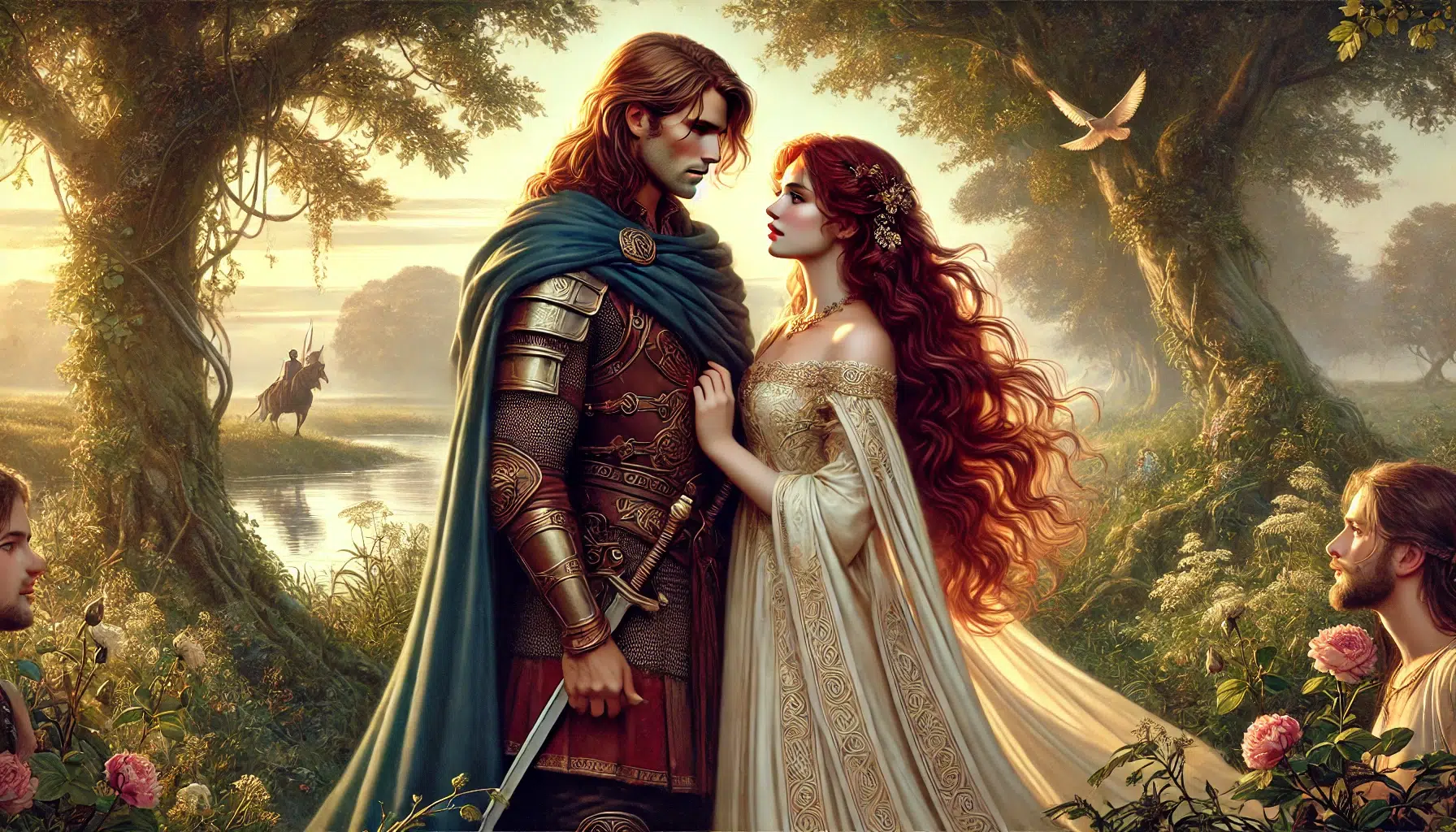
The Chase of Diarmuid and Gráinne tells a story of love, betrayal, and loyalty within the Fianna. Gráinne, the daughter of the High King of Ireland, becomes betrothed to Fionn mac Cumhaill, the leader of the Fianna. However, during the wedding feast, Gráinne falls in love with Diarmuid, one of Fionn’s warriors.
Gráinne uses a geis, a magical obligation, to force Diarmuid to run away with her. Bound by honour, Diarmuid cannot refuse and reluctantly agrees. Together, they flee across Ireland, pursued by Fionn and the Fianna. Diarmuid’s exceptional skills help him evade capture, as he protects Gráinne from dangers along the way.
The couple faces challenges, including encounters with magical creatures, hostile warriors, and Fionn’s relentless pursuit. Over time, Diarmuid falls deeply in love with Gráinne, and they build a life together in hiding. However, their happiness remains overshadowed by Fionn’s anger.
Eventually, Fionn and Diarmuid reconcile, but the story ends tragically. A magical boar fatally wounds Diarmuid during a hunt. Fionn has the power to save him but chooses not to act in time, allowing Diarmuid to die.
This tale explores themes of love, honour, and jealousy, revealing the complexities of human relationships. It remains a powerful story of loyalty and the costs of forbidden love in Irish mythology.
Myth: The Pursuit of the Giolla Deacair
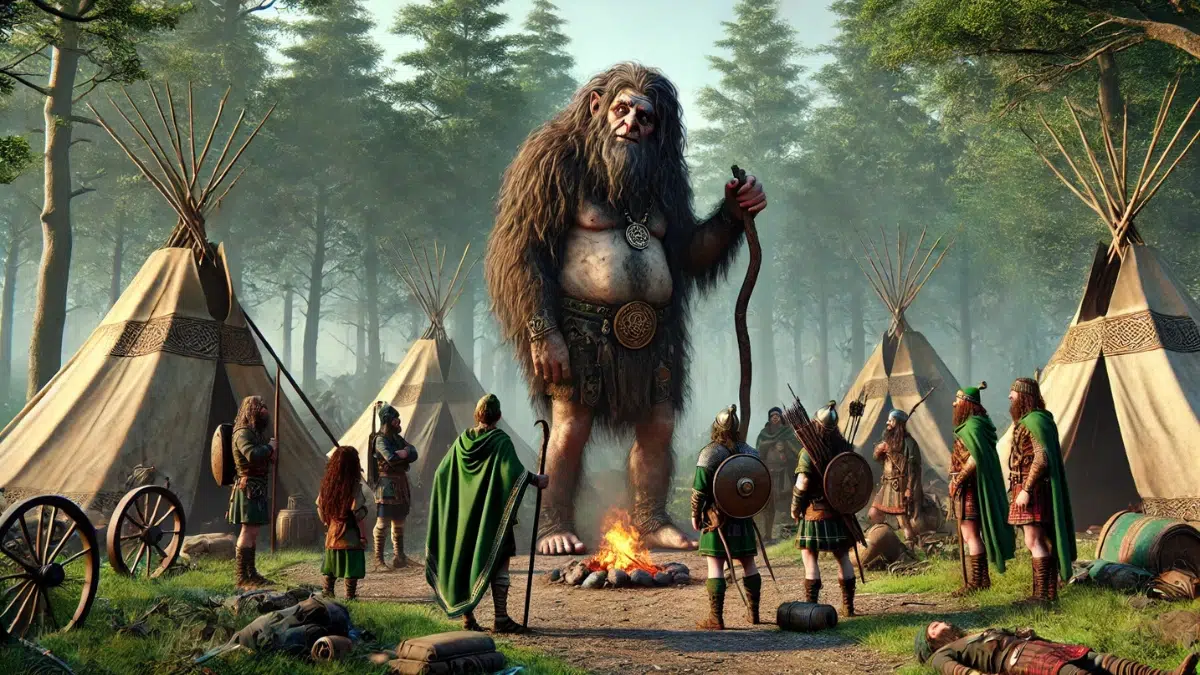
The Pursuit of the Giolla Deacair combines adventure, humour, and loyalty. Fionn mac Cumhaill and the Fianna encounter a strange giant named the Giolla Deacair, meaning “Difficult Servant.” This peculiar figure arrives at their camp, appearing lazy and demanding. Despite his odd behaviour, Fionn agrees to let him join the Fianna.
The Giolla Deacair brings trouble. His enormous size and clumsiness disrupt the camp, and he causes frustration for everyone. He then reveals his magical horse, an equally strange creature that carries an aura of mischief.
When the Giolla Deacair requests help for his horse, Fionn and his men try to assist. However, the horse suddenly captures many of the Fianna and gallops away, carrying them off into the distance.
Fionn and the remaining warriors pursue the Giolla Deacair and his horse across Ireland. Along the way, they face magical obstacles and traps set by the Giolla Deacair. Using their courage and teamwork, they overcome each challenge. Finally, they catch up with the Giolla Deacair and free their captured companions.
This story highlights the loyalty and determination of the Fianna. Despite the comedic elements, it reflects their bravery and resourcefulness. The Pursuit of the Giolla Deacair remains a memorable tale from the Fenian Cycle, blending humour with themes of unity and perseverance.
Myth: The Enchanted Deer (Sadbh and Fionn)
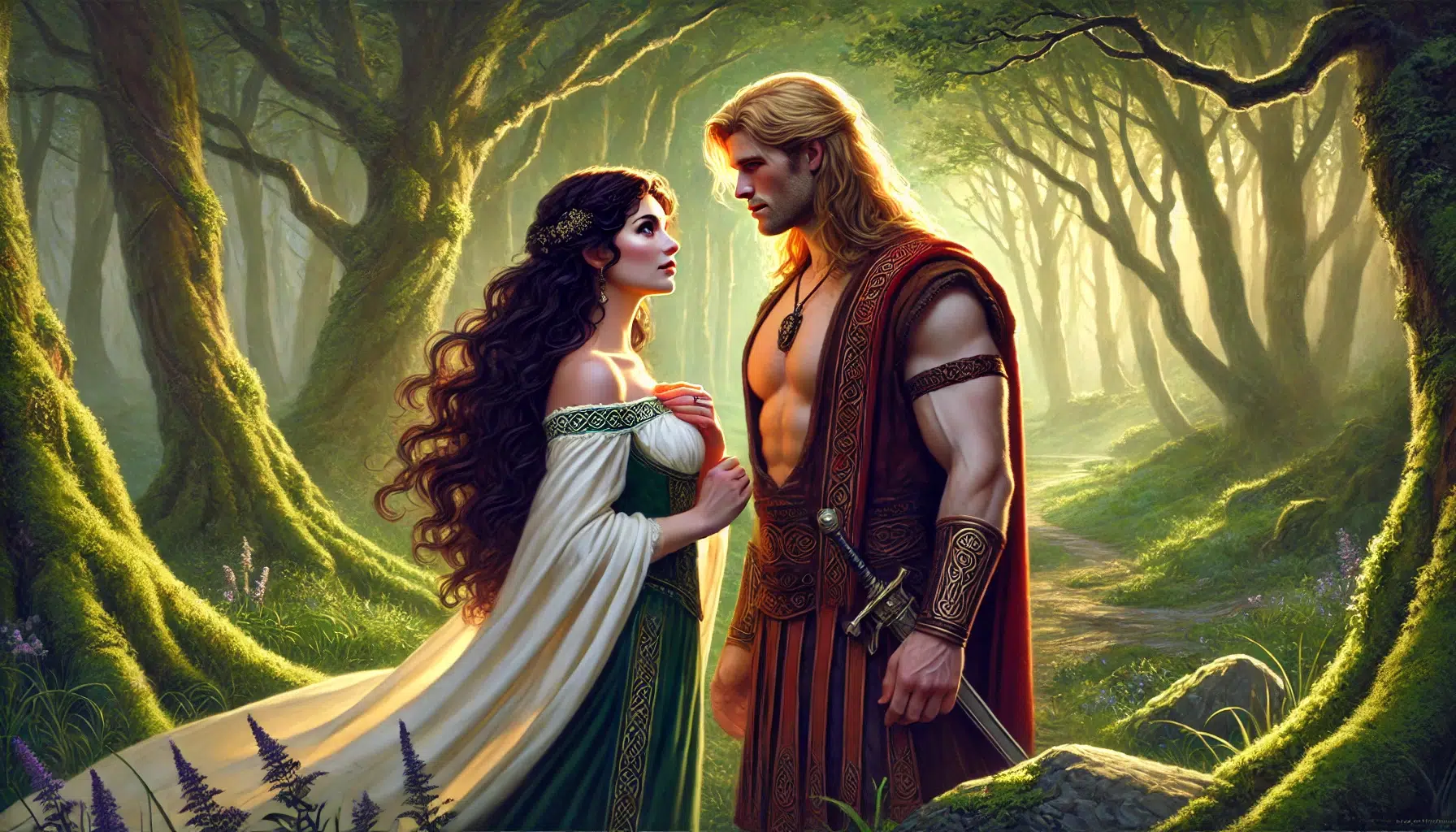
The love story of Sadbh and Fionn Mac Cumhaill is a touching tale from Irish mythology. Sadbh, a beautiful woman, was cursed by a druid to live as a deer.
One day, she wandered into Fionn’s land, where Fionn’s magical hounds, Bran and Sceólang, who recognized her as a human, did not harm her. Fionn then met Sadbh in her human form, as the spell was broken within his land.
Fionn and Sadbh fell deeply in love and soon married. They were happy together, and Sadbh became pregnant.
However, their happiness was short-lived. The druid who cursed Sadbh tricked her into leaving Fionn’s protection, causing her to transform back into a deer. She was then taken away by the druid, and Fionn was left heartbroken.
Fionn searched for Sadbh for many years but could not find her. Eventually, he discovered their son, Oisín, who had been raised by deer. Oisín grew up to be a great warrior and poet, known for his adventures and stories.
The love story of Sadbh and Fionn is remembered as a tale of deep love, tragic loss, and the enduring bond between parents and their children.
Myth: The Birth of Oisín
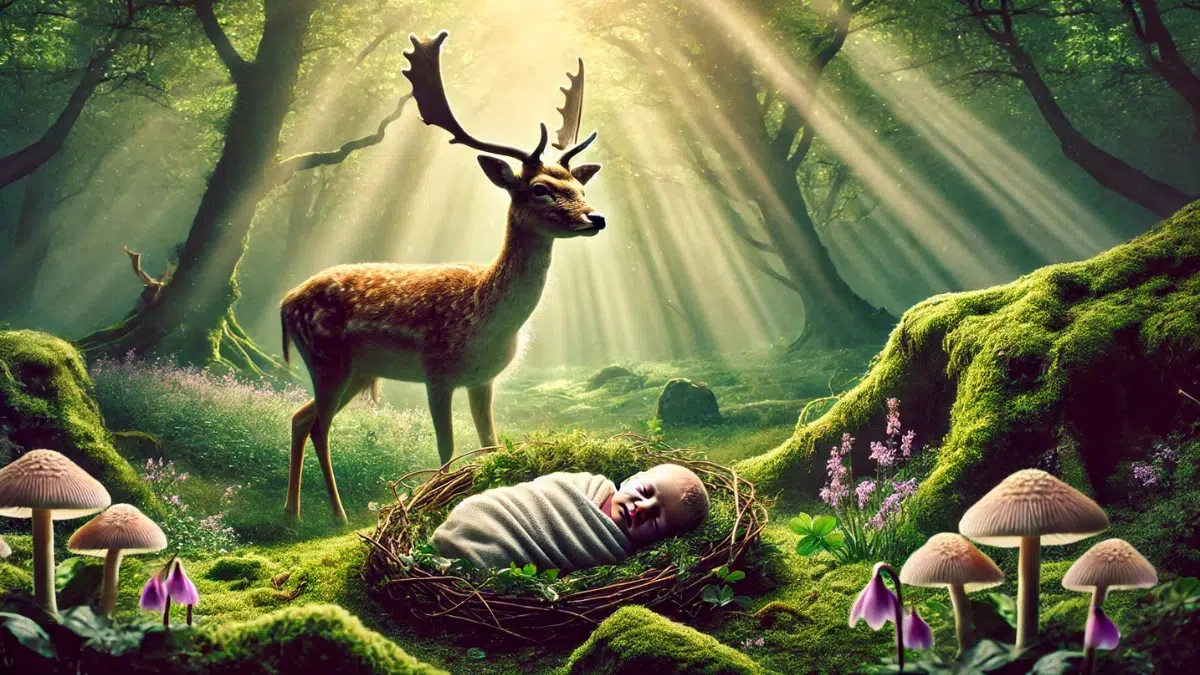
The birth of Oisín connects the mortal world to the magical. Oisín, one of Ireland’s greatest poets and warriors, is the son of Fionn mac Cumhaill, leader of the Fianna, and Sadhbh, a woman under a powerful curse.
Sadhbh, once a beautiful maiden, transforms into a deer due to the spell of a dark druid. Fionn unknowingly encounters her while hunting and spares her life. The moment he shows compassion, the spell breaks, and Sadhbh returns to her human form. She and Fionn fall in love and live together in happiness.
However, the druid discovers her whereabouts and recasts the spell, forcing her to return to the forest as a deer. Fionn searches tirelessly for her but cannot find her. Unbeknownst to him, Sadhbh gives birth to their son, Oisín, in the wild.
Eventually, the Fianna discover Oisín and bring him to Fionn. His name means “little deer,” reflecting his mother’s transformation. Oisín grows into a legendary figure, known for his poetic skill, strength, and connection to both the natural and mystical worlds.
The birth of Oisín highlights themes of love, loss, and the enduring bond between parent and child. It shows how compassion can create lasting legacies, even in the face of tragedy. Oisín’s story remains central to the Fenian Cycle and Irish mythology.
Myth: Oisín in Tír na nÓg
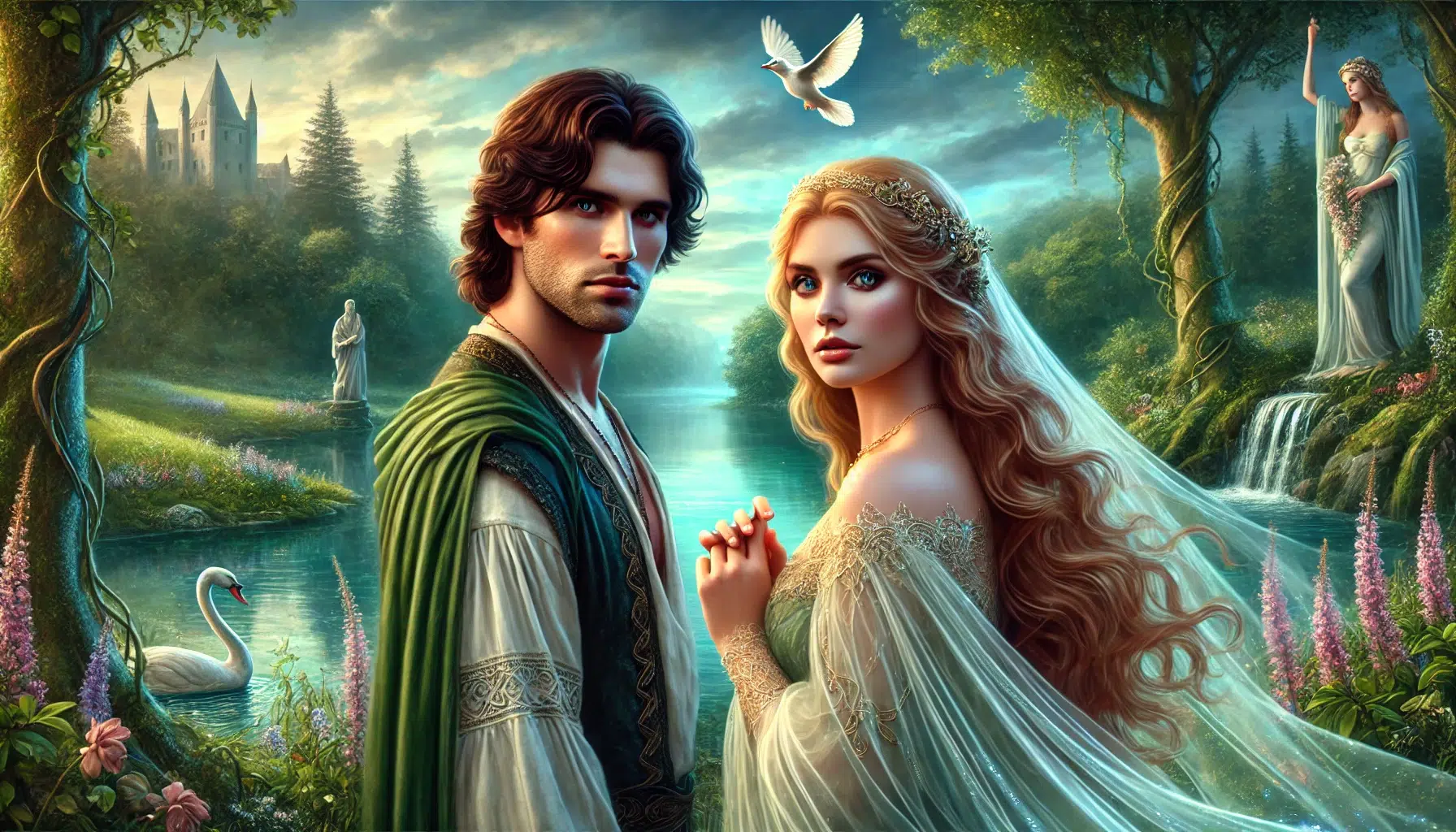
The story of Oisín in Tír na nÓg is one of the most magical tales in Irish mythology. Oisín, the son of Fionn mac Cumhaill, encounters Niamh Chinn Óir, a woman of extraordinary beauty from Tír na nÓg, the Land of Eternal Youth.
Niamh arrives on a white horse and invites Oisín to join her in her homeland, a paradise where no one ages or suffers.
Oisín agrees and travels with Niamh to Tír na nÓg. He experiences a life of joy, abundance, and peace. Time in this magical realm passes differently, and although Oisín believes he spends only a few years there, centuries pass in the mortal world.
Eventually, Oisín feels a strong longing to return and see his people. Niamh warns him not to touch the ground in the mortal world, as doing so will break the spell protecting him. She lends him her magical horse so he can visit safely.
When Oisín reaches Ireland, he finds that the Fianna no longer exist. The land has changed, and he feels out of place. In an act of compassion, he tries to help lift a heavy rock for some men. He accidentally touches the ground, and the spell breaks.
Oisín instantly ages and becomes a frail old man.
Oisín’s story symbolizes the passing of time, the impermanence of life, and the longing for connection between worlds. It remains one of the most poignant myths of the Fenian Cycle.
The Death of Fionn mac Cumhaill
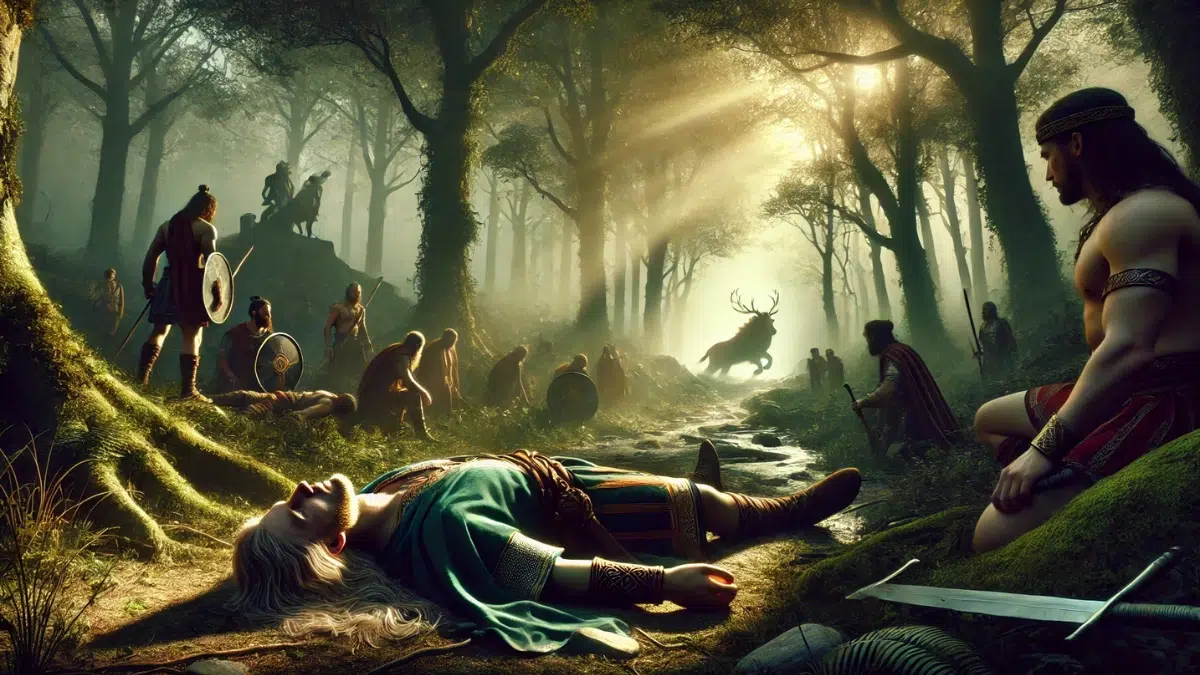
The Death of Fionn mac Cumhaill marks the end of one of Ireland’s greatest heroes. As the leader of the Fianna, Fionn’s life reflects courage, wisdom, and loyalty. His death, like his life, remains steeped in legend.
The story begins with Fionn growing older and sensing the end of his journey. Despite his age, he continues to lead the Fianna and protect Ireland. He faces a final battle against the forces of his old enemies. During this battle, Fionn fights with the same bravery and skill that define his legacy.
One version of the tale describes Fionn encountering a mysterious figure who challenges him. Another version involves a tragic accident during a hunt for a magical boar. In both accounts, Fionn falls in battle, surrounded by his loyal warriors.
Some myths suggest that Fionn does not truly die but sleeps in a hidden cave, waiting to return when Ireland needs him most.
The Death of Fionn mac Cumhaill explores themes of legacy, honour, and the inevitable passing of heroes. It serves as a powerful conclusion to the Fenian Cycle, reminding audiences of the sacrifices made by great leaders. Fionn’s story continues to inspire through his courage, wisdom, and enduring connection to Ireland’s mythology.
Conclusion to the Celtic Fenian Cycle
The Fenian Cycle captures the spirit of adventure, loyalty, and heroism in Irish mythology. These stories focus on Fionn mac Cumhaill and the Fianna, showcasing their courage, wisdom, and close connection to nature. Through their adventures, the Fianna protect Ireland, face supernatural challenges, and uphold their code of honour.
The myths explore themes of friendship, love, and sacrifice. Stories like The Chase of Diarmuid and Gráinne highlight the complexities of loyalty and human relationships. Others, like The Salmon of Knowledge, celebrate wisdom and personal growth. The Fenian Cycle offers a balance between epic battles and tales of romance and adventure.
These stories reflect the values of early Irish culture, where loyalty, bravery, and connection to the land hold great importance. The Fenian Cycle inspires audiences by showing the strength of community and the enduring power of leadership. Its timeless lessons continue to resonate, reminding us of the importance of loyalty, courage, and the bonds that unite us.