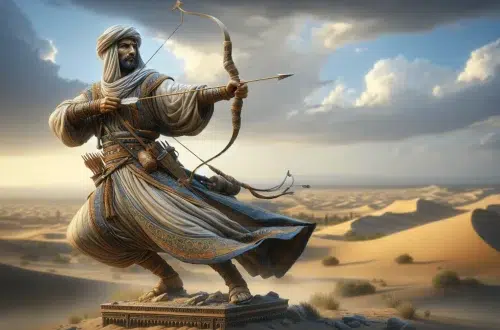

Babur: Timurid Prince to Mughal Emperor
Introduction to the Founder of Mughal Dynasty
Zahir-ud-din Muhammad Babur was a remarkable historical figure whose life story is intertwined with the founding of the Mughal Empire in India.
Babur hailed from a lineage that included two of history’s most formidable conquerors – Timur on his father’s side and Genghis Khan on his mother’s.
His early years were spent grappling with maintaining his ancestral holdings. The endeavor would eventually led him towards the Indian subcontinent.
Babur’s conquest of India in 1526 marked the beginning of the Mughal dynasty. This became an empire that would shape Indian culture, architecture, and history for over three centuries.
Origins and Early Life: Unveiling the Timurid Heritage
Babur was born on February 14, 1483, from the Fergana Valley, which is part of modern-day Uzbekistan.
His lineage was steeped in nobility, descending from two significant historical figures.
On his father’s side, he was a direct descendant of Timur, also known as Tamerlane, the fierce 14th-century conqueror and founder of the Timurid Empire.
Connection to Genghis Khan
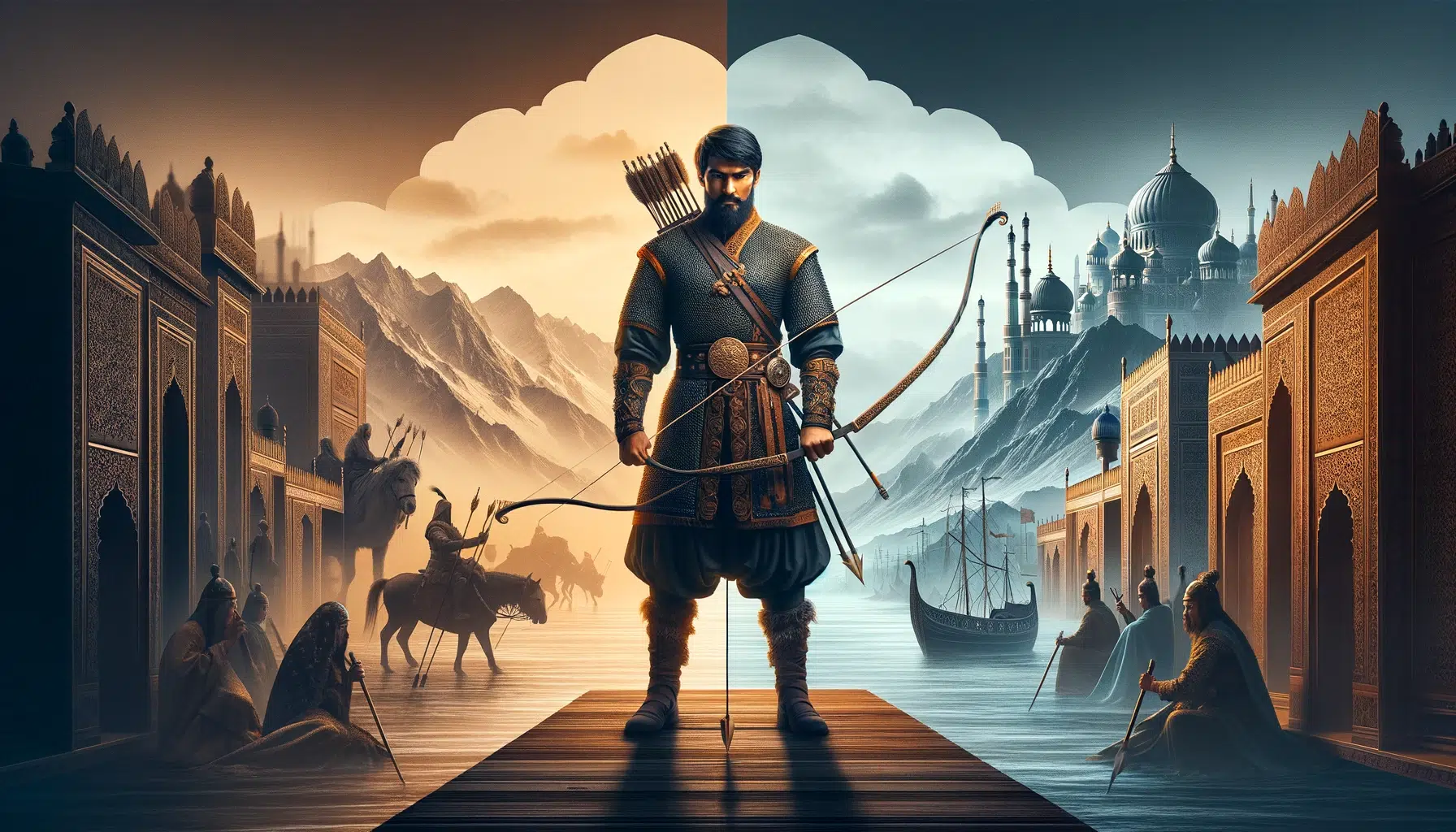
Babur’s mother linked him to Genghis Khan.
Thus establishing a dual heritage that combined ferocity and statesmanship.
This was an inheritance that would greatly influence his life and legacy.
Orphaned at a young age, this prince of the Timurid dynasty exhibited a precocious talent for leadership, navigating the complexities of tribal loyalties and regional politics during his formative years.
Learn more about:
Babur’s Quest for a Kingdom
Babur, a direct descendant of Tamerlane, began his journey in Fergana, today’s Uzbekistan.
At a young age, he inherited the throne but faced immediate challenges from rival kin and external forces.
His quest for power led him through Central Asia’s treacherous political landscape.
Babur first seized Kabul in 1504, which became his power base. He recognized the strategic position of Kabul, nestled between the trade routes of Central Asia and the riches of the Indian subcontinent.
This conquest marked the beginning of Babur’s establishment of the Mughal Empire and his relentless pursuit for a kingdom that would stretch across Northern India.
Babur’s achievements in Kabul set the stage for the future expansion of his empire into India, where his legacy would flourish over the centuries.
The Battle of Panipat: A Turning Point in Indian History
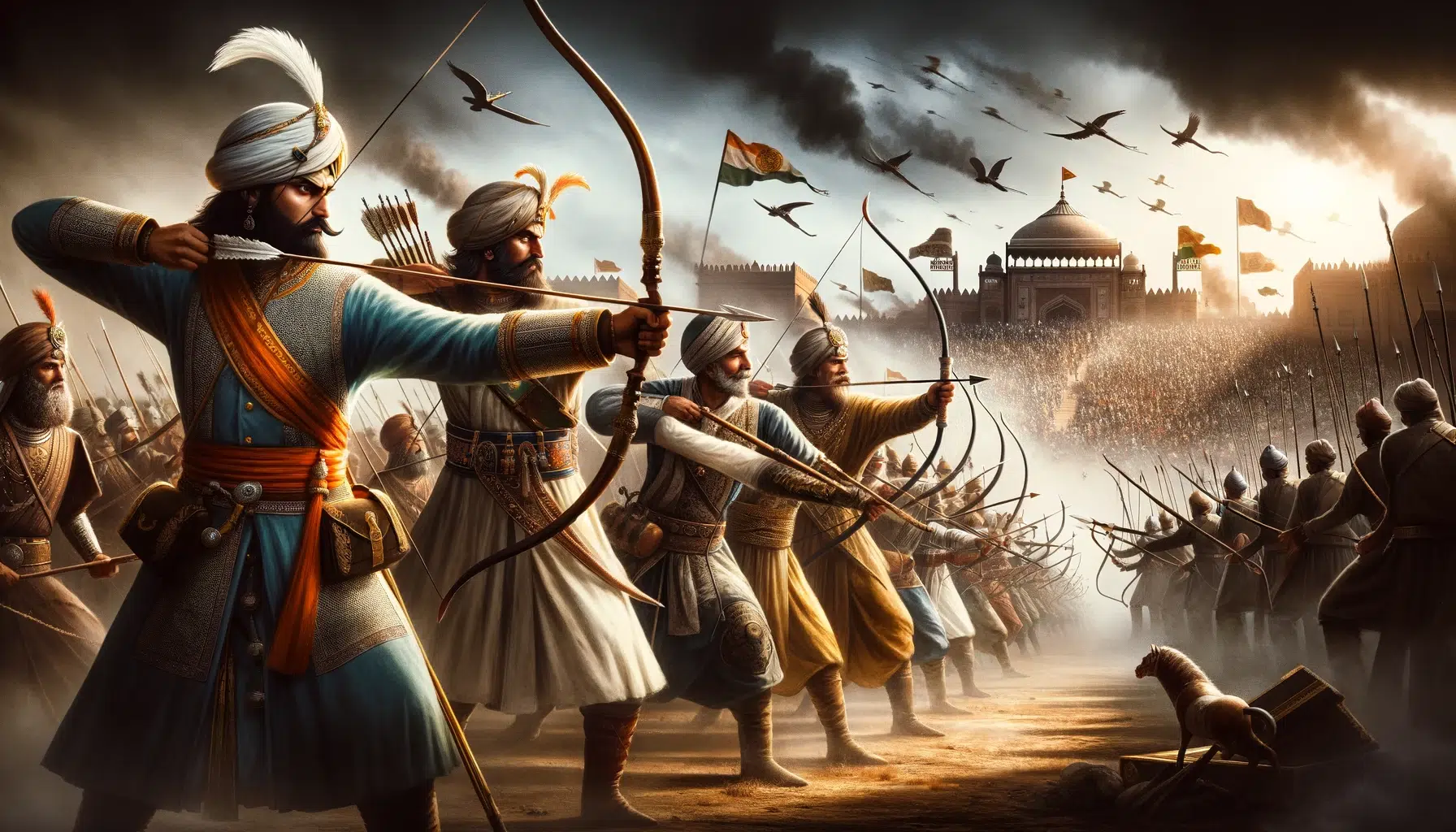
On April 21, 1526, the historic Battle of Panipat was fought between Babur’s Timurid forces and the Sultanate of Delhi led by Ibrahim Lodi.
Babur’s military tactics, including the use of tulughma maneuver, innovative deployment of artillery, and cavalry archers, profoundly altered the fate of the Indian subcontinent.
His decisive victory not only annihilated Lodi’s army but also led to the establishment of the Mughal Empire, which endured for over three centuries.
This battle marked the beginning of Mughal rule, setting the stage for an era of monumental architecture, rich cultural development, and administrative reforms that have shaped modern India.
Babur’s triumph at Panipat fundamentally shifted the dynamics of power and influence on the Indian subcontinent.
Babur’s Administration and Military Tactics
Babur, a true Timurid inheritor, masterfully integrated military strength with administrative efficiency to solidify his dominance in India.
Recognizing the diversity of his new empire, he respected local customs and fostered an inclusive administration that drew from various ethnic and religious groups.
To maintain control, Babur implemented:
- A centralized government structure, mirroring Persian models
- The institution of the Mansabdari system, ranking officials and warriors
- A disciplined, standing army equipped with contemporary weaponry
- Innovative use of artillery and mobile cavalry units in battle
His military tactics, often blending traditional methods with new technologies, set a precedent for Mughal warfare and governance.
The Timurid Influence on Mughal Art and Architecture

The Timurid legacy profoundly shaped Mughal aesthetics.
Babur, a connoisseur of art and architecture, brought Timurid tastes to India, combining them with local styles to create a unique cultural synthesis.
- Mughal art reflected Timurid love for intricate floral and geometric designs, visible in miniature paintings and manuscript illumination.
- Timurid architectural principles, emphasizing symmetry and balance, influenced the grandiose edifices of Mughal India, such as Humayun’s Tomb and the Taj Mahal.
- The Persian charbagh layout, a quadrilateral garden divided by walkways or flowing water, became a hallmark of Mughal landscape architecture.
- Indo-Islamic architectural features like the onion dome and Iwan (arched entrance) were integrated with traditional Indian motifs and methods.
- Calligraphy, a revered Timurid art form, adorned the walls of Mughal monuments, bearing inscriptions from the Quran and poetry.
This cultural amalgamation epitomized the Mughal era’s artistic endeavors, leaving a lasting impact on the Indian subcontinent’s visual identity.
Babur’s Contribution to Landscape Architecture
Babur, the founder of the Mughal Empire, harboured a profound adoration for gardens, a penchant reflecting in his legacy of landscape architecture.
Steeped in Persian influences, Babur introduced the concept of Charbagh—a quadrilateral garden layout based on the four gardens of Paradise mentioned in the Quran.
These gardens were meticulous in symmetry, with water features central to their design, symbolizing life and fertility.
- Charbagh introduced an orderly system, with pathways and water channels intersecting at right angles.
- Water, essential for life in Central Asia, became a focal design element, showcasing Babur’s desire to recreate the lush landscapes of his homeland in the Indian subcontinent.
- His grandson, Akbar, continued this tradition, expanding on Babur’s designs with local adaptations, thereby enriching the Mughal garden legacy.
Babur’s Personal Life: Religiosity, Poetry, and Paternity
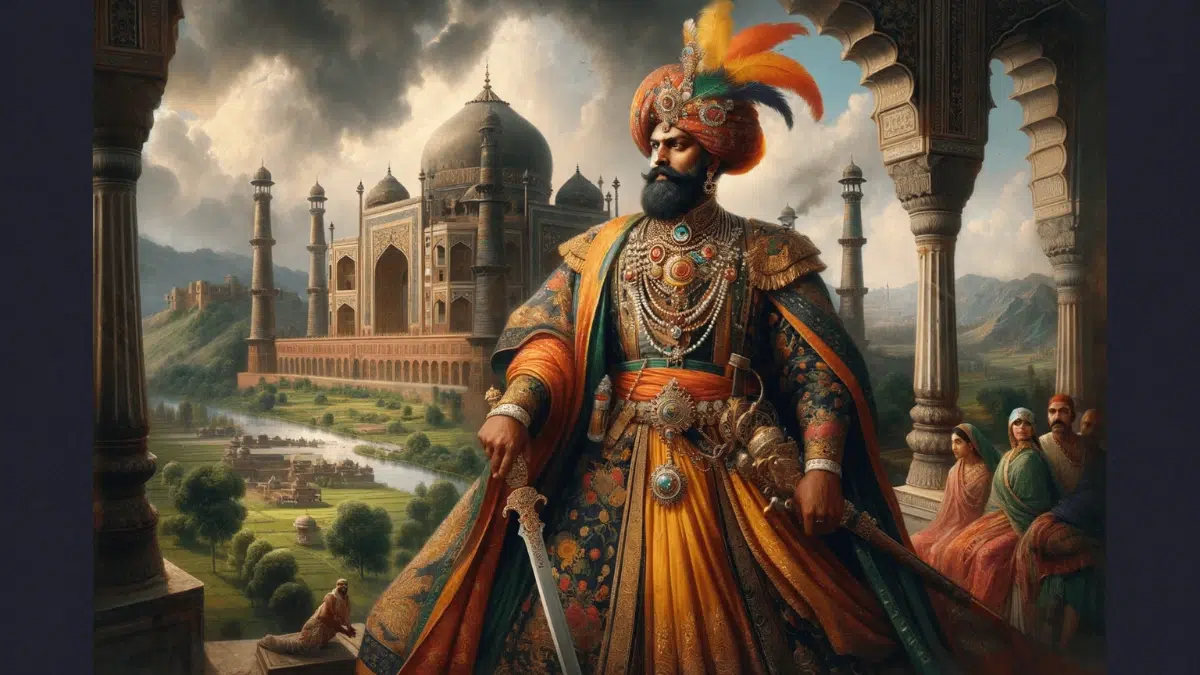
Babur upheld Islamic traditions, often seeking guidance from the Sufi philosophy that emphasized a direct, personal connection with the divine.
His faith influenced both his personal actions and political decisions, creating a synthesis of religious piety and governance.
While devoted to Islam, he was known for his tolerance towards other religions.
Acknowledged as a gifted poet, Babur wrote in Persian and Chagatai Turkish.
He demonstrated a deep appreciation for literature, reflecting in his prose and verse. His poetry often captured his contemplative insights and the natural beauty that surrounded him.
The Baburnama, his memoirs, remains a significant literary and historical work.
Fathering numerous children, Babur’s paternity was both a personal facet and a political strategy.
His progeny secured the succession line, reinforcing his dynastic claim.
Most notably, Humayun, his eldest son, succeeded him and furthered the Mughal legacy, continuing the empire’s expansion and consolidation initiated by Babur.
The ‘Baburnama’: A Window into the Soul of a Conqueror
The ‘Baburnama’, literally ‘Book of Babur’, is not just a historical text; it is the personal diary of Babur, the founder of the Mughal Empire.
It offers an intimate glimpse into the life, ambitions, emotions, and thoughts of this Timurid prince turned emperor.
The memoirs are remarkable for their candor, detail, and literary quality, providing a complex portrait of Babur’s character:
- His candid reflections on successes and failures.
- Vivid descriptions of the lands and people he encountered.
- Poetic expressions of his love for nature and gardens.
- Frank discussions of his inner turmoil and existential reflections.
In reading the ‘Baburnama’, one encounters the multidimensional aspects of Babur’s personality both as a relentless warrior and a contemplative soul.
It is in these pages that we understand the human behind the emperor’s visage, revealing a man with profound depths, cultural refinement, and a surprising relatability that transcends time.
The Succession and Babur’s Legacy

Upon Babur’s death in 1530, his son Humayun inherited a burgeoning empire fraught with challenges.
Humayun, whose name means “Fortunate,” initially struggled to consolidate his rule amidst rebellious warlords and external threats.
This period was characterized by:
- Tumultuous battles with the Afghan chieftains and the formidable ruler Sher Shah Suri
- Occasional losses of territory, including a significant period of exile
- Astute alliances and patronage of arts, echoing Babur’s legacy of cultural sophistication
Humayun’s eventual return to power in 1555, although short-lived, set the stage for the expansion and fortification of the Mughal Empire under his son, Akbar, marking the true entrenchment of Babur’s dynastic legacy.
Babur’s Impact on India
Babur, the founder of the Mughal dynasty, radically altered the fabric of India, socially, culturally, and politically.
His conquests paved the way for a rule that would last over three hundred years.
With his Timurid heritage and a blend of Persian culture, he introduced progressive administration systems that were emulated by his successors.
This included land reforms, a centralized government, and a well-organized military.
Babur’s patronage of arts and architecture initiated the prolific Mughal aesthetic, marked by grand fortresses and lush gardens that continue to enchant the world.
His strategic alliances and victories, most notably at the First Battle of Panipat, established the Mughal lineage as a formidable force in the Indian subcontinent.
Babur’s vision and policies played a pivotal role in shaping the landscape of modern Indian culture and governance.
This imprinted a legacy that would deeply influence the region’s history and identity.
Reflections on Babur
Historians often portray Babur as a conqueror who laid the foundations for a vast empire that would endure for centuries.
His memoirs, the Baburnama, offer personal insights into his character and policies, providing a unique source for understanding his reign.
Modern perceptions of Babur are complex; he’s recognized as a cultured, literary ruler with a penchant for gardens and architecture, conjointly viewed as a savvy leader who used force effectively.
Debates continue about the extents to which his actions were driven by necessity or personal ambition, shaping his legacy.
The Enduring Influence of Babur on South Asian History
The character and ambition of Babur have left an indelible mark on South Asia.
His establishment of the Mughal Dynasty laid the groundwork for cultural synergy and administrative reforms. This would define the Indian subcontinent for centuries.
Babur’s military strategies and societal contributions have become a poignant part of South Asian heritage. Thus influencing the region’s historical narrative to this day.
His memoirs, the Baburnama, offer a window into the era’s psyche. Babur’s impact on art, architecture, and governance continues to resonate in modern South Asian culture and identity.