The Archer’s Checklist: Recurve Bow Arrows
Selecting the right arrows for a recurve bow is crucial to an archer’s performance.
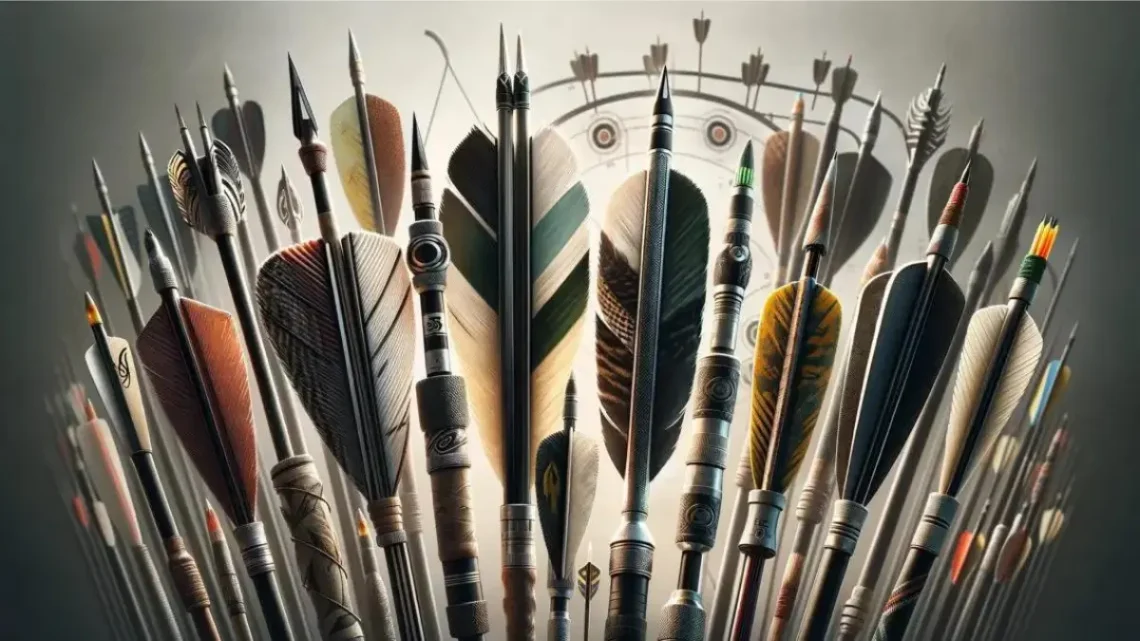
Every arrow consists of four main parts: the shaft, fletching, arrowhead, and nock.
- Shaft: This is the main body of the arrow. It can be made from various materials including wood, aluminum, carbon, or a combination. The stiffness and length of the shaft must be compatible with the archer’s draw length and bow weight.
- Fletching: Attached to the tail end of the shaft, fletching stabilizes the arrow in flight. It usually consists of three vanes or feathers, with one distinguished by color, called the “cock feather,” indicating the correct positioning of the arrow against the bowstring.
- Arrowhead: This part, also known as the tip or point, varies based on the intended use, such as target practice or hunting. Arrowheads range from simple target points to broadheads designed for game hunting.
- Nock: A small notch at the arrow’s tail end, the nock is designed to sit on the bowstring. It needs to fit snugly enough to stay in place but not so tight as to impede the arrow’s release.
When assessing arrows for a recurve bow, archers must consider several factors:
- Arrow Length: An arrow that’s too short for the archer’s draw length can be dangerous, while one that’s too long can affect accuracy and power.
- Spine Rating: This indicates the stiffness of the arrow. A proper spine rating ensures that the arrow flexes optimally during the shot.
- Weight: The weight of an arrow influences penetration and trajectory. Archers may need to experiment with different weights to find the ideal balance.
- Material: The material affects the arrow’s performance and durability. While modern archers often prefer carbon arrows for their versatility and strength, traditionalists might opt for wooden arrows.
In summary, understanding these basic components and characteristics is the first step in selecting the perfect arrows for one’s recurve bow setup.
The Importance of Arrow Length
Selecting the correct arrow length is paramount for safety and performance in archery.
An arrow that is too short poses a significant risk as it may slip off the arrow rest and cause injury upon release.
Conversely, an arrow that is excessively long can negatively impact the arrow’s flight and the archer’s form, potentially undermining accuracy.
To gauge the appropriate arrow length, one must undertake the following steps:
- Seek a professional fitting, especially if new to archery.
- Draw an arrow on a bow with a marked shaft to determine the draw length, ensuring it is long enough to clear the front of the bow when at full draw.
- Add 1-2 inches to the draw length, which allows for variations in draw length that may occur during shooting.
The ideal arrow length also hinges on:
- The type of archery: Target archers may opt for longer arrows for stability while hunting archers prioritize shorter lengths for maneuverability.
- The bow type and configuration: Some recurve bows necessitate longer arrows due to their geometry.
- Personal form and preference: Factors like release aids, anchor point variability, and draw length consistency dictate the most suitable length for each archer.
A frequently overlooked aspect is the impact of arrow length on spine selection. The length influences the spine, or the stiffness of the arrow, which affects its flight dynamics. Thus, ensuring the correct measurement is essential to maintaining precision and safety. Always adjust the arrow length in relation to changes in draw length over time or when transitioning to bows with differing characteristics.
Selecting the Right Arrow Material
When choosing arrows for a recurve bow, the material from which the arrows are constructed is a fundamental consideration affecting performance, durability, and suitable use scenarios.
Here are the most common materials used for arrow manufacture:
- Aluminum: These arrows offer an excellent balance between durability and cost-effectiveness. Aluminum arrows have consistent weight, are less prone to warping than wood, and their straightness leads to consistent flight patterns. They are a good choice for both beginners and experienced archers who seek reliable performance in various conditions.
- Carbon: Known for their high strength-to-weight ratios, carbon arrows yield stiffer spines and are generally lighter than their aluminum counterparts. This leads to faster arrow velocities and flattened trajectories, which can enhance accuracy at longer distances. They are resistant to bending and can withstand repeated use, but they are typically more expensive.
- Wood: Traditional in essence, wooden arrows are favored by archery purists, especially for historical recreation or hunting with traditional equipment. Every arrow is unique, often requiring more attention to matching spine and weight for consistent shooting. While aesthetically pleasing, they are more susceptible to damage and environmental effects like moisture.
- Fiberglass: Generally, fiberglass arrows are seen in institutional settings, where durability and low cost are essentials, like in archery classes. They can take more abuse than wooden arrows but are heavier and not as consistent as aluminum or carbon arrows.
- Composite: These arrows combine materials, such as carbon and aluminum, to maximize the benefits of each. They offer the straightness of aluminum with the resilience and speed of carbon, making them a popular but often expensive choice.
Archers must assess the arrow’s purpose—be it competition, hunting, or practice—as well as their own skill level and budget when choosing arrow material.
The correct choice of material complements the archer’s skill and the recurve bow’s capabilities, resulting in an optimal archery experience.
Determining the Appropriate Arrow Weight
When selecting arrows for a recurve bow, one critical factor is ensuring that the arrow weight is suitable for the bow’s draw weight and the archer’s intended use.
An arrow that is too light may fail to absorb sufficient energy from the bow, leading to poor performance and potential damage to the bow.
Conversely, an overly heavy arrow may not fly as desired or could limit distance and speed.
To determine the appropriate weight, archers should consider the following:
- Draw Weight: Heavier draw weights typically require heavier arrows. A good rule of thumb is to use 6 to 8 grains of arrow weight per pound of bow draw weight. So, a 40-pound draw weight might best match with arrows that are 240 to 320 grains in weight.
- Purpose of Shooting: For target shooting, lighter arrows often suffice, allowing for a flatter trajectory and less fatigue during long shooting sessions. In contrast, hunting requires heavier arrows for deeper penetration and kinetic energy.
- Arrow Length: Longer arrows will weigh more. Ensure that the arrow is appropriate for the archer’s draw length, affecting the overall weight.
- Arrow Material: Carbon arrows are typically lighter than aluminum or wood and can be an ideal choice for those seeking speed. However, archers should account for the individual weight specifications of their selected materials.
- Fletching and Nocks: The weight of these components also contributes to the total arrow weight. Be sure to calculate their weight into the overall consideration.
- Broadheads or Points: The weight of the tip is crucial, especially in hunting, with broadheads often much heavier than standard target points.
A grain scale can be invaluable for precise measurements, ensuring that each arrow is within an acceptable range of variance.
Archers may find it beneficial to experiment with different weights to discover what works best for their style and needs, as this can vary from person to person.
Consistency in arrow weight across one’s quiver will ensure the most reproducible results and optimal performance.
Learn more about: Bow Draw Weight in Archery – Part 2
Spine Selection: Matching Arrows to Your Recurve Bow
When selecting arrows for a recurve bow, the spine—or the stiffness of the arrow—is a crucial factor to consider.
An arrow’s spine affects how it flexes when released from the bow, known as the Archer’s Paradox.
The key is to match the arrow’s spine to the draw weight of your recurve bow for optimal performance.
- Determine Draw Weight: The first step is to determine the draw weight of your recurve bow at your draw length. Bows are marked with a standard draw weight measured at 28 inches, but if your draw length differs, you should adjust accordingly.
- Consult Spine Charts: Manufacturers provide spine selection charts that help archers match their bow’s draw weight to the correct arrow spine. These charts are a great starting point but consider arrow length which also affects spine.
- Consider Arrow Length: Longer arrows have more flex, so if you shoot arrows longer than standard, go for a stiffer spine. Conversely, shorter arrows require a less stiff spine.
- Assess Shooting Style: Two archers with the same recurve bow may require different spine arrows depending on their shooting styles. A smooth, consistent release affects arrow flex less forcefully than a quick snap release, potentially necessitating different spine ratings.
- Test with a Bare Shaft: One accurate way to test if you have the correct spine is to shoot a bare shaft (an arrow without fletching) alongside fletched arrows. The bare shaft’s point of impact provides insight into the appropriateness of the spine selection.
Remember, an arrow too stiff or too flexible will not fly accurately.
This trial and error process ensures that you find an arrow that complements your bow and shooting style.
Upgrading to a recurve bow with a different draw weight will also necessitate reevaluation of your arrows’ spine.
Consistency is key, and once the appropriate spine is found, the archer’s accuracy and confidence will soar.
Fletching: Vanes vs. Feathers and Their Impact on Flight
When selecting recurve bow arrows, archers should carefully consider the type of fletching that best suits their needs.
Fletching stabilizes the arrow in flight, and its material—either vanes (usually plastic) or feathers—can significantly affect performance.
Vaned fletches are the go-to choice for outdoor archers facing various weather conditions. Vanes are:
- Durable: They withstand adverse weather and rough handling.
- Water-resistant: Unlike feathers, vanes maintain their shape when wet.
- Consistent: Manufactured vanes provide uniformity that aids in repeatable arrow flight.
However, vanes are typically heavier and stiffer, potentially affecting arrow flight by:
- Reducing Arrow Speed: The added weight may slow down the arrow.
- Impacting Clearance: Their rigidity can cause clearance issues with the arrow rest.
Feather fletches, on the other hand, are favored for their traditional feel and performance characteristics:
- Lightweight: Feathers are lighter, often leading to a faster shot.
- Forgiving: Their ability to fold upon contact reduces clearance problems.
- Sensitive: Feathers provide better feedback, making them ideal for indoor shooting and recurve bows with less power.
But feathers also come with several drawbacks, such as:
- Susceptibility to Weather: Moisture can cause feathers to wilt, altering flight dynamics.
- Fragility: They can get damaged more easily, requiring more frequent replacement.
Ultimately, the choice between vanes and feathers hinges on the archer’s shooting environment, bow setup, and personal preference.
One should evaluate both options’ impact on arrow flight before making a decision, and possibly experiment with each to determine what works best for their archery style.
Arrow Points: Choosing the Right Tips for Your Needs
Choosing the right arrow points is crucial for archers whether they practice target archery, field archery, or bowhunting.
Each point type is designed for a specific purpose, and understanding the differences help to ensure accuracy and effectiveness.
- Target Points: These bullet-shaped points are used for indoor and outdoor target shooting. Their aerodynamic design helps in maintaining a straight trajectory and they cause minimal damage to the targets, which makes them ideal for practice sessions and competitions.
- Field Points: Similar in shape to target points but usually more tapered, field points are made for outdoor shooting and roving. They are well-suited to be shot into bags or foam targets and mimic the weight and shape of broader hunting points for practice without inflicting excessive wear on targets.
- Blunt Points: Used primarily for small game hunting and some types of field archery, blunt points impart force over a larger area to stun or dispatch prey without penetration.
- Judo Points: Featuring spring arms that prevent the arrow from burrowing into grass or leaves, judo points are perfect for hunting small game and for field practice where arrow retrieval is a concern.
- Broadheads: These are exclusively for hunting bigger game. Their broad, sharp blades are designed to deliver maximum damage and are available in fixed or mechanical designs. Choosing the right type of broadhead depends on the archer’s quarry and personal preference.
When selecting arrow points, archers must also consider the weight.
Points that are too light can cause an arrow to fly erratically, while those that are too heavy might reduce speed excessively and affect the trajectory.
It’s vital to match the weight of the point to both the arrow’s spine and the bow’s draw weight to maintain balance and achieve optimal performance.
Nock Considerations for Optimal Performance
For archers employing recurve bows, the nock—the small notch where the arrow affixes to the string—plays a crucial role in arrow performance.
Effective nock selection and use directly impact shot accuracy and consistency.
Here are essential considerations when evaluating nocks for your recurve bow arrows:
- Nock Fit: The nock should snugly fit onto the bowstring without being too tight or too loose. If the fit is too tight, the arrow may not release smoothly, while too loose a fit can lead to the arrow falling off the string before the shot.
- Nock Size and Type: Ensure the nock size corresponds with the bowstring diameter. Additionally, there are different types of nocks – press-in, overnock, and pin nocks – each suited to different shooting styles and arrow shafts.
- Material Durability: Nocks are commonly made from plastic or polycarbonate materials. The choice must balance between being lightweight for performance and durable enough to withstand the force of repeated shooting.
- Consistency: When purchasing nocks, consistency in size and shape is key. Variations can lead to inconsistencies in shooting, thus impacting accuracy.
- Alignment: Always check the nock to ensure it properly aligns the fletching with the bowstring. This alignment is pivotal for proper arrow flight.
In the pursuit of maximal precision, consider customizing your nocks.
Many competitive archers adjust the throat of the nock—the point where the string sits—to refine the release according to their technique.
Lastly, frequent inspection is crucial as nocks can suffer damage from use or from contact with other arrows.
Even minor damage can significantly affect arrow flight and should not be overlooked.
Regular replacement of nocks should be part of the archer’s maintenance routine to ensure optimal arrow performance.
By giving careful attention to nock considerations, archers can ensure their recurve bow arrows are a step closer to striking the center of the target.
Measuring Draw Length and Its Impact on Arrow Selection
Before coming to grips with the specifics of arrow selection, an archer must first accurately measure their draw length.
This pivotal parameter not only ensures a comfortable and consistent shooting stance but also determines the most suitable arrow length for a given bow.
The process of measuring draw length typically involves an archer stretching their arm out to mimic a full draw position without straining.
Experts may employ a specialized arrow or a draw length indicator to pinpoint the distance from the nock point to the pivot point of the bow, plus an additional 1.75 inches (the standard AMO method).
It is important for an archer to maintain a natural posture during this procedure to avoid inaccuracies.
Once the draw length is established, the following implications on arrow selection become apparent:
- Arrow Length: An arrow should generally be longer than the archer’s draw length to ensure it safely clears the bow. Typically, 1 to 2 inches longer arrows are selected.
- Arrow Spine: The correct spine (flexibility) of an arrow is dependent on both the draw length and draw weight. A mismatch can lead to poor arrow flight and reduced accuracy.
- Weight: The physical weight of the arrow, which often correlates with length and spine, can affect the projectile’s trajectory and speed.
- Tuning: Bow tuning and arrow selection are intertwined; the archer’s draw length influences fine adjustments for optimal flight characteristics and performance.
Remember that personal preferences play a role as well—some archers may prefer a certain feel or arrow behavior even if theoretically not ‘perfect’ according to their measurements.
Frequent practice and experimentation with different arrow lengths and spines can lead to the best setup for an individual’s style and physique.
Balancing Cost and Quality for Long-Term Use
When archers consider purchasing recurve bow arrows, the upfront cost is an important factor, but so is the long-term value. To optimize both cost and quality, archers must evaluate materials and craftsmanship.
- Materials: The material of the arrow can dramatically affect both cost and longevity. Carbon arrows, while more expensive, offer a balance of durability and performance. Aluminum arrows are cheaper but bend more easily. Meanwhile, wooden arrows may be suitable for traditional archery but can be less consistent in quality and delicate.
- Craftsmanship: A well-constructed arrow will have a straight shaft, consistent fletching, and a properly fitted nock and point. High-quality construction often correlates with a higher price tag, but a well-crafted arrow can last longer and perform better, reducing the need for frequent replacements.
- Performance over time: It is not just about initial performance; it is about how well the arrow maintains its integrity and flight characteristics over prolonged use. Higher-quality arrows can withstand repeated shots and maintain their straightness.
- Cost-benefit analysis: While budget constraints are real, investing in mid-range to high-end arrows may ultimately be more cost-efficient. Lower quality arrows may need to be replaced more often, leading to higher costs over time.
- Bulk purchasing: One way to reduce individual costs is to buy arrows in bulk. Some suppliers offer discounts for larger orders, contributing to a lower long-term cost per arrow.
Archers must weigh their immediate budget against their long-term goals and usage patterns.
Investing in higher quality arrows may result in better performance and fewer replacements down the line, which can translate to savings and a more satisfying archery experience.
Tips for Testing and Fine-Tuning Your Arrow Setup
Fine-tuning your arrow setup is essential to maximizing your recurve bow’s performance.
It involves several key steps that collectively improve accuracy and consistency.
- Spine Match
Ensure the spine matches your draw weight and bow type. Utilize manufacturer spine charts as a starting point and adjust from there. - Bare Shaft Testing
Test shoot a bare shaft along with fletched arrows at a target approximately 20 yards away:- Observe the bare shaft’s point of impact compared to the fletched arrows.
- Adjust the bow’s tiller, nocking point, or the arrow’s point weight until the bare shaft and fletched arrows group closely together.
- Fletching and Nock Alignment
Properly align fletchings and nocks to ensure consistent arrow flight. Use a fletching jig for precision. - Dynamic Spine Adjustment
Tweak point weights and insert weights to refine the dynamic spine. A heavier point, for instance, can weaken the dynamic spine, which might be necessary if your arrows are too stiff. - Paper Tuning
Shoot arrows through a paper tuner to identify any flight issues:- A perfect bullet hole indicates good arrow flight.
- Any tears apart from the central hole suggest the need for further adjustments to the rest, nock point, or limb alignment.
Remember, each archer’s setup is unique.
Therefore, a meticulous approach to each adjustment is imperative, as is patience.
Rest assured that the diligent effort put into testing and fine-tuning can significantly enhance an archer’s performance.
Maintaining Your Arrows: Care and Storage Practices
Arrows are essential components of an archer’s equipment, and proper care is vital to ensure their longevity and performance.
Adhering to specific maintenance protocols can make a significant difference in the quality and lifespan of your arrows.
Regular Inspections
- Always inspect arrows before use for any signs of damage, such as cracks, bends, or splinters.
- Check the fletchings to ensure they are firmly attached and in good condition.
- Examine the nocks and ensure they are not cracked and fit snugly on the bowstring.
Cleaning
Arrows should be kept clean to maintain their aerodynamics and overall integrity.
- Wipe down the shafts regularly with a soft, dry cloth to remove dirt and grime.
- If necessary, use a mild soap and water solution for a deeper clean, but avoid soaking the arrows.
Storage
Proper storage is crucial to prevent damage to your arrows when they are not in use.
- Store arrows in a dry, cool place away from direct heat sources to prevent warping or other heat-induced damage.
- Use an arrow tube or a quiver with dividers to keep arrows separate and prevent them from knocking against each other, which could cause scratches or dents.
- Avoid storing arrows with the points engaged, as this can dull the tips over time. Instead, use protective covers for the arrowheads when not in use.
Protection from Elements
- Limit exposure to extreme temperatures and humidity changes, which can cause materials to expand or contract and may lead to structural failures.
- If shooting in the rain or wet conditions, dry the arrows thoroughly afterwards to prevent mold or mildew buildup on the fletchings and shaft.
By respecting these care and storage practices, archers can ensure their recurve bow arrows remain reliable and accurate for many shooting sessions to come.
Frequently Asked Questions About Recurve Bow Arrows
What Should I Consider When Choosing Recurve Bow Arrows?
- Arrow length: Ensure the arrow is appropriate for your draw length to avoid underdrawing or overdrawing.
- Arrow weight: Match the arrow weight to your bow’s draw weight for optimal performance and safety.
- Material: Choose between wood, aluminum, carbon, or composite arrows based on your needs and budget.
- Spine rating: Select a spine that matches your bow’s draw weight and your draw length to ensure arrow stability and accuracy.
Can Recurve Bow Arrows be Used on Compound Bows and Vice Versa?
Generally, arrows are not interchangeable between recurve and compound bows due to differences in draw weight and the mechanics of the bows. Arrows specifically designed for recurve bows may not perform well or could be dangerous when shot from a compound bow.
How Do You Determine the Proper Arrow Length for a Recurve Bow?
To determine proper arrow length for a recurve bow, you should:
- Measure your draw length.
- Add 1-2 inches to this measurement to find an appropriate arrow length, ensuring it safely clears the riser.
How Often Should Recurve Bow Arrows be Replaced?
Replace recurve bow arrows if they show:
- Signs of damage like cracks or dents.
- Worn fletchings or nocks.
Additionally, consider replacing them if you’ve significantly changed your draw weight or require a different arrow spine.
Do Heavier or Lighter Arrows Affect Arrow Speed and Accuracy?
Yes, heavier arrows travel slower but are less affected by wind and may offer deeper penetration. Lighter arrows are faster and may improve flatness of trajectory, but can be more impacted by external conditions. Balancing weight for your needs and bow specifications is crucial for optimal accuracy.
What is Fletching and How Does it Affect an Arrow’s Flight?
Fletching refers to the vanes or feathers at the arrow’s tail that stabilize the arrow during flight. The size, shape, and material of fletching can affect speed, drag, and stability, thereby impacting accuracy and performance.
Top Mistakes to Avoid When Selecting Arrows
When an archer is in the market for recurve bow arrows, certain common missteps can hinder their performance and enjoyment of the sport. Here are vital errors to sidestep:
- Ignoring Arrow Spine: The arrow spine, which indicates the flexibility of the arrow, must match the draw weight of your bow. Too stiff or too flexible arrows won’t fly correctly and could lead to poor shooting accuracy.
- Neglecting Arrow Length: Arrows that are too short pose a safety hazard, while arrows that are too long affect your bow’s performance. Ensure that the length is appropriate for your draw.
- Choosing the Wrong Arrow Weight: Too heavy arrows will drop quickly, while too light ones may fly erratically. Select the arrow weight that suits your shooting style and the purpose, whether for target shooting or hunting.
- Overlooking Fletching Material: The fletching is crucial for an arrow’s flight stability. Choose between plastic vanes or natural feathers considering your use scenario – feathers are often better for shooting off the bowshelf, while vanes suit modern rests.
- Forgetting About Nock Fit: Insecure nocks can lead to misfires or the arrow falling off the string. The nock should fit snugly on the string, but not so tightly it impacts arrow release.
- Disregarding Quality: Investing in high-quality arrows pays off in durability and consistency. Cheap arrows might save money initially but can cost more in replacements and lost performance.
- Not Considering the Point: The type of point or tip is essential, especially for hunters who may require broadheads instead of standard target points. Make sure the points are compatible with your bow and the archery discipline you practice.
Avoid these pitfalls to ensure your arrows complement your recurve bow, promoting better performance, safety, and overall satisfaction in your archery endeavors.