
Ajax the Great: Legendary Warrior’s Downfall
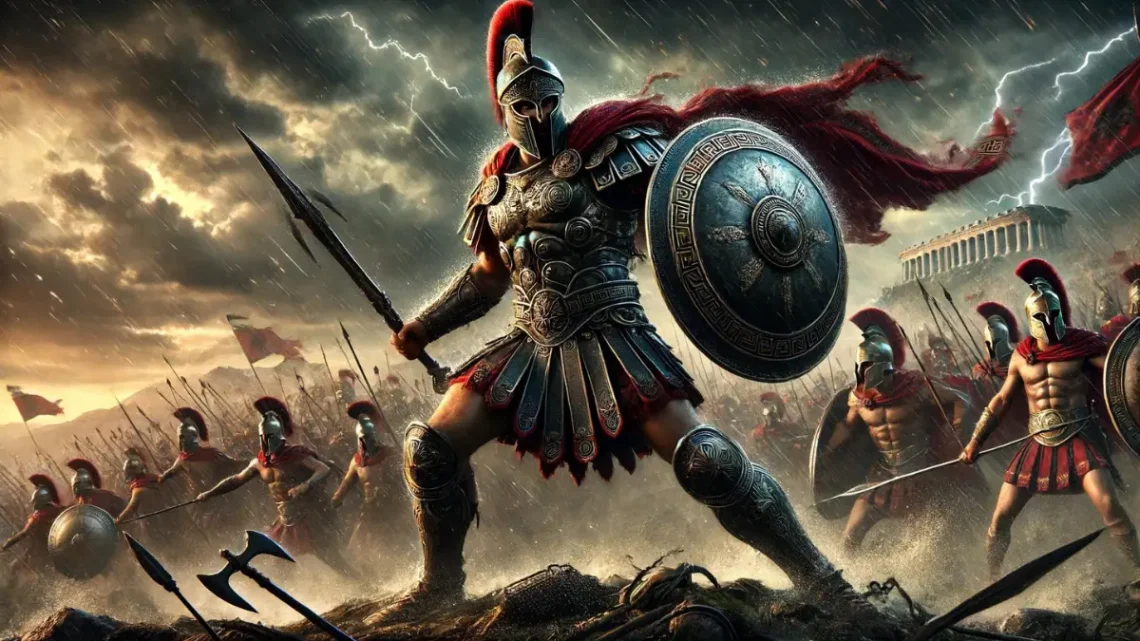
Ajax the Great, also known as Telamonian Ajax, is a standout among ancient Greek mythological heroes. His story tells of bravery and sorrow that echoes through time. Known for his big size and his unbreakable courage, Ajax’s story is part of the poems credited to Homer. These include the ‘Iliad’, where he is highlighted as a key figure.
Ajax the Great is a prominent hero in Greek mythology. He is the son of King Telamon of Salamis and Periboea. Known for his immense size and strength, Ajax stands out as one of the greatest warriors in the Trojan War.
He is often described as second only to Achilles in both physical prowess and combat skills. Ajax wields a massive shield made of seven cowhides with a layer of bronze, making it nearly impenetrable.
He plays a crucial role in defending the Greek ships and retrieving Achilles’s body from the battlefield. Despite his bravery and strength, Ajax faces a tragic end after losing a contest for Achilles’s armour to Odysseus.
Overcome with shame and anger, he takes his own life, leaving behind a legacy of heroism and tragedy.
Ajax was part of the Trojan War, fighting as a legendary warrior. Many ancient texts remember his brave deeds and strong influence. His tale is a blend of fearless war tales and deep sadness, making his life story an epic journey that continues to captivate people today.
The Origins and Early Life of Ajax
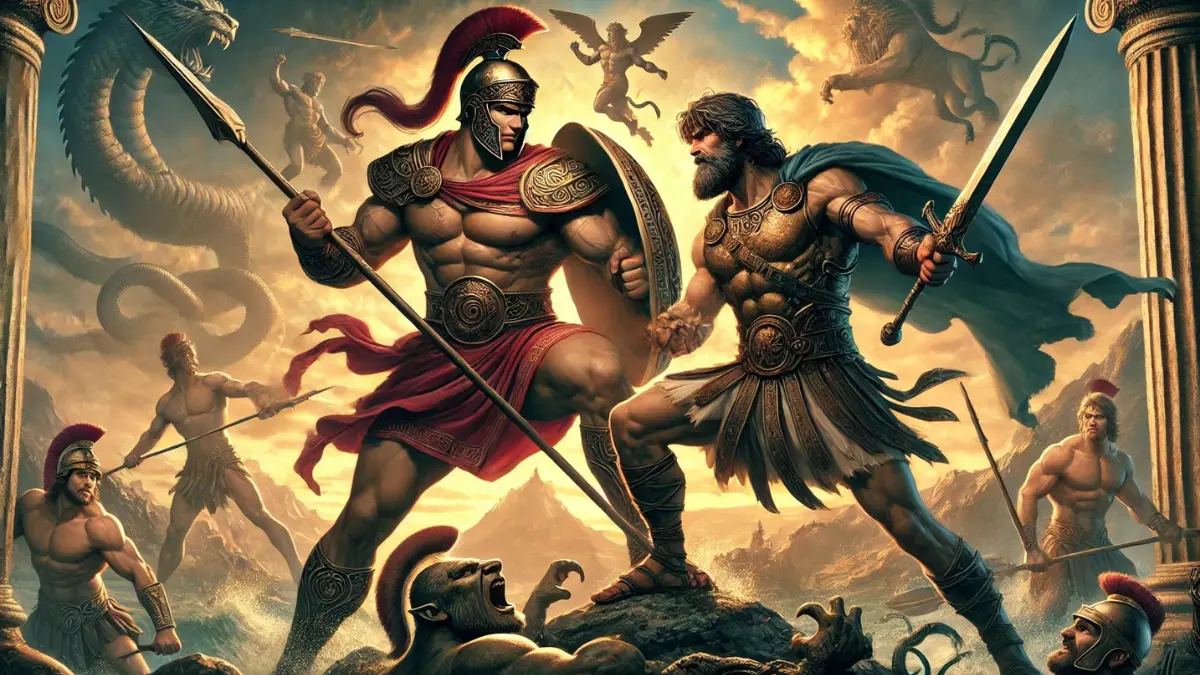
Ajax was a powerful Greek hero who came from Salamis, an island. His father, Telamon, was both a famous king and a respected warrior. This family background is important in understanding Ajax’s story. It shows how his family’s influence shaped his life and deeds.
From the start, Ajax was known for his great strength and his skill in war. He was praised as one of the top Greek warriors. The focus on his family’s past highlights his perfect place in Greek myths. It blends inherited courage with his own great deeds.
Ajax Parents and Family
Being from Salamis, Ajax was brought up in a brave and valorous setting. Telamon, a hero himself, participates in many legendary quests, including the Calydonian Boar Hunt and the Argonauts’ expedition. His father had also fought beside Hercules, which set a high standard for courage and strength.
He not only got the throne of Salamis but also the qualities that made him a mythic hero.
Periboea, his mother, is known for her beauty and grace. This noble lineage gives Ajax a strong foundation and heroic potential from birth.
Siblings
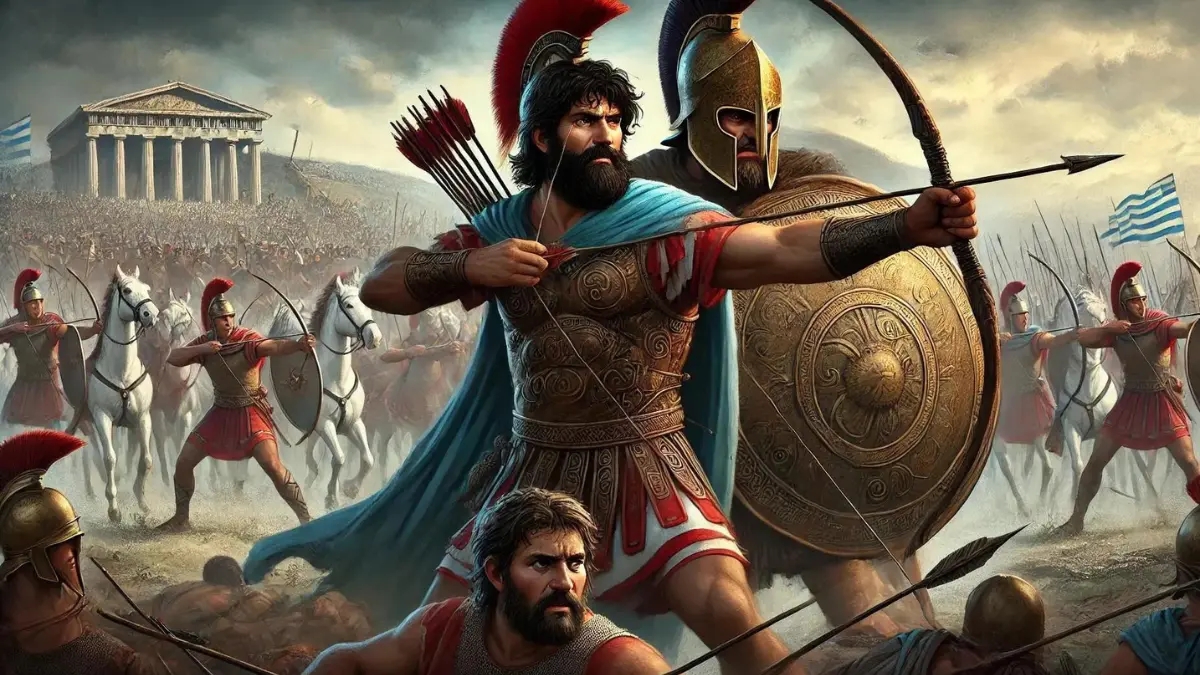
Ajax has a half-brother named Teucer. Teucer is the son of King Telamon of Salamis and his second wife, Hesione.
Teucer has exceptional skills as an archer. During the Trojan War, Teucer often fights alongside Ajax, using Ajax’s massive shield for protection while shooting arrows at the enemy. Their teamwork on the battlefield showcases their strong bond and mutual respect. Teucer’s presence adds to Ajax’s legacy, highlighting the heroic lineage of their family.
The Early Years
From a young age, Ajax shows signs of his future greatness.
Legends say that when Ajax is born, Heracles, a close friend of Telamon, prays to Zeus for the child to grow strong and brave. Zeus sends an eagle as a sign of approval, and Telamon names his son Ajax, inspired by the Greek word for eagle, “aietos.”
Growing up in Salamis, Ajax enjoys a privileged life, surrounded by stories of heroism and valour. His early years are filled with training and preparation for the challenges ahead.
Training by Chiron

Ajax’s parents send him to be trained by Chiron, the wise centaur known for educating many Greek heroes.
Chiron lives on Mount Pelion, where he teaches Ajax various skills. Under Chiron’s guidance, Ajax learns the art of war, including swordsmanship, archery, and combat strategy.
Chiron also teaches him music, medicine, and hunting, making him a well-rounded warrior. Chiron’s teachings emphasize honour, bravery, and wisdom, shaping Ajax into a formidable hero.
The bond between Chiron and Ajax is strong, with Chiron acting as a mentor and father figure. This training prepares Ajax for his future role in the Trojan War and his many heroic deeds. Chiron’s influence ensures that Ajax grows not only in strength but also in character, embodying the virtues of a true hero.
Marriage and Children
Ajax would marry Tecmessa, the daughter of King Teleutas.
Tecmessa becomes Ajax’s consort after he captures her during a raid. Despite the circumstances of their union, Tecmessa and Ajax share a deep bond. They have a son named Eurysaces, who is named after Ajax’s famous shield.
Eurysaces inherits his father’s heroic qualities and becomes a symbol of Ajax’s legacy. Ajax also has another son named Philaeus, though less is known about him. These children ensure that Ajax’s lineage continues, preserving his memory and heroic deeds for future generations.
Ajax’s Characteristics and Famous Weapons
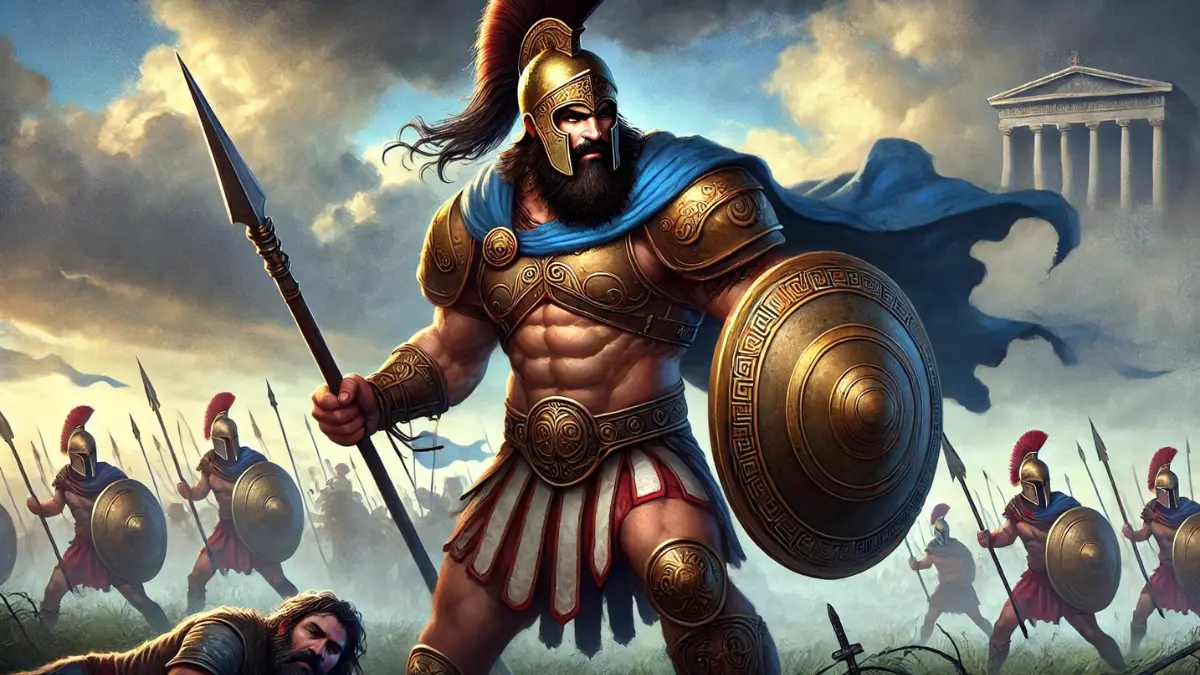
Ajax is renowned for his immense size and strength. He stands taller and broader than most Greek heroes, making him a formidable presence on the battlefield.
His great stature allows him to wield large weapons and shields with ease. Ajax’s physical strength is unmatched, second only to Achilles. His towering figure strikes fear into his enemies and inspires confidence in his allies.
Ajax’s strength and size make him a key warrior in the Trojan War, capable of holding back entire enemy forces.
Compared to other Greek heroes, he stands out for his sheer physical power and defensive capabilities. While Achilles is known for his speed and offensive skills, Ajax excels in strength and defense.
Unlike Odysseus, who relies on cunning and strategy, Ajax uses brute force and resilience. His ability to fight without divine assistance sets him apart from heroes like Diomedes and Hector, who often receive help from the gods.
His role as the “bulwark of the Achaeans” highlights his importance in protecting the Greek forces.
Famous Shield and Weapons of Ajax the Great
Ajax carries a massive shield, famous for its size and durability.
Made of seven layers of ox hide and a layer of bronze, the shield is nearly impenetrable. This enormous shield is large enough to protect both Ajax and his half-brother Teucer.
In addition to his shield, Ajax wields a powerful spear and a silver-studded sword. The sword, a gift from Hector after their duel, symbolizes mutual respect between the two warriors.
His weapons are not only tools of war but also symbols of his strength and heroism. His ability to use these heavy weapons effectively showcases his physical prowess.
Ajax the Great’s Role in the Trojan War

Ajax plays a crucial role in the Trojan War.
As the son of King Telamon of Salamis, he brings twelve ships and many warriors to join the Greek forces. Ajax’s immense size, strength, and bravery make him one of the most formidable Greek warriors.
Known as the “bulwark of the Achaeans,” he stands out for his ability to hold back enemy forces and protect his comrades. Throughout the war, Ajax participates in numerous battles, showcasing his combat skills and unwavering courage.
In the Siege of Troy, Ajax was a standout hero. Homeric poems write of his feats. He was big and brave, a solid support among the Greeks.
Ajax’s part in the war against Troy showed his great skills in battle. His presence boosted the Greek army’s morale. He had a special bond with Achilles, also a top Greek hero, which added depth to his story.
Often leading the Greeks against tough odds, he was known for his strength and loyalty to his friends. These qualities made him a key player in the Trojan War tales.
His Duel with Hector

One of Ajax’s most famous moments in the Trojan War is his duel with Hector, the Trojan prince.
Hector challenges the Greeks to single combat, and chooses Ajax to face him. The duel lasts an entire day, with both warriors displaying incredible strength and skill.
Ajax’s massive shield, made of seven layers of ox hide and a layer of bronze, protects him from Hector’s attacks. Ajax manages to wound Hector, but the duel ends in a draw as night falls.
The two heroes exchange gifts, showing mutual respect. Hector gives Ajax a sword, and Ajax gives Hector a purple sash. This duel highlights Ajax’s prowess and the respect he commands from even his enemies.
Defense of Greek Ships
During the Trojan War, the Greek ships face a significant threat from the Trojans. Hector and his forces nearly break through the Greek defenses and set the ships on fire.
Ajax plays a vital role in defending the ships, using his strength and strategic skills to repel the Trojans. He hurls a massive stone at Hector, knocking him unconscious and temporarily halting the Trojan advance.
His actions prevent the destruction of the Greek fleet and boost the morale of his fellow warriors. His ability to hold the line and protect the ships earns him great admiration from his comrades.
Retrieval of Achilles’s Body
After Paris kills Achilles, with the help of Apollo, the Greeks face the challenge of retrieving his body.
Ajax and Odysseus undertake this dangerous mission. Ajax uses his great shield and spear to fend off the Trojans while Odysseus helps carry Achilles’s body back to the Greek camp. This act of bravery and loyalty ensures that Achilles receives a proper burial.
Ajax’s role in this mission highlights his dedication to his comrades and his willingness to risk his life for the honor of fallen heroes. His actions during the retrieval of Achilles’s body further cement his reputation as one of the greatest Greek warriors.
The Contest for Achilles’s Armour

Ajax the Great Competition with Odysseus
After Achilles dies, his divine armour, crafted by Hephaestus, becomes a coveted prize.
The Greek leaders decide to award the armour to the bravest warrior. Ajax and Odysseus both claim the right to the armour.
Ajax argues that his strength and bravery on the battlefield make him the rightful heir. He highlights his role in defending the Greek ships and retrieving Achilles’s body.
Odysseus, known for his cunning and eloquence, presents a different case. He emphasizes his strategic mind and contributions to the Greek cause.
The Greek leaders, influenced by Odysseus’s persuasive speech and Athena’s support, award the armour to Odysseus.
Impact Decision Has on Ajax
The decision to award the armour to Odysseus deeply affects Ajax.
He feels humiliated and betrayed by his fellow Greeks. Ajax believes that his strength and bravery should have earned him the armor.
The loss of the armour symbolizes a loss of honour and respect for Ajax. This outcome shakes his confidence and pride, leading to feelings of intense anger and shame.
His sense of injustice grows, and he becomes consumed by thoughts of revenge. The decision marks a turning point in Ajax’s life, leading to tragic consequences.
Ajax’s Reaction and Descent into Madness
Ajax faces a turning point after losing the contest for Achilles’s armour to Odysseus.
This loss deeply wounds his pride and honour. Feeling humiliated and betrayed, Ajax plans to kill the Greek leaders who denied him the armour. He intends to murder Agamemnon, Menelaus, and Odysseus.
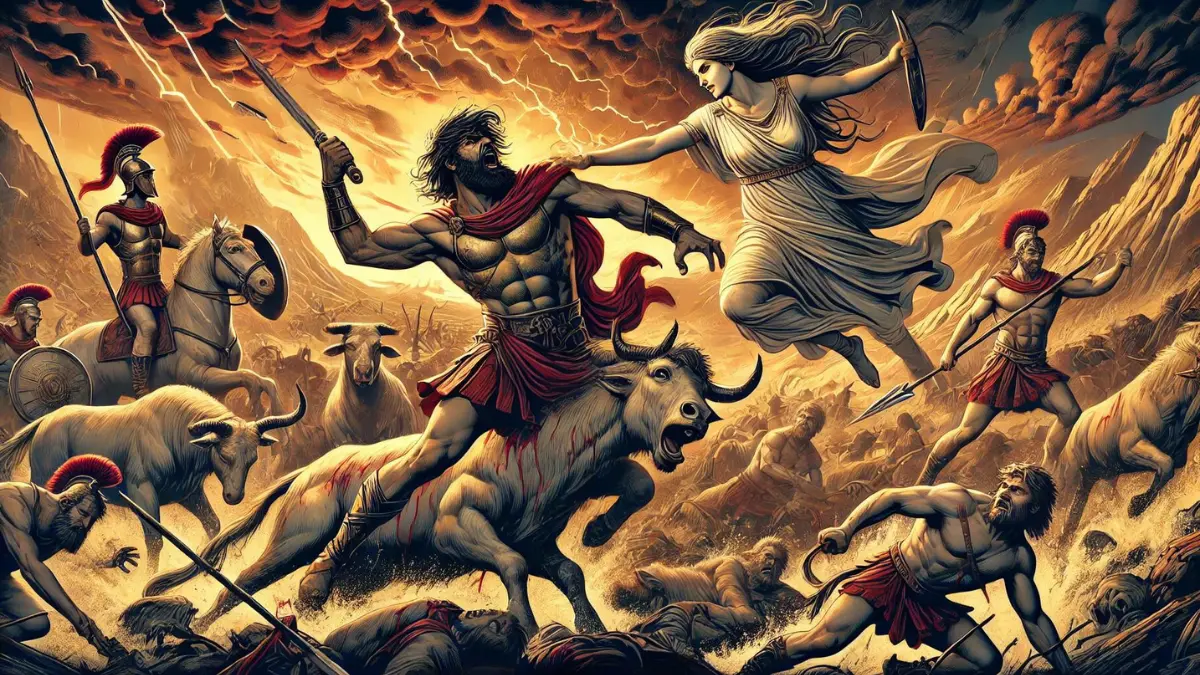
However, Athena intervenes and strikes Ajax with madness. In his delusional state, he mistakes livestock for his enemies and slaughters them. When he regains his senses, he realizes the extent of his actions.
The sight of the dead animals and his own madness fills him with shame and despair.
Death of Ajax the Great
Ajax’s Suicide and Its Significance
Overwhelmed by shame and unable to cope with the humiliation, Ajax decides to end his life.
He takes the sword given to him by Hector and falls upon it, taking his own life. This act of suicide holds deep significance. It reflects Ajax’s inability to live with the loss of his honour and the shame of his actions.
In Greek culture, honour and reputation are paramount, and Ajax feels that his only escape from disgrace is death. His suicide is a tragic end to a once-great hero, highlighting the harsh consequences of pride and the importance of honour in Greek society.
Burial and Honours
After Ajax’s death, his half-brother Teucer takes responsibility for his burial. Teucer faces opposition from Agamemnon and Menelaus, who initially refuse to allow Ajax a proper burial.
However, Odysseus, despite being Ajax’s rival, persuades them to honour Ajax with a proper funeral. Odysseus argues that even enemies deserve respect in death.
Ajax is buried at Cape Rhoeteum, and his ashes are placed in a golden urn. The people of Salamis, Ajax’s homeland, honour him with a festival called Aianteia. This festival celebrates Ajax’s heroism and legacy, ensuring that his memory endures.
Legacy and Worship
Ajax’s dramatic journey has fascinated many people over the years. It has earned him a key role in classical literature.
Hero Cult and Festivals
After his death, the people of Salamis and Athens honour Ajax with hero cults and festivals.
The most notable festival is the Aianteia, celebrated in Salamis. During this festival, people set up a couch with Ajax’s armour, symbolizing his presence. This practice recalls the Roman Lectisternium, where couches were prepared for gods.
The festival includes athletic competitions, sacrifices, and feasts, celebrating Ajax’s heroism and legacy. These events ensure that Ajax’s memory endures and that his heroic deeds are remembered by future generations.
Depiction by Greek Philosophers and in Literature

Ajax’s story is seen in different ways throughout history. This has added a lot to how we understand literature.
Looking at Ajax’s story from old times to now, we see a consistent theme. He is the perfect example of a tragic hero. His story is still important in literature today.
Homer’s Iliad
In the Iliad, Homer describes Ajax as a towering warrior, second only to Achilles in strength and bravery. He calls Ajax the “bulwark of the Achaeans,” highlighting his role in defending the Greek forces. Homer portrays him as a steadfast and courageous hero who plays a crucial role in the Trojan War.
Sophocles Play Ajax
The tragedy Ajax by Sophocles is especially famous. It shows Ajax’s tough journey from a hero to a broken man.
It focuses on Ajax’s descent into madness and eventual suicide. He presents Ajax as a tragic hero, unable to cope with the loss of Achilles’s armour to Odysseus. Sophocles uses his story to explore themes of honour, dangers of too much pride, and sadness.
Ovid’s Metamorphoses
In Metamorphoses, Ovid recounts the contest between Ajax and Odysseus for Achilles’s armour. He portrays Ajax as a strong but ultimately outmaneuvered warrior. Ovid emphasizes the shift from brute strength to cunning and rhetoric. This shows Odysseus’s cleverness overshadows showing Ajax’s traditional heroism.
Plato’s Republic
In Republic, Plato references Ajax’s soul choosing the life of a lion, reflecting his disdain for human life after the judgment over Achilles’s armour. This choice symbolizes his deep sense of injustice and his preference for a life of strength and pride over human complexities.
Other Depictions
Pindar’s Isthmian Odes
In his Isthmian Odes, Pindar praises Ajax’s valour and heroic deeds. He acknowledges Ajax’s tragic end but emphasizes his bravery and the honour he brought to his name. Pindar’s work helps preserve Ajax’s legacy as a great warrior.
Pausanias’s Description of Greece
In Description of Greece, Pausanias mentions the hero cult of Ajax in Salamis, where he is worshipped as a tutelary hero. Pausanias describes the festival Aianteia, which honours his memory and celebrates his contributions to Greek mythology.
Robert Graves Greek Myths
In Greek Myths, Robert Graves describes Ajax as second only to Achilles in courage, strength, and beauty. He highlights his role in the Trojan War and his tragic end, emphasizing the themes of honor and pride.
These references by various philosophers and writers highlight Ajax’s significance in Greek mythology and his lasting impact on literature and culture.
Conclusion
Ajax the Great, a towering figure in Greek mythology, leaves a lasting legacy.
Known for his immense strength and bravery, he plays a crucial role in the Trojan War. Despite his tragic end, his heroism and dedication remain inspirational. Ajax’s story highlights the importance of honour and the devastating effects of pride.
Festivals like Aianteia celebrate his memory, ensuring his deeds are remembered.
In art and literature, Ajax appears as a symbol of strength and resilience. His influence extends to later Greek culture, where he is honoured as a protector and hero.
Ajax’s legacy teaches valuable lessons about courage, honour, and the human spirit.